
Last updated November 18, 2026
 Hardwood
 Engineered hardwood
 Luxury vinyl plank
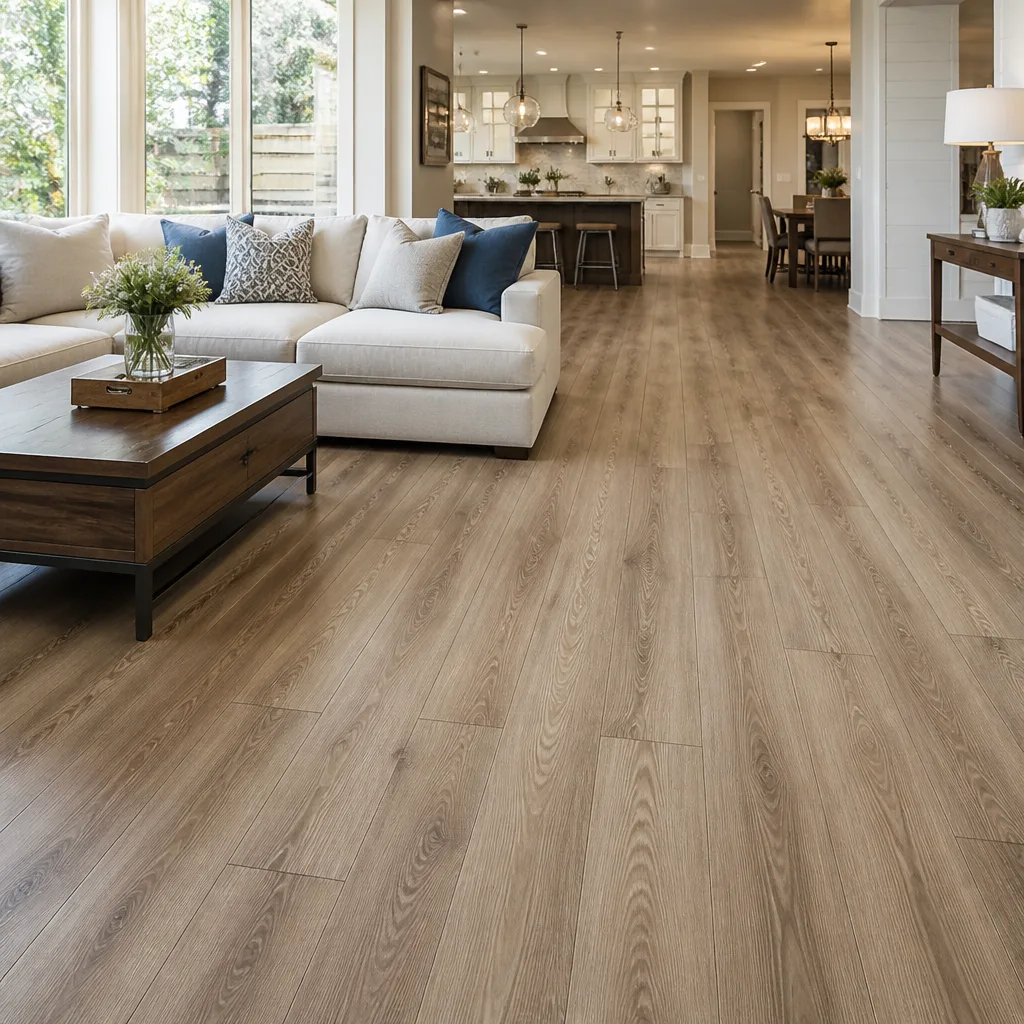 Laminate
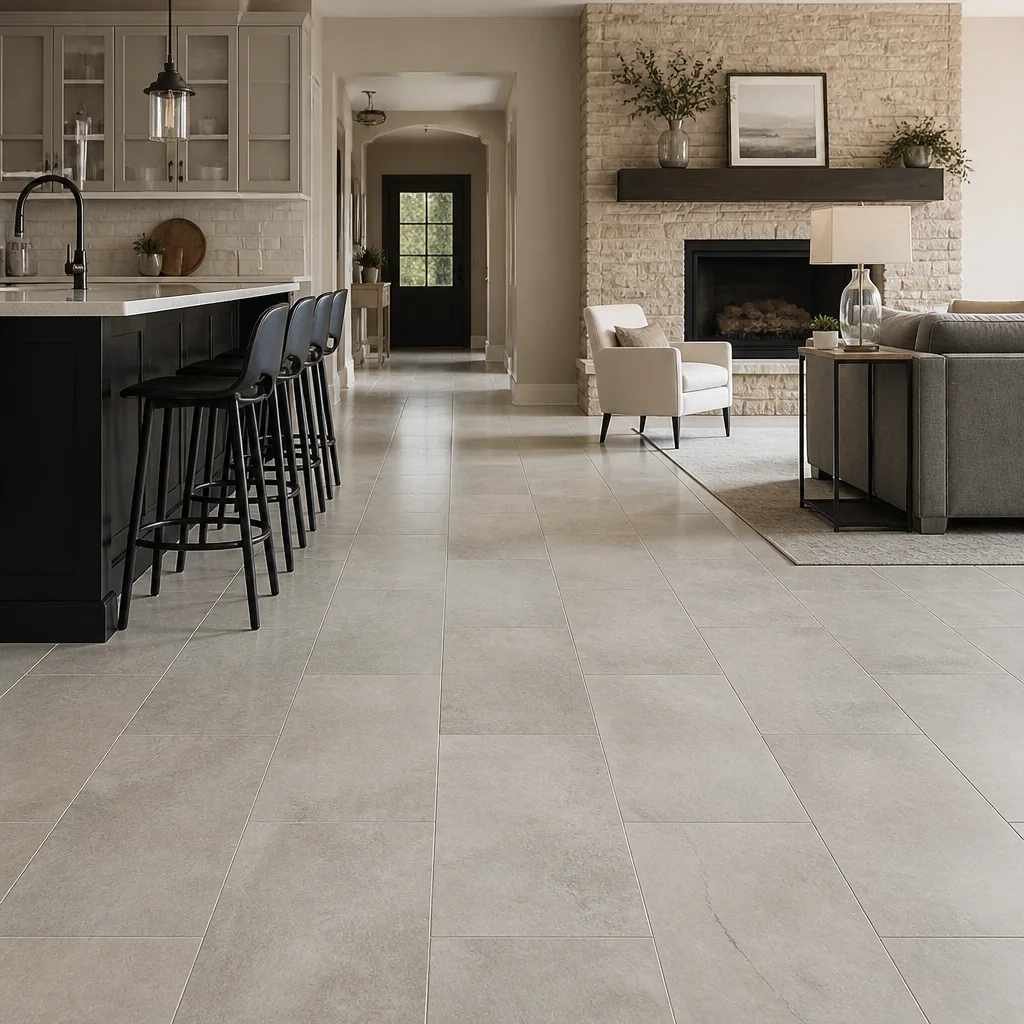 Porcelain tile
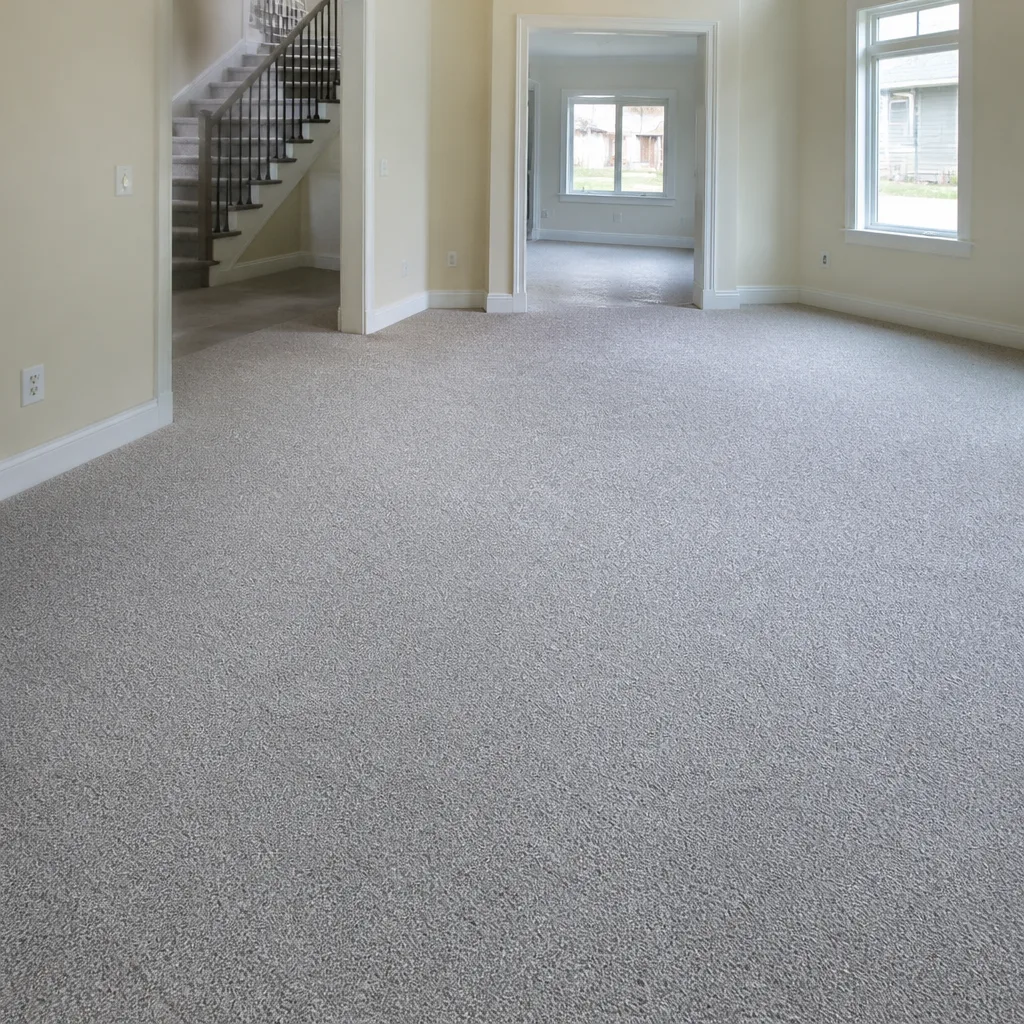 Carpet
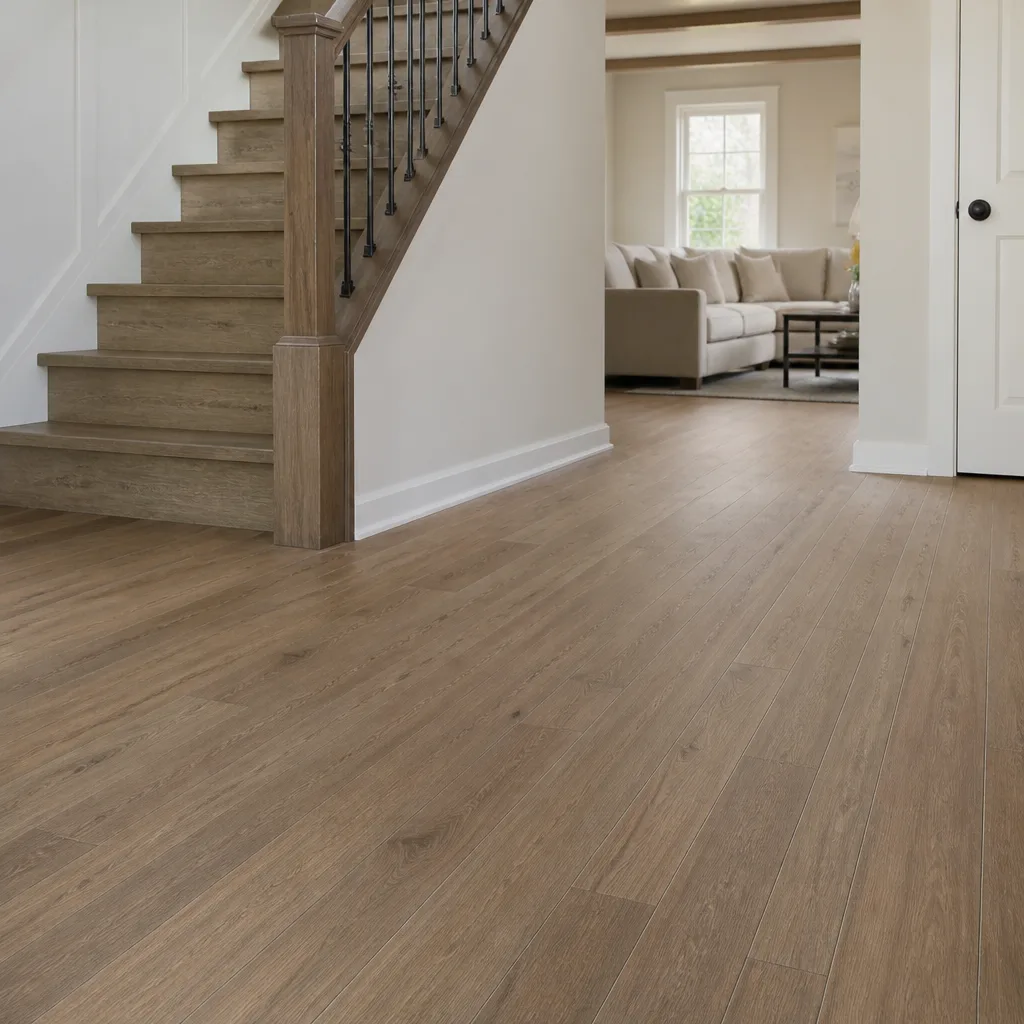 Shaw
 Mohawk
 COREtec
 Pergo
Free in-home measure and written estimate: Shaw, Mohawk, COREtec and Pergo lines compared on your own rooms, with carpet, tile, vinyl plank, laminate and hardwood laid out side by side
Get your free estimateFix It or Start Over: Flooring Repair vs Replacement
A homeowner who spends a few hundred dollars repairing hardwood over a soft subfloor will be back in the same conversation in about a year and a half. The floor wasn’t the problem. The problem was underneath it, and nobody looked. That’s the mistake we see most often, and it’s why this guide starts where most flooring advice ends: with the subfloor. Before you price a repair, before you fall in love with a replacement product, you need to know what the floor is sitting on. In the sections below you’ll get a subfloor-first framework for the repair-versus-replace decision, a realistic way to judge whether your hardwood has another sanding left in it, and a cost-per-square-foot method you can run with your own numbers. This is the conversation we have every week with homeowners around Spring Valley, and it’s worth having before you commit to either path.
Quick Answer
Repair makes sense when the damage is surface-level or isolated and the subfloor underneath is sound, flat and dry. Replace when the damage is widespread, the subfloor is soft or moving, or the visible floor has already been sanded past the point where another refinish is safe. The floor itself rarely decides it. The subfloor condition, the spread of the damage, and how much life is left in the material are what tell you which path actually makes financial sense in Spring Valley.
Styles & brands we work with
- Hardwood
- Engineered hardwood
- Luxury vinyl plank
- Laminate
- Porcelain tile
- Carpet
- Shaw
- Mohawk
- COREtec
- Pergo
Table of Contents
- Start With the Subfloor, Not the Surface
- Which Damage Is Repair-Eligible?
- The Replacement Triggers
- Hardwood Refinishing: Is There Another Sanding Left?
- The Hidden Cost of Partial Replacement
- A Cost-Per-Square-Foot Framework You Can Run Yourself
- What Makes This Decision Different in Spring Valley
- A Step-by-Step Path Through the Decision
Start With the Subfloor, Not the Surface
Here’s the part almost nobody does first. Before you evaluate the visible floor, evaluate what’s holding it up. A floor is a system, and the top layer is only the part you can see. If the subfloor is soft, uneven, damp or moving, no repair you make to the surface will last. That’s where the money gets thrown away.
We’ve walked into plenty of Spring Valley homes where the carpet or tile looked like the problem, and the real story was a subfloor that had taken on moisture or had never been properly fastened down. Repair a tile crack over a moving subfloor and the crack comes back. Patch a carpet stain over a soft spot and the soft spot spreads. The visible floor is a symptom more often than it’s the disease.
Our technicians have up to 14 years of experience, and the single most useful habit from that time is this: check the base before you price the finish. When we do a free estimate, the subfloor check comes before any product talk.
The Subfloor Condition Checklist
Run through these before you spend a dollar on the visible floor:
- Sound vs. soft: Walk the whole room in bare feet. Any spot that gives, sponges or sounds hollow underfoot needs a closer look before repair makes sense.
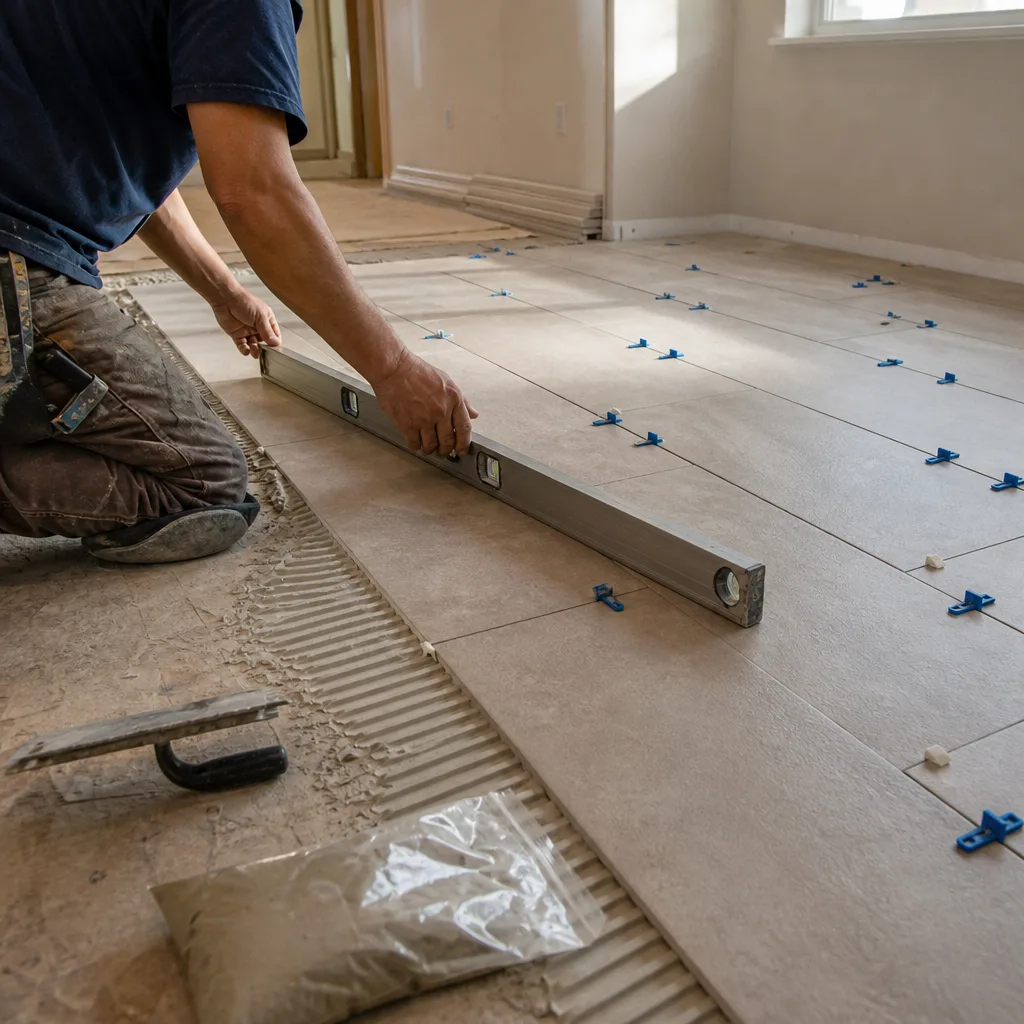
- Flat vs. uneven: Lay a straight edge or a long level across the floor in a few directions. Rocking or gaps mean the base isn’t flat, which matters for tile especially.
- Dry vs. damp: Look for staining, musty smell or dark patches at the edges. Moisture from below is the classic silent killer of a repair job.
- Stable vs. moving: Watch for squeaks, creaks and gaps that open and close with the seasons. Movement at the base will telegraph through anything you put on top.
- Fastened vs. loose: Any give in the fastening means the surface layer is effectively floating when it shouldn’t be.
If the subfloor passes all five, repair is genuinely on the table. If it fails two or more, the conversation turns to what has to happen underneath before any surface work is worth doing.
Which Damage Is Repair-Eligible?
Surface-level and isolated damage is usually a repair. Widespread damage is usually a replacement. The line between them is about how much of the floor is affected and whether the base is sound, not about how bad any one spot looks.
The honest test is this: is the damage something a trained technician can address on the spot, and is the surrounding floor sound enough to stay? If both answers are yes, repair is the sensible first conversation. If either is no, you’re likely looking at replacement, or at a repair that buys time but won’t be the last word.
Damage that’s typically repair-eligible
- Surface scratches and scuffs in hardwood, where the finish is scuffed but the wood underneath is intact.
- An isolated tile crack, where the surrounding tile and the base are sound and the crack hasn’t spread.
- Small, recent carpet stains, where the fiber hasn’t been damaged and the stain hasn’t set.
- A loose or lifted edge plank or tile, where the surrounding floor is solid.
- Dull or worn finish on hardwood that’s still thick enough to refinish rather than replace.
Damage that points toward replacement
- Widespread cupping, which is usually a moisture story, not a wear story.
- Full-room discoloration or a finish that’s gone across the whole floor.
- Structural movement: a floor that bounces, rocks or shifts underfoot.
- Multiple tile cracks across a room, often a sign the base isn’t doing its job.
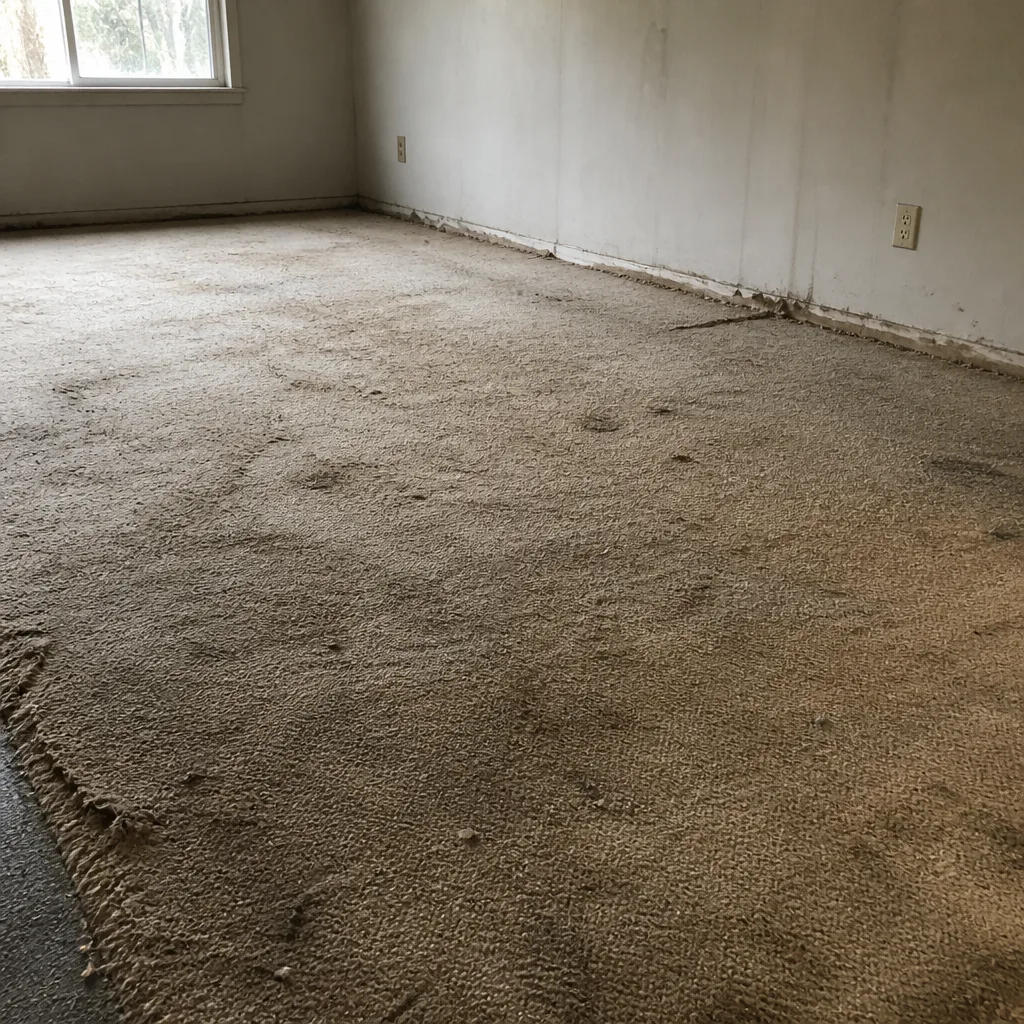
- Carpet that’s worn through in traffic lanes, torn or lifted along seams beyond a patch.
- A hardwood floor that’s been sanded down to the point where another pass isn’t safe.
Notice that almost every item on the replacement list has a subfloor or an age-of-material explanation underneath it. That’s not a coincidence. The surface is telling you what the base and the material condition already know.
The Replacement Triggers
Some floors are telling you clearly that repair money is wasted. The trick is to recognize the signal before you’re committed. These are the triggers we look for during a free estimate in Spring Valley, and they’re the ones most worth checking yourself first.
The first trigger is widespread cupping. Cupping means the edges of each plank are lifting and the center is dipping, usually because the floor has taken on moisture unevenly. It’s not a surface finish issue. It’s a moisture-and-base issue, and it tends to affect the whole floor rather than one corner. Sanding a cupped floor back to flat can remove more material than the floor has to give, which is why the responsible answer is often replacement, not refinishing.
The second trigger is full-room discoloration. When a whole floor has gone gray, dark or uneven in tone, the finish has likely failed across the surface, not just in one traffic lane. A repair touches a spot. This touches everything.
The third trigger is structural movement. If the floor bounces, if you can feel the subfloor give underfoot, or if gaps open and close, the problem is underneath. Any new surface you put down will inherit that movement.
The fourth is multiple isolated problems that add up to one big one. Three tile cracks in different rooms, a soft spot by the door and a lifted edge near the window aren’t three small repairs. They’re one signal that the floor’s base and material are both past their useful life.
If you’re seeing two or more of these, lean toward replacement as the realistic option. If you’re seeing one, repair might still buy you meaningful time.
Hardwood Refinishing: Is There Another Sanding Left?
A hardwood floor has a finite number of sandings in it, and the limit is the thickness of the wood above the tongue, not the number of scratches on the surface. If there’s still enough material above the tongue and the floor is sound, refinishing is a real option. If there isn’t, you’re looking at replacement.
Refinishing removes a thin layer of the wood surface, so every pass costs material. A floor that started with plenty can take more than one. A floor that’s been sanded before, or one that’s already worn thin, has less to give. This is measured, not guessed: a technician checks the wear layer at the estimate visit, and the written estimate tells you whether refinishing is safe or whether you’ve crossed the refinishable threshold.
This is also why refinishing is a distinct service rather than a step inside a new installation. A homeowner with a tired but structurally sound hardwood floor often doesn’t need to replace it at all. They need a refinish. We treat that as its own job, which is why it’s a standalone service at Flooring Spring Valley and not something bundled in.
How to think about the refinish decision
- Confirm the base is sound and flat. A refinish can’t fix a soft or cupped floor.
- Confirm the wear layer is thick enough. This is measured at the estimate and depends on the wood and its condition.
- Confirm the finish is the actual problem. Dull, worn or scratched surface over sound wood is the ideal refinish case.
- Get the written price. Refinish versus replace is a cost decision, and you can only make it against real numbers.
Refinishing existing hardwood is often the more cost-conscious first conversation. It extends the life of a floor you already own and doesn’t require new material. But it only works when there’s material left to remove, and that’s a physical measurement, not a sales pitch.
Safety note: sanding a finished hardwood floor sends fine dust into the air and can involve equipment with real injury risk if handled carelessly. Refinishing is a job for a trained professional, not a weekend project. We measure and plan it as a professional service, and we recommend you treat it that way.
The Hidden Cost of Partial Replacement
Patching a room instead of replacing it seems like the obvious money-saver. In practice, partial replacement often costs more than you expected and looks worse than you hoped, and the reason is that floors don’t patch invisibly.
Here’s what nobody tells you before you commit to a patch. First, dye-lot mismatches. Flooring material is made in runs, and each run can vary slightly in color and shade. A patch uses material from a different run than the original floor, and that difference can be visible across a room. You match the floor you can see, and the new piece still reads as a patch.
Second, transition strips. Where a patch meets the original floor, you usually need a transition strip to cover the seam. That strip is a visual interruption. A small repair turns into a visible line across the room that wasn’t there before.
Third, the wear mismatch. An old floor has an old finish. New material in the same room has a new finish. Even if the color is close, the sheen and wear pattern differ, and the eye picks it up.
Patching about a fifth of a floor often looks worse than replacing the whole floor, because a full replacement gives you one material, one finish and one color across the room. A patch gives you a reminder of the old floor next to the new one. That’s why the honest advice is often to replace the room rather than patch it, and it’s a conversation worth having during a free estimate before you buy material for a patch.
This is one of the reasons a spring valley refresh is often simpler than it looks: when the whole room is one floor, one material and one finish, the outcome is uniform. Partial work is more likely to read as patched.
A Cost-Per-Square-Foot Framework You Can Run Yourself
The repair-versus-replace decision only becomes real when it’s expressed as a cost per square foot, compared against how many more years each path is likely to give you. Before you call anyone, you can estimate the shape of that comparison with your own numbers.
Here’s the framework, in plain terms. A replacement cost is a full-room number: material plus removal plus installation, priced per square foot. A repair cost is a targeted number: the specific work on the specific spot. The honest comparison is not repair-versus-full-replacement. It’s cost per year of life. A cheap repair that lasts a year and a half isn’t cheap if you’ll be back in the same conversation then. A fuller job that lasts far longer can be the better value even though it costs more up front.
How to run the comparison
- Measure the room so you’re comparing the same area. A repair has no square footage; a replacement does.
- Get a real replacement quote for your material and room size. Don’t guess.
- Get a real repair or refinish quote for the specific damage.
- Divide each number by the years of life you expect it to give. That’s the cost per year.
- Compare the two cost-per-year figures, not the two headline budgets. A smaller up-front number isn’t automatically the better decision.
Two more things to plug in. First, the spring valley market for both repairs and replacements varies with material choice, so the written estimate is the only number that counts. Second, if you’re leaning toward replacement, brand selection affects the material side of the framework. That’s why we carry several brands rather than one: COREtec and Mannington give you different price points and finishes for a full replacement, and Pergo often fits a budget-conscious room without taking the floor down to the cheapest line available anywhere. The right material depends on the room and the budget, not on what’s in stock.
The framework also helps on repair: if repairs are cheaper per year of life than replacement, repair is the answer, even if the total replacement number looks more impressive. If repairs aren’t holding up to that test, replacement is the more honest choice.
What Makes This Decision Different in Spring Valley
Flooring decisions don’t happen in a climate vacuum. In Spring Valley, the things that affect a floor most are the ones most homeowners don’t connect to the decision at all: indoor dry air, seasonal temperature swings, and the way desert homes shift between heating and cooling seasons. Each of those has a repair-versus-replace implication.
Dry indoor air is the big one. Desert homes run hot and dry through much of the year, and that dry air affects both hardwood and tile. Hardwood is sensitive to moisture content, and a house that swings between very dry and seasonally more humid can dry wood out, which is where gaps and small cracks come from. A single hairline gap isn’t a replacement trigger. Gaps opening and closing across a whole floor are a sign the base and the material are both dealing with more than surface wear. That’s when a subfloor check matters most in Spring Valley.
Seasonal temperature swings cook and cool the same room repeatedly, and that cycling is hard on tile bedding and sealant. An isolated crack is a repair. Cracks recurring in the same area point to movement you can’t see, and that’s a base conversation, not a crack conversation.
Housing stock matters too. Some Spring Valley homes sit on slabs, some on raised foundations, and the base behaves differently in each. A slab home changes the moisture story and how a repair or replacement has to be planned. This is one reason a generic answer doesn’t serve you: the subfloor underneath your specific home is what determines whether the visible floor is repairable or not.
Finally, Spring Valley is full of older homes where the original floors are still in place. That’s good news for the refinish conversation. If the wood’s still sound and thick enough, refinishing is often the most cost-conscious path, and it’s why we offer refinishing as its own service rather than treating it as part of a new install. For a whole-home refresh, matching the material to the room is the next step after the repair-versus-replace call.
A Step-by-Step Path Through the Decision
Here’s the decision in the order it should actually happen. The floors come first, the products come last, and that order is the difference between a decision that holds and one you’ll revisit.
- Walk the room in bare feet and note soft or hollow spots. Subfloor soundness is the gate every later step has to pass.
- Check the base for flatness and movement. A straight edge and a careful look at the edges tell you a lot.
- Look for damp patches, staining or a musty smell. Moisture from below is the quiet reason repairs fail.
- List the damage and mark whether it’s isolated or widespread. One spot is a repair. Spread across a room is a replacement signal.
- For hardwood, ask whether there’s a sanding left. That’s measured at the estimate, so get a professional opinion rather than guessing.
- Get a real repair quote and a real replacement quote. You cannot run the cost-per-year comparison without both numbers.
- Run the comparison using your own square footage. Use the framework above so you’re comparing years of life, not headline budgets.
- Only now choose the material and brand. If you’re replacing, pick by room and budget, not by habit. A full-room refresh calls for carpet, and carpet installation from a brand like LifeProof or Mannington plugs into the same cost framework as any other material.
- Book the install day. Once the decision is made, the schedule is set at the estimate, and the estimate is where the price gets locked in writing.
If you’re replacing a wet or high-traffic room, the repair-versus-replace decision overlaps with material choice. That’s where tile flooring installation often wins: a hard surface that handles traffic and moisture without the care a softer floor needs. For a bedroom or a full-room refresh, carpet is often the better fit. Either way, the subfloor-first check happens before you pick a product.
Common Mistakes to Avoid
- Skipping the subfloor check. Most failed repairs are failed base conditions, not bad surface work. Walk the room in bare feet before you price anything.
- Treating one tile crack as a one-off. A single crack is a repair. Cracks that keep coming back point to movement, and that’s a replacement conversation, not a repair one.
- Assuming a repair is automatically cheaper. In Spring Valley’s dry indoor air, a repair that doesn’t address a foundation problem can fail within a couple of seasons, and you’re back where you started.
- Refinishing a cupped or soft floor. Cupping and softness are base and moisture problems. Sanding them back to flat removes material and doesn’t fix what caused the cupping.
- Patching a large share of a room and expecting it to disappear. Dye-lot mismatches, transition strips and different finishes all show. If you’re replacing a fifth of the floor, price the whole room before you buy material.
- Choosing material before you’ve decided repair vs. replace. Product selection is the last step, not the first. Picking a finish before you know the subfloor condition is how people end up with a beautiful floor over a bad base.
- Comparing headline budgets instead of cost per year of life. The cheaper up-front number isn’t the better decision unless you divide by how long each path actually lasts.
See the difference
 Before
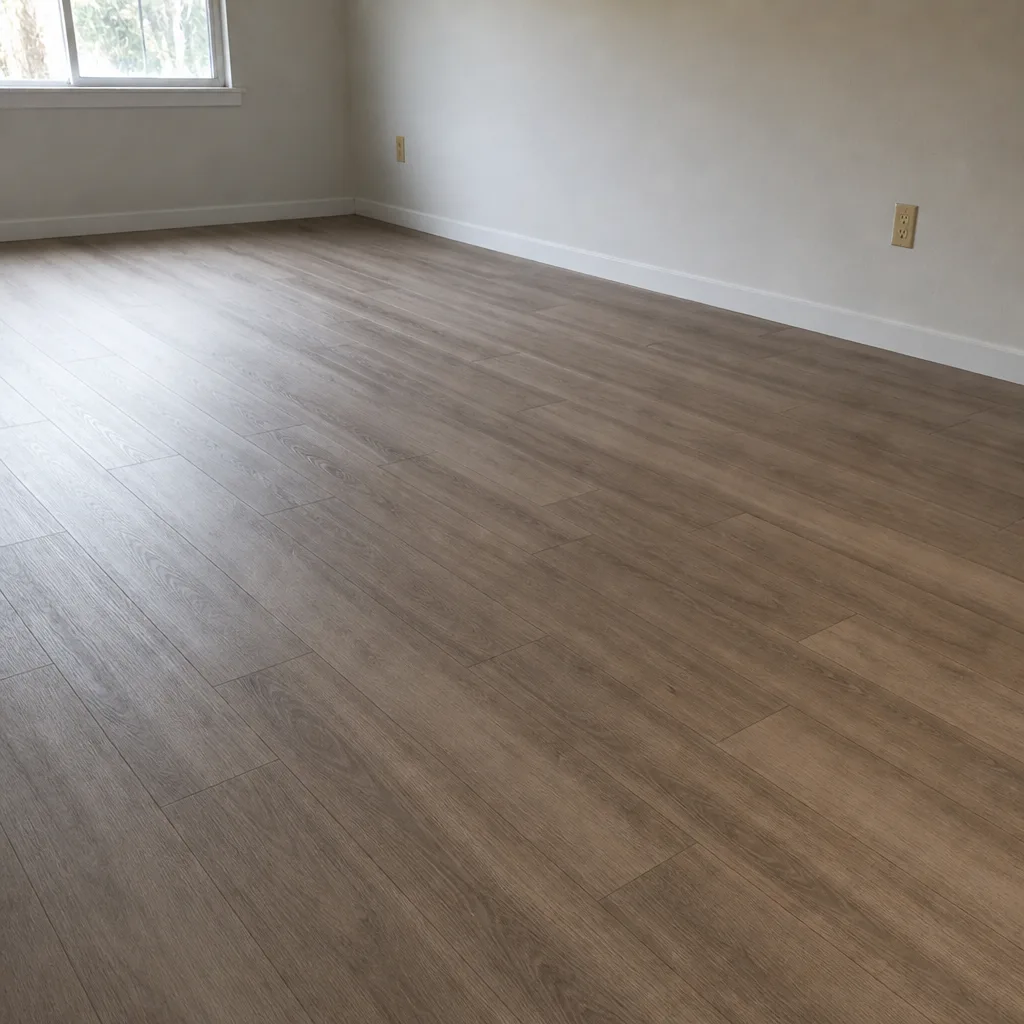 After
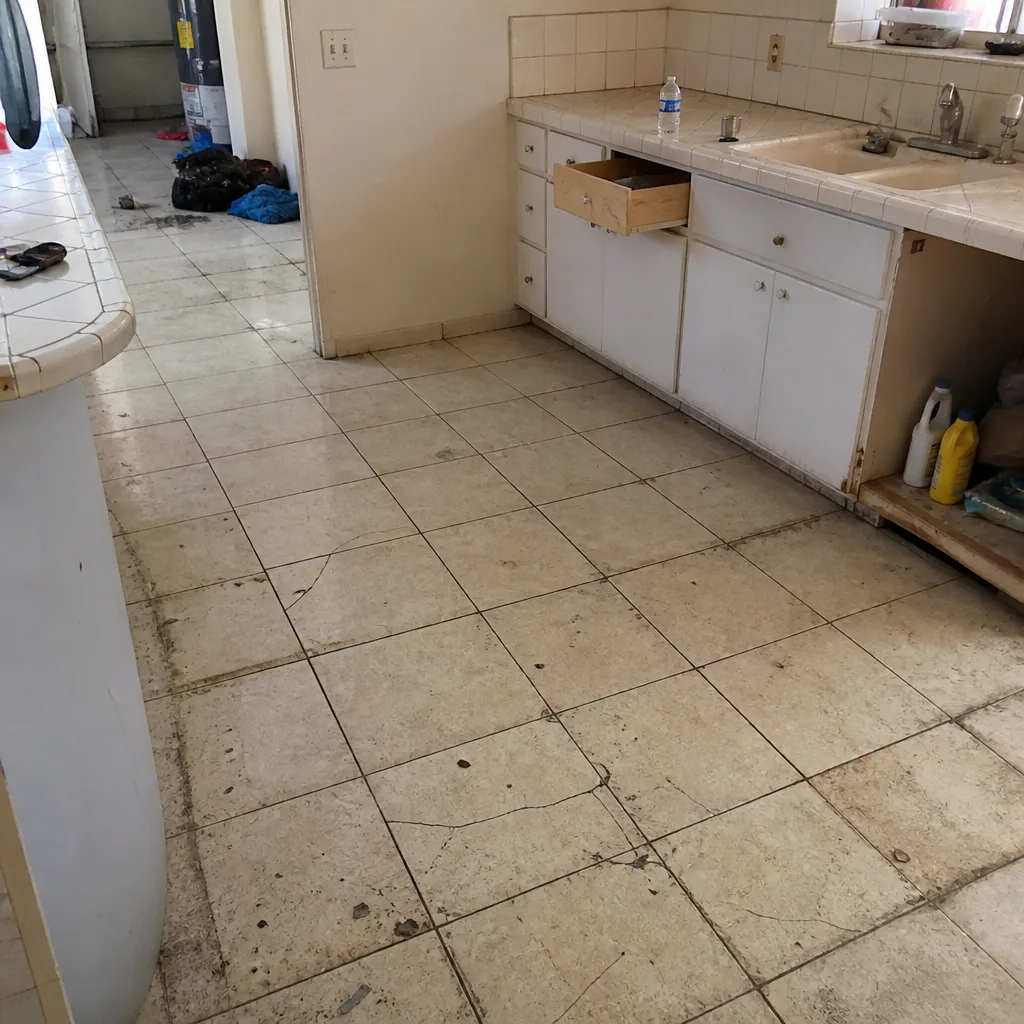 Before
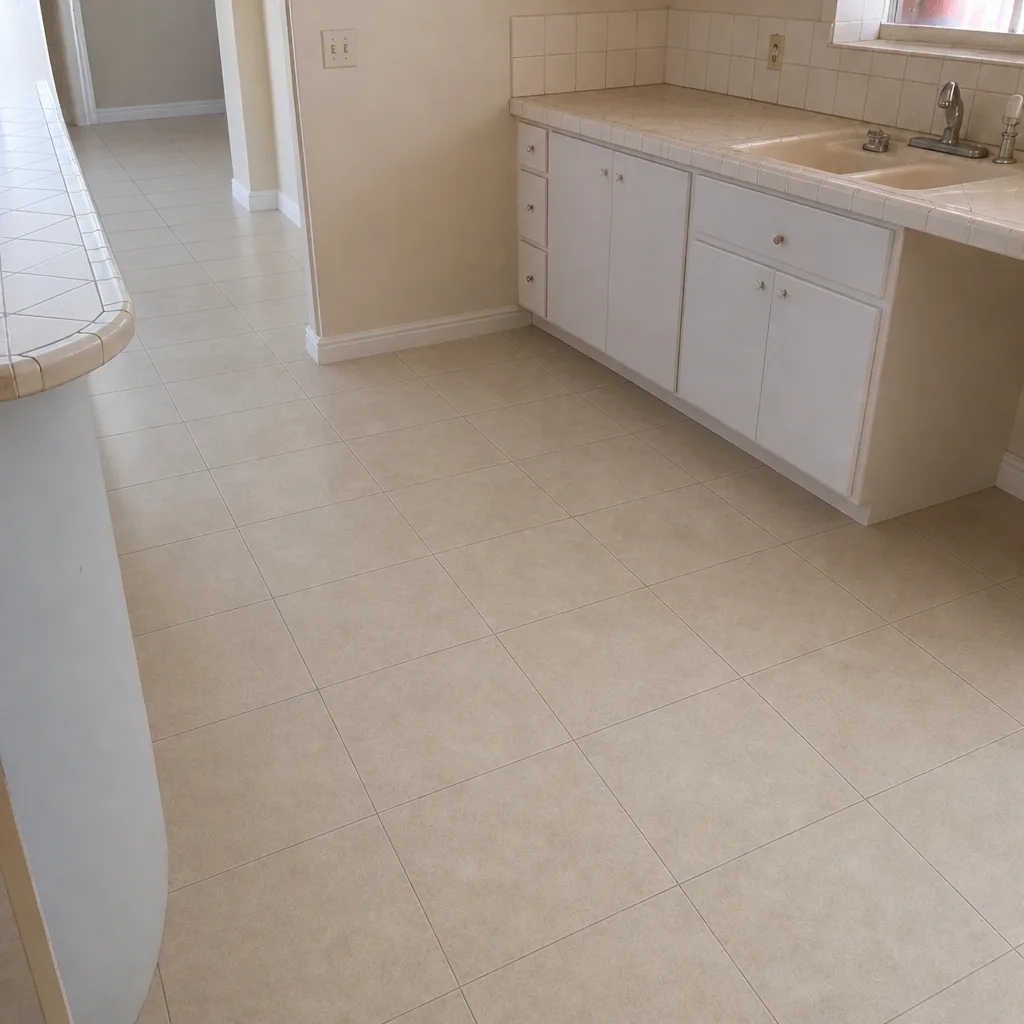 After
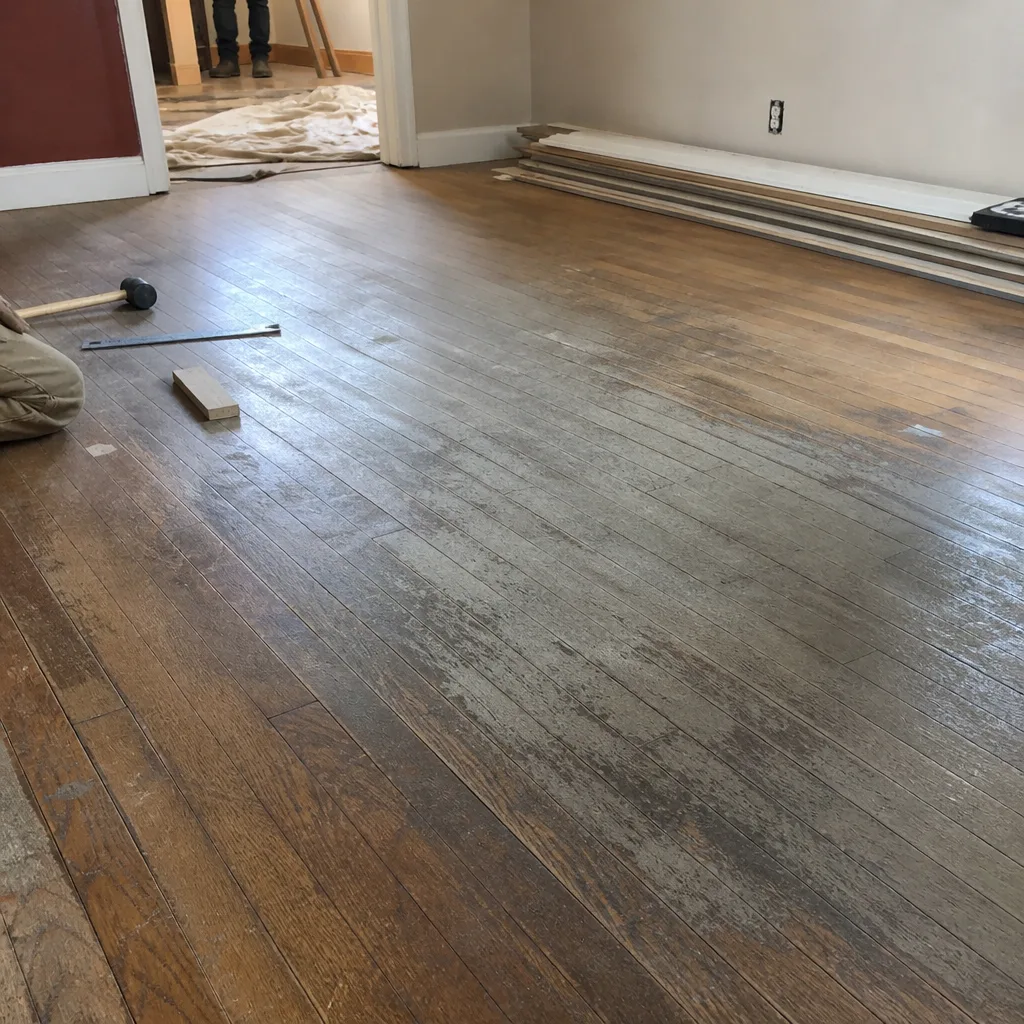 Before
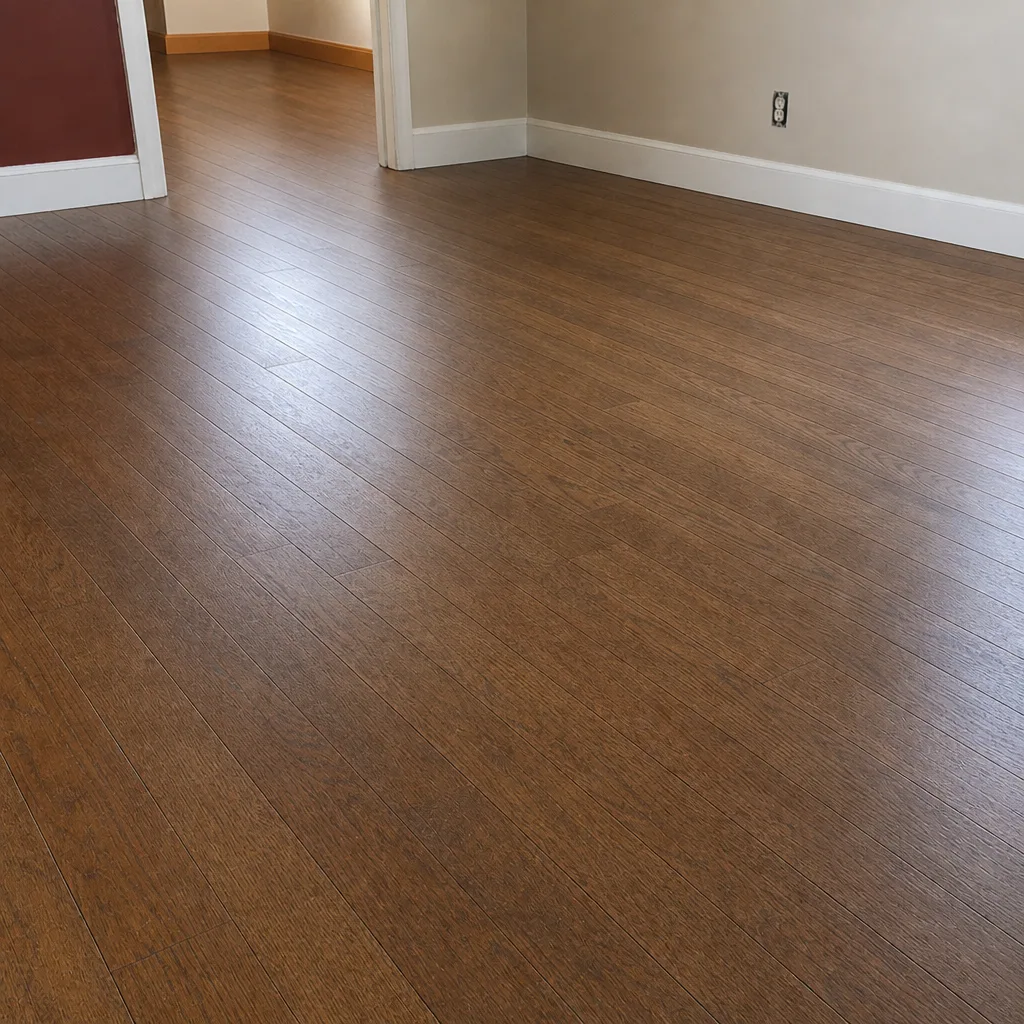 After
When to Call a Professional
Some of this you can check yourself: walk the room, look at the edges, note the soft spots. But the parts that decide the outcome are the ones that need tools and eyes from someone who does this every week. Call a professional when the floor feels soft or moving underfoot, when cupping or widespread discoloration shows up, when tile cracks keep returning to the same spot, or when you’re not sure whether your hardwood still has a sanding left in it. Those are the cases where a wrong call is expensive and a right one saves you real money. A free estimate is the lowest-risk way to get a straight answer on the subfloor and the finish in one visit. Flooring Spring Valley offers free estimates in Spring Valley. Call (888) 350-5054. We answer 24/7. Fast dispatch from 7am to 7pm, Sunday through Friday.
Frequently Asked Questions
Repair is usually cheaper up front, but the honest comparison is cost per year of life, not headline budget. A cheap repair over a soft subfloor can cost more over time than one replacement done right. Get a real repair quote and a real replacement quote for your room, then compare them the way the framework above shows. Call (888) 350-5054 for a free estimate in Spring Valley. We answer 24/7.
Walk the whole room in bare feet and look for spots that feel soft, hollow or springy, and check for gaps or movement at the edges. If those spots exist, the visible floor isn’t the main issue. A professional estimate measures the base before price is set, which is the only way to confirm it. Call (888) 350-5054 for a free estimate. Fast dispatch from 7am to 7pm, Sunday through Friday.
No, and that’s the honest answer. A floor needs enough thickness above the tongue to take another sanding, and that’s measured at the estimate visit. If the wood is still sound and thick enough, refinishing is often the more cost-conscious choice. If it’s been sanded past the refinishable threshold, replacement is the realistic path. Call (888) 350-5054 to schedule a free estimate. We answer 24/7.
It can be, for a small, isolated area and a floor that’s otherwise sound. It becomes a bad idea when the patch is large enough that dye-lot mismatches, transition strips and finish differences show across the room. Patching about a fifth of a floor often reads as patched, which is why a full-room replacement can be the better outcome even at higher cost. Call (888) 350-5054 for a free estimate. Fast dispatch from 7am to 7pm, Sunday through Friday.
Widespread cupping, full-room discoloration, structural movement, multiple tile cracks across a room, or a hardwood floor with no sanding left. Any one of these is worth a close look; two or more usually means replacement. If you’re unsure, get an estimate on the base before you spend on the surface. Call (888) 350-5054 for a free estimate in Spring Valley. We answer 24/7.
Yes. Desert homes run dry for much of the year, and that dry air can dry out hardwood, which shows up as gaps and hairline cracks. A single gap isn’t a replacement signal. Gaps opening and closing across a whole floor usually mean the base and the material are both involved. Call (888) 350-5054 for a free estimate. Fast dispatch from 7am to 7pm, Sunday through Friday.
The Bottom Line
The repair-versus-replacement question is a diagnostic one, not a math problem. Start with the subfloor, then the spread of the damage, then how much life is left in the material, and let the cost-per-year comparison decide the rest. Repair when the damage is surface-level and isolated over a sound base. Replace when the damage is widespread, the subfloor is soft or moving, or the hardwood has no sanding left. Don’t buy material before the base is checked, and don’t treat a partial patch as a full cure. Run the numbers the way this guide lays out, with your own room and your own quotes, and the right path for your Spring Valley home gets much clearer.
Ready for a straight answer on your floor? Call (888) 350-5054 for a free estimate from Flooring Spring Valley. We answer 24/7. Fast dispatch from 7am to 7pm, Sunday through Friday. Visit Spring Valley for local service details, and if your refresh includes a full-room material change, we’re glad to talk carpet, tile and hardwood refinishing all in one visit.
Written by the team at Flooring Spring Valley.