
Last updated November 18, 2026
 Hardwood
 Engineered hardwood
 Luxury vinyl plank
 Laminate
 Porcelain tile
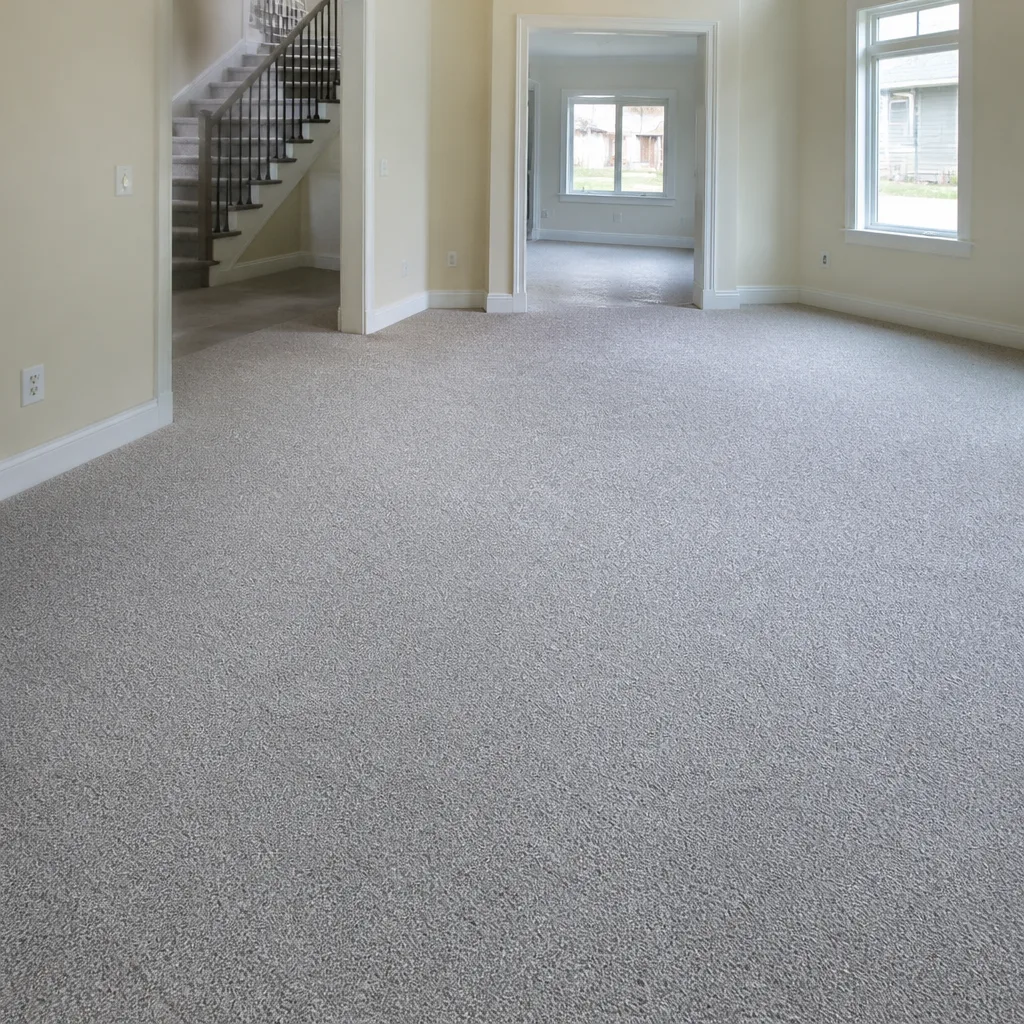 Carpet
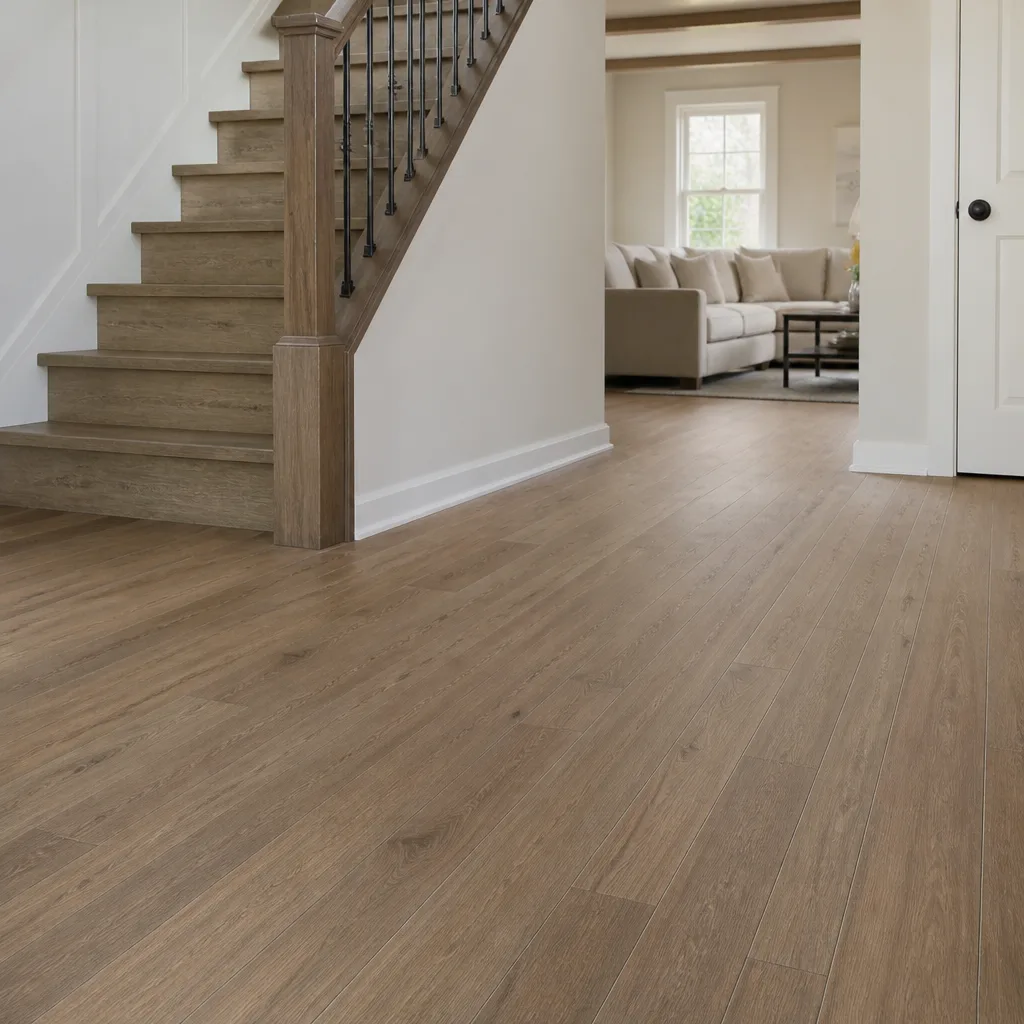 Shaw
 Mohawk
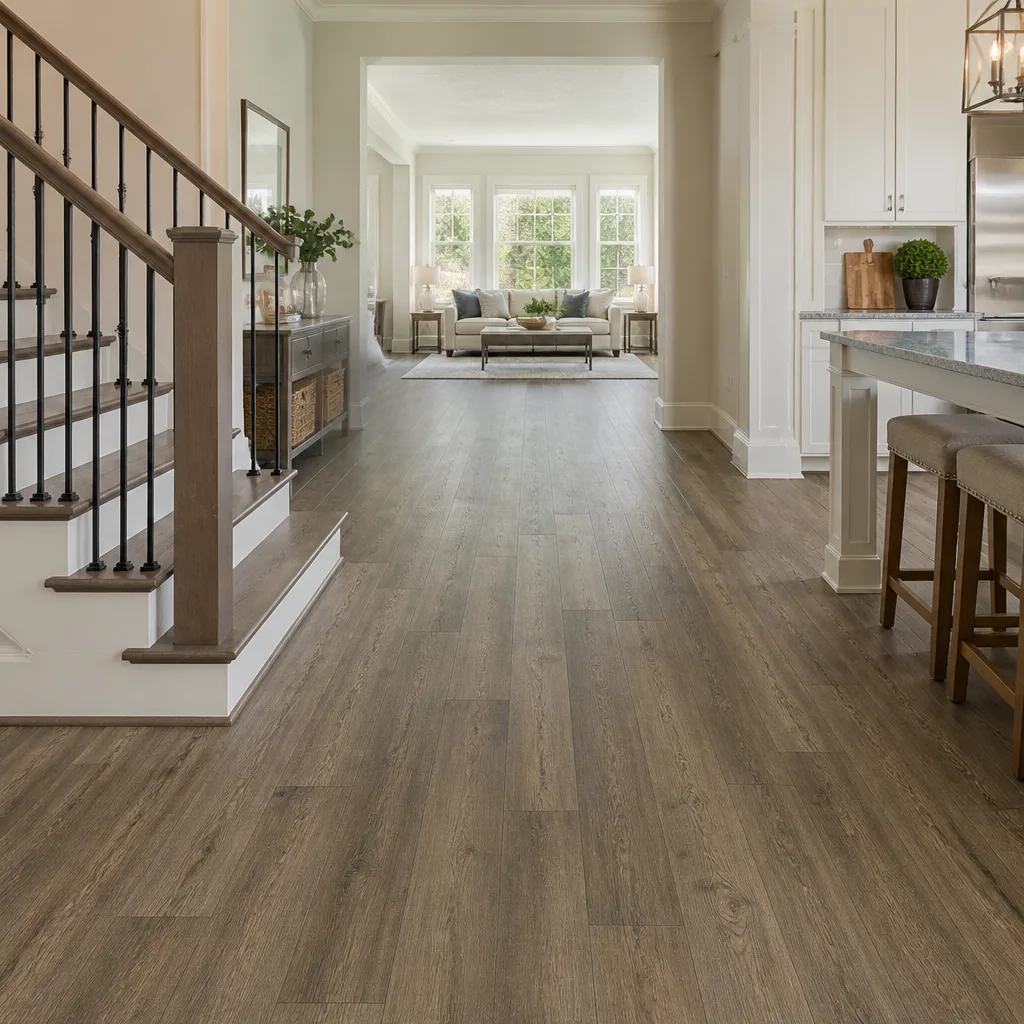 COREtec
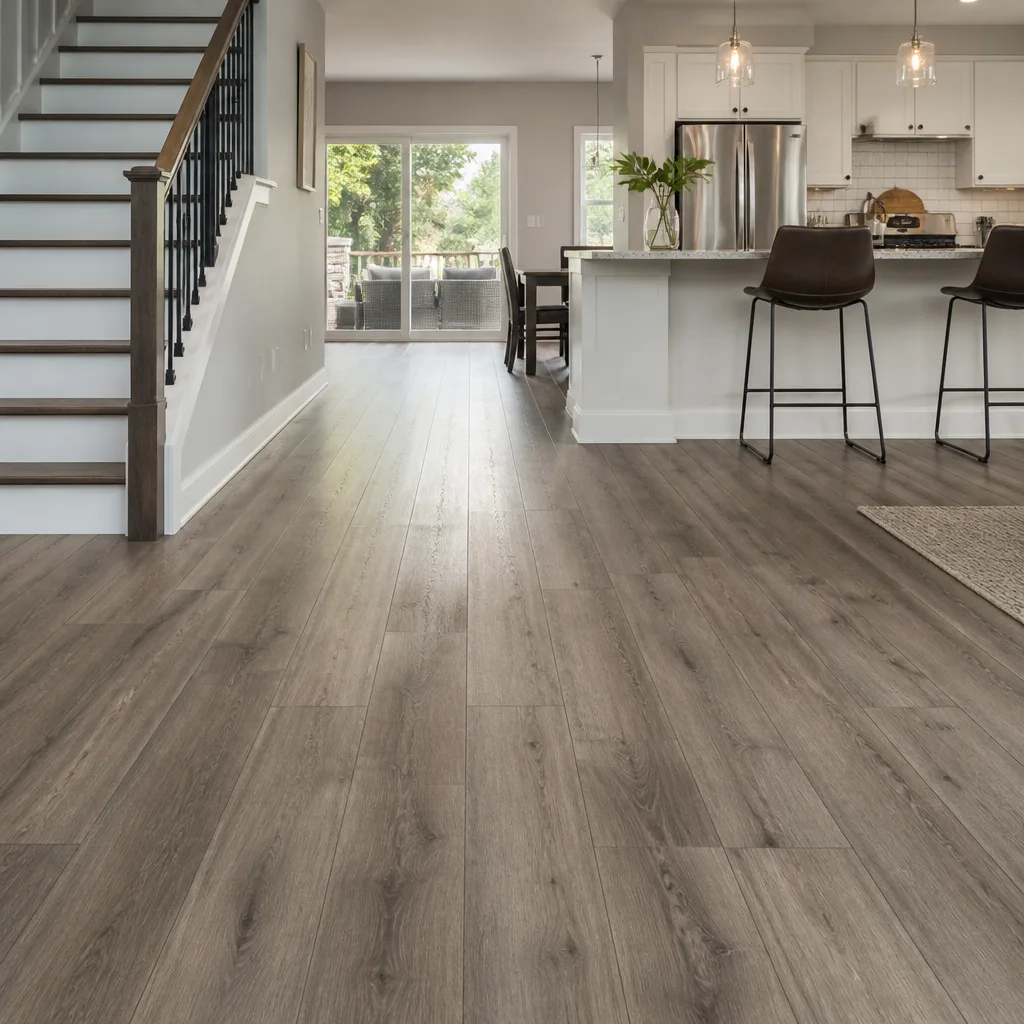 Pergo
Free in-home measure and written estimate: Shaw, Mohawk, COREtec and Pergo lines compared on your own rooms, with carpet, tile, vinyl plank, laminate and hardwood laid out side by side
Get your free estimateWhat Happens at a Free In-Home Flooring Estimate in Spring Valley
If an estimator spends twenty minutes in your home and never once crouches down to look at your subfloor, you don’t have an accurate quote. You have a number that will move the moment someone pulls up the old carpet. Most homeowners walk into a free in-home flooring estimate expecting a sales pitch and come out with a price on a piece of paper. The better framing is a diagnostic appointment: the person at your door should be reading your floor, your rooms, and your moisture situation the way a mechanic reads a car before writing an estimate. In this guide we’ll walk through exactly what a qualified estimator inspects, how to measure your own rooms first, the questions that expose a soft scope of work, what “allowances” really mean, and how to compare two Spring Valley quotes fairly.
Quick Answer
A free in-home flooring estimate in Spring Valley is a diagnostic visit, not a sales call: the estimator measures every room, inspects your subfloor and transitions, checks moisture at floor level, and confirms which product actually fits your traffic and budget. You leave with a written scope of work and a fixed price for carpet, tile, or hardwood refinishing, at no cost and with no obligation. The final price is set by that written estimate, so the quality of the inspection is what determines whether the number holds.
Styles & brands we work with
- Hardwood
- Engineered hardwood
- Luxury vinyl plank
- Laminate
- Porcelain tile
- Carpet
- Shaw
- Mohawk
- COREtec
- Pergo
Table of Contents
- What a Free In-Home Estimate Actually Is
- What a Qualified Estimator Physically Inspects
- How to Measure Your Rooms Before the Visit
- Questions That Reveal Whether Scope Is Fully Priced
- What Allowances Mean and How to Replace Them
- How to Compare Two Estimates That Quote Different Products
- Why Spring Valley Homes Pose Specific Flooring Questions
- The Estimate-to-Install Timeline, Step by Step
What a Free In-Home Estimate Actually Is
A free in-home flooring estimate is a scheduled visit where a trained estimator gathers the facts needed to price a job accurately: room measurements, subfloor condition, moisture readings, transition details, and product choice. It costs nothing, and you are under no obligation to book the installation. The estimate exists so both sides know what the floor actually needs before anyone commits.
In Spring Valley, the housing stock ranges from newer builds in the southern valleys to older ranch-style homes closer to the established corridors, and each one presents different subfloor realities. A concrete slab behaves very differently from a wood subfloor, and what sits under carpet is often not what the homeowner expects. That’s why the visit matters more than the brochure.
An estimate that is genuinely diagnostic will produce three things:
- A written scope of work listing what is removed, what is installed, and what is prepped.
- A fixed price for the work described, not a range that shifts once the floor is opened up.
- A product recommendation matched to the room’s traffic, moisture exposure, and your budget, drawn from brands you can actually research yourself, whether that’s Mannington for a mid-range look or Karndean for a premium finish.
Here’s the point that surprises people: a fast estimate and an accurate one are rarely the same. If someone quotes you from a doorway in five minutes, they’re guessing at your subfloor, and guesses get corrected later, often after your furniture is already moved. If you want to see how this connects to the wider service picture, our overview of Flooring Spring Valley lays out what the three core services cover.
What a Qualified Estimator Physically Inspects
A qualified estimator should inspect four things on-site before pricing: the subfloor condition, moisture at floor level, transitions between rooms, and any load-bearing thresholds or door clearances. These four checks are what separate a diagnosis from a guess. Miss any of them and the written number is likely to change once installation begins.
Here’s what each actually involves.
1. Subfloor Condition
Under the carpet or old tile is where most surprises live. The estimator needs to know whether the surface is concrete or wood, whether it’s flat, whether it’s stable, and whether there’s any deflection or softness. A slab with cracks and a wood subfloor with a low spot are two completely different installs. Flatness and the fix for any deviation are matters the product instructions and the written estimate should define, not something we’d pin to a number here.
2. Moisture at Floor Level
Desert climates like Spring Valley’s still have moisture. Slabs wick ground moisture, and interior humidity swings with the seasons. A serious estimator takes a reading at floor level before recommending a product. This matters most in kitchens, bathrooms, and laundry rooms, where water-resistant options from LifeProof and COREtec need to be part of the conversation. Water-resistant is not the same as waterproof, and any product still has to be installed over a subfloor that’s dry and stable.
3. Transitions Between Rooms
Where carpet meets tile, where tile meets hardwood, and where a floor meets a sliding door, the transition explains a lot about how the last install was done. Transitions also carry a real material cost, and an estimate that ignores them isn’t finished.
4. Load-Bearing Thresholds and Door Clearances
Tile adds height. A prefinished hardwood can add more than the carpet it replaces. If your closet doors, entry doors, or thresholds don’t clear the new floor, that’s a scope item the estimator needs to note before it becomes a surprise.
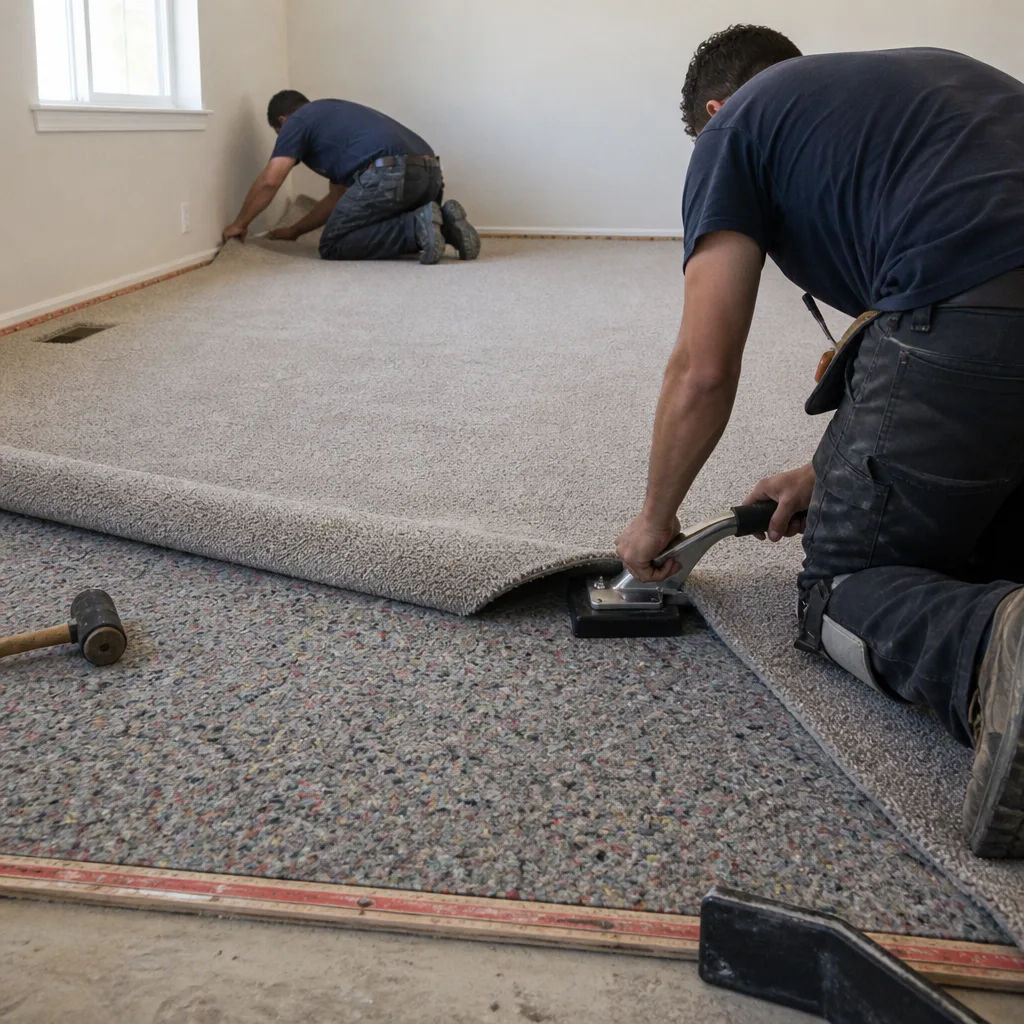
The bottom line: if the person at your door doesn’t crouch down, pull a corner up, or set a moisture meter, ask them to. A good estimator will do it without hesitation. Our carpet installation page shows how the same inspection first applies when the room is going to carpet.
How to Measure Your Rooms Before the Visit
Measure each room before the estimator arrives so you can cross-check the square footage they calculate. A quick pre-measure takes twenty minutes and gives you the confidence to ask questions when a number looks off. Flooring is sold by the square foot, and the only way to know if the total is right is to know roughly what you’re looking at.
- Sketch the floor plan of each room. A simple rectangle per room is enough.
- Measure the longest length and widest width of each room at floor level, wall to wall. Round up to the nearest half foot.
- Note the closets, doorways, and angled walls. These get handled in the estimate, but you want to know they exist.
- Multiply length by width per room and add the totals.
- Add roughly 10% for waste and cuts, which is standard for most installs. Tile usually needs a bit more.
- Write your total down and bring it to the estimate.
Your number will not match the estimator’s exactly, and it doesn’t need to. The point is to catch a wild difference. If your quick math says 1,100 square feet and the estimate says 1,600, ask why. Often there’s a good reason (measurement of transitions, prep, a room you forgot to include), but you should hear that reason and understand it before signing anything.
Rooms in Spring Valley homes with large tile footprints, like open kitchen-and-living areas, can run long on square footage once cuts and thresholds are added. Our tile flooring installation page covers how tile measurement differs from carpet, which is worth reading if you’re comparing the two.
Questions That Reveal Whether Scope Is Fully Priced
The fastest way to know if an estimate covers everything is to ask what is not included. Any job has potential add-ons: removal and haul-away of old flooring, subfloor prep and leveling, trim and baseboard work, and furniture moving. If those items aren’t in the written estimate, they’ll be added later, or the installer will have to make a decision on the spot that costs you money.
These questions do the work:
- “Is removal and haul-away of the old floor included in this number?” If not, ask for it, in writing.
- “What subfloor prep is in this price, and what would trigger more?” Listen for specifics about leveling and patching.
- “Are transitions, base shoe, and threshold pieces included?” These are commonly under-quoted.
- “Is the price fixed or does it change if the subfloor condition is different than expected?” A written fixed price is the goal; a “we’ll see when we open it up” is not.
- “What’s the manufacturer’s installation requirement for this product, and does this scope meet it?” Any product has instructions that set moisture and subfloor requirements; the scope should follow them.
- “Who handles the material delivery and staging?” Not a trick question; you just want it named.
- “What’s the schedule window for the install itself, once we book?” The exact install length depends on the product and the home, and should be booked in writing.
A good estimator will answer every one of these without flinching. If any answer feels vague, that’s your signal to push. Our technicians have up to 14 years of experience, and the ones who’ve been in the trade the longest are the ones who answer scope questions plainly. Brand choice doesn’t fix an incomplete scope: Armstrong and Mannington both need the same prep work as any other product when the subfloor is off.
What Allowances Mean and How to Replace Them
An “allowance” is a placeholder dollar figure in an estimate for a material or scope item that isn’t yet selected. You’ll see it most often on the material line when the product hasn’t been picked. The problem is that allowances are guesses, and guesses get corrected after you’ve already committed to the job.
Here’s why it matters when you’re comparing in-home flooring estimates in Spring Valley: a low total with a material allowance can end up costing far more than a higher total with a fixed material price. The line that looks like apples-to-apples is often apples to oranges.
How to replace an allowance with a fixed price:
- Pick a product at the estimate. Even a range within the brand’s catalog is better than an open allowance.
- Ask for a written fixed cost per square foot for that specific product, in that specific pattern (plank, herringbone, tile layout, etc.).
- Confirm the trim, transition, and adhesive lines are also fixed, not allowance-based.
- Get the scope reviewed and signed off at the estimate visit, not later.
The only legitimately open lines should be items that truly cannot be known until the floor is opened, and those should be called out explicitly with a plan for handling them. If you see a wide allowance, ask for the fixed-cost alternative. Our Spring Valley service overview is built around this principle: written scope, fixed price, scheduled install day.
How to Compare Two Estimates That Quote Different Products
Two in-home estimates quoting different products at similar prices are not automatically comparable. You have to normalize three things first: the scope of work, the material specification, and the install method. Until those line up, you’re comparing two different jobs, not two prices.
Here’s the normalization checklist:
- Scope: Both estimates should include removal, haul-away, subfloor prep, transitions, trim, and cleanup. Cross out any line missing in one and add a real cost for it before comparing.
- Material: A Mannington product and a Karndean product are both excellent, but they sit in different places in the catalog. Make sure you’re comparing like for like: similar plank width, similar finish, similar wear expectation for your room.
- Install method: Floating installs, glue-down, and nailed installs are different jobs with different labor. Make sure both estimates specify the method.
- Warranty terms: You’ll want to know what the written estimate says about any warranty coverage the installer offers, and what the product itself specifies. Warranty details depend on the product and the home, and should be spelled out in the paperwork.
- Schedule: The install length depends on the product and home; what you’re normalizing for is the booking window and whether both companies set the schedule at the estimate.
Once you’ve normalized the three big items, the price difference usually tells a coherent story: one scope is thicker, or the material is a deeper catalog tier, or one says “roughly three days” while the other names a fixed start.
One thing to resist: choosing on total price alone when the scope differs. A lower total that leaves subfloor prep off the paper is often more expensive in the end.
Why Spring Valley Homes Pose Specific Flooring Questions
Spring Valley homes sit in a desert climate with wide temperature swings between day and night and dry air most of the year. That doesn’t eliminate moisture, it changes how moisture behaves. Slabs still wick, and humidity inside rooms like kitchens and bathrooms can stay elevated compared to the rest of the house. That’s why an estimator checks moisture at floor level regardless of how dry the outside air feels.
A few realities that come up often in Spring Valley:
- Older ranch homes and newer builds share the same zip code. Both a 1970s house with original concrete slab and a recent build with a different subfloor assembly can live in the same neighborhood. The estimate needs to reflect which one you’re in.
- Large open floor plans are common. Long spans without transitions mean fewer places for the installer to reset the level of the floor, which can mean more prep work if the subfloor has any deviation.
- Tile adds height at doorways. In a lot of Spring Valley remodels the tile is going in where carpet used to be, and that height has to clear every door and threshold in the room.
- Kitchens and bathrooms see real water exposure. A water-resistant product like COREtec or LifeProof makes sense in those rooms; a carpet or wood product in the same spot is a different conversation. None of these products are waterproof, and standing water is still a problem everywhere.
Our tile flooring installation team uses Daltile’s supplier relationship for larger-footprint projects, which matters when a Spring Valley kitchen or great room needs a consistent tile run across the whole space. The point isn’t the brand name; it’s that the material can be sourced consistently for the job.
The Estimate-to-Install Timeline, Step by Step
An in-home flooring estimate leads to a written price, which leads to a booked install day. There’s no rush to book at the estimate; the written number is yours to sit with. The schedule is set at the estimate visit, and the actual install length depends on the product and the home.
- Free in-home estimate. The estimator inspects, measures, and writes the scope.
- Written price delivered. You get a fixed number with the scope spelled out.
- Product confirmed. If you’re still deciding, the team helps match the brand to the room, whether that’s a carpet like Shaw for bedrooms, a Mannington option for a living area, or a Karndean for a designer-level finish.
- Install day booked. A specific day, in writing, with any remaining prep items confirmed.
- Install runs. Scope and product schedule the length; the written estimate defines the work.
- Walkthrough. You walk the finished floor with the installer before final payment.
Nothing here promises same-day install or a fixed arrival time. The schedule is a booked job, and the written estimate sets the final price. If you already have hardwood floors and are wondering whether refinishing is cheaper than replacing, that’s a conversation the estimate visit opens, not a foregone conclusion: whether a floor can be refinished at all depends on the wood’s thickness and condition, checked at the visit.
Common Mistakes to Avoid
- Accepting a quote calculated from the doorway. If the estimator never looks at the subfloor, the number isn’t grounded in your home. Ask them to inspect before committing.
- Skipping your own room measurements. A quick pre-measure catches off-by-hundreds differences before you sign. It takes twenty minutes.
- Ignoring allowances. A generous material allowance is a placeholder. Ask for a fixed-cost alternative instead.
- Comparing totals without normalizing scope. Removal, prep, transitions, and trim all need to be included on both sides before any price comparison means anything.
- Assuming the lowest total is safest. A lower estimate that leaves prep off the page is usually the more expensive option once install starts.
- Picking a product without a room-by-room plan. Kitchen, bathroom, bedroom, and entryway each have different traffic and moisture exposure. A single product across all four is rarely the best answer.
- Treating water-resistant as waterproof. LifeProof and COREtec handle real-life spills well, but standing water and moisture from below still have to be dealt with. Ask about moisture readings before install, not after.
See the difference
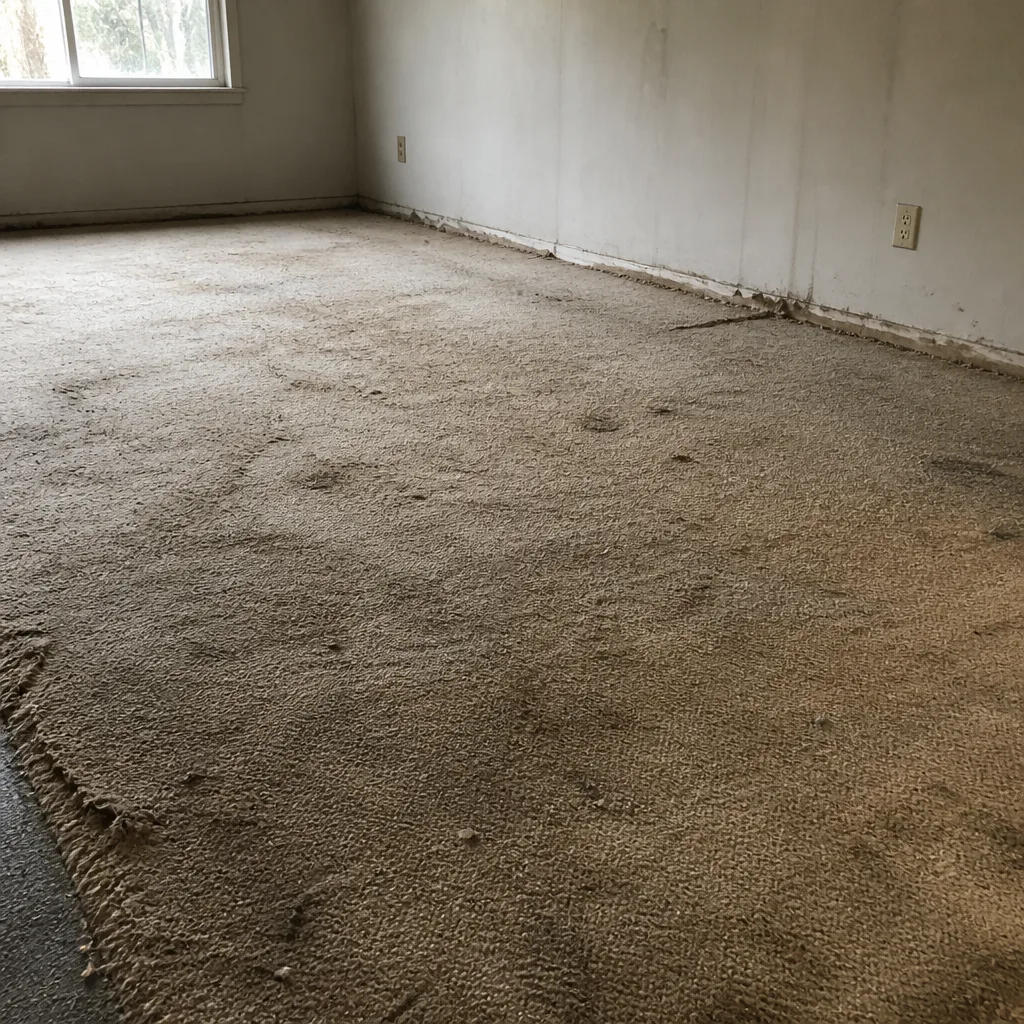 Before
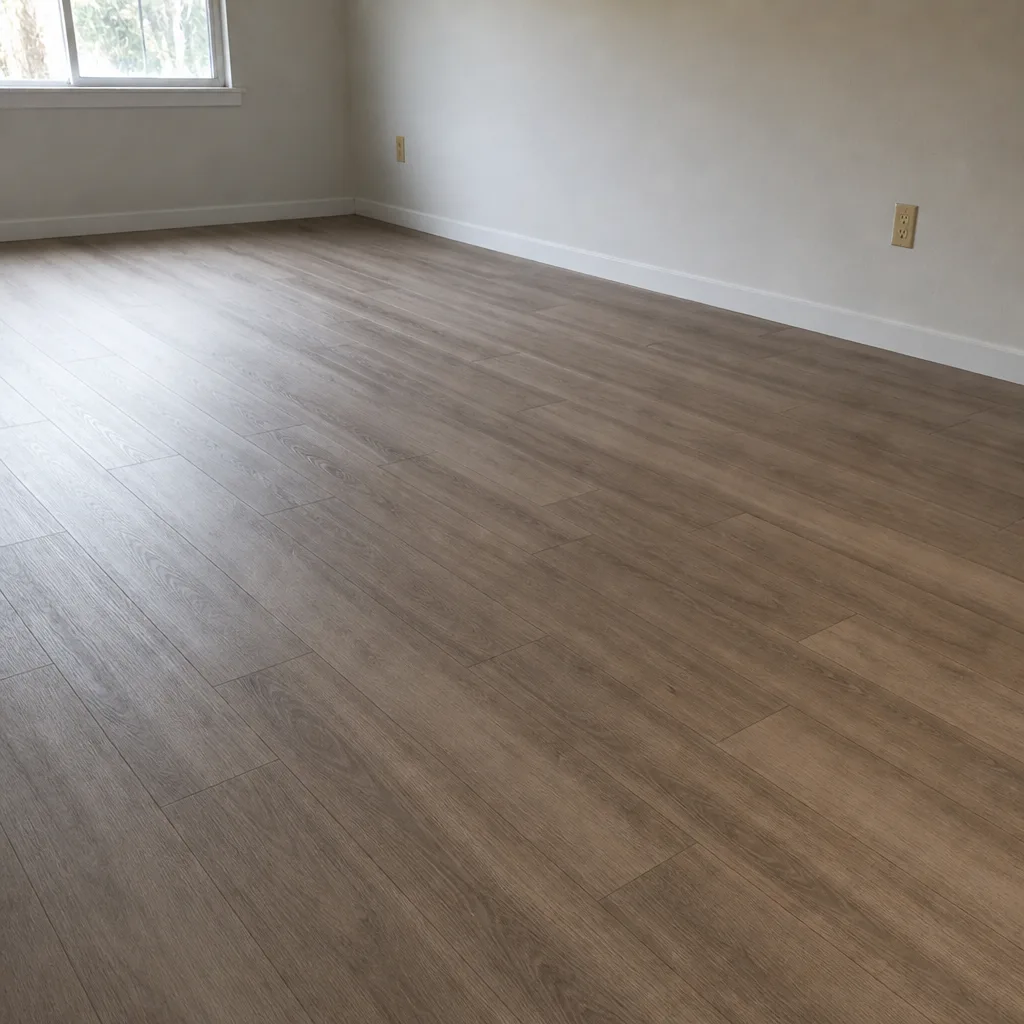 After
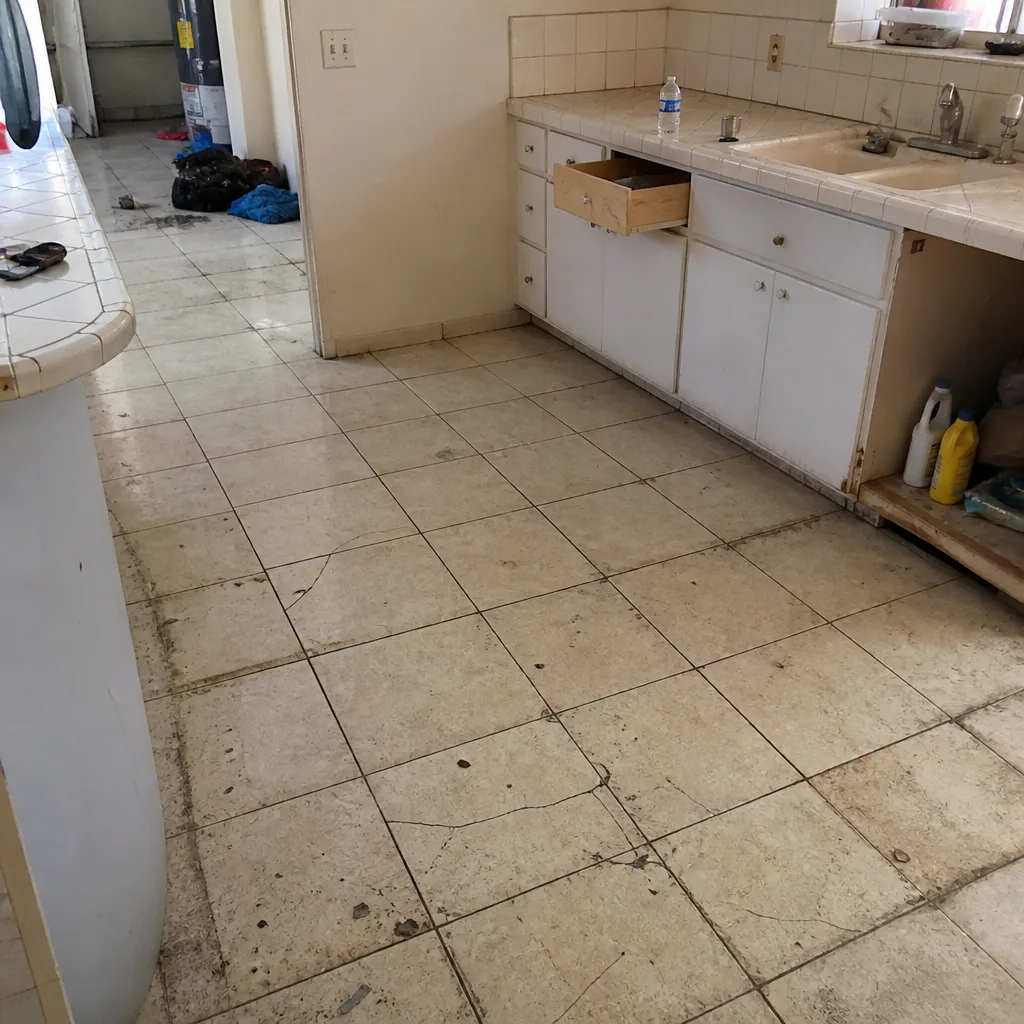 Before
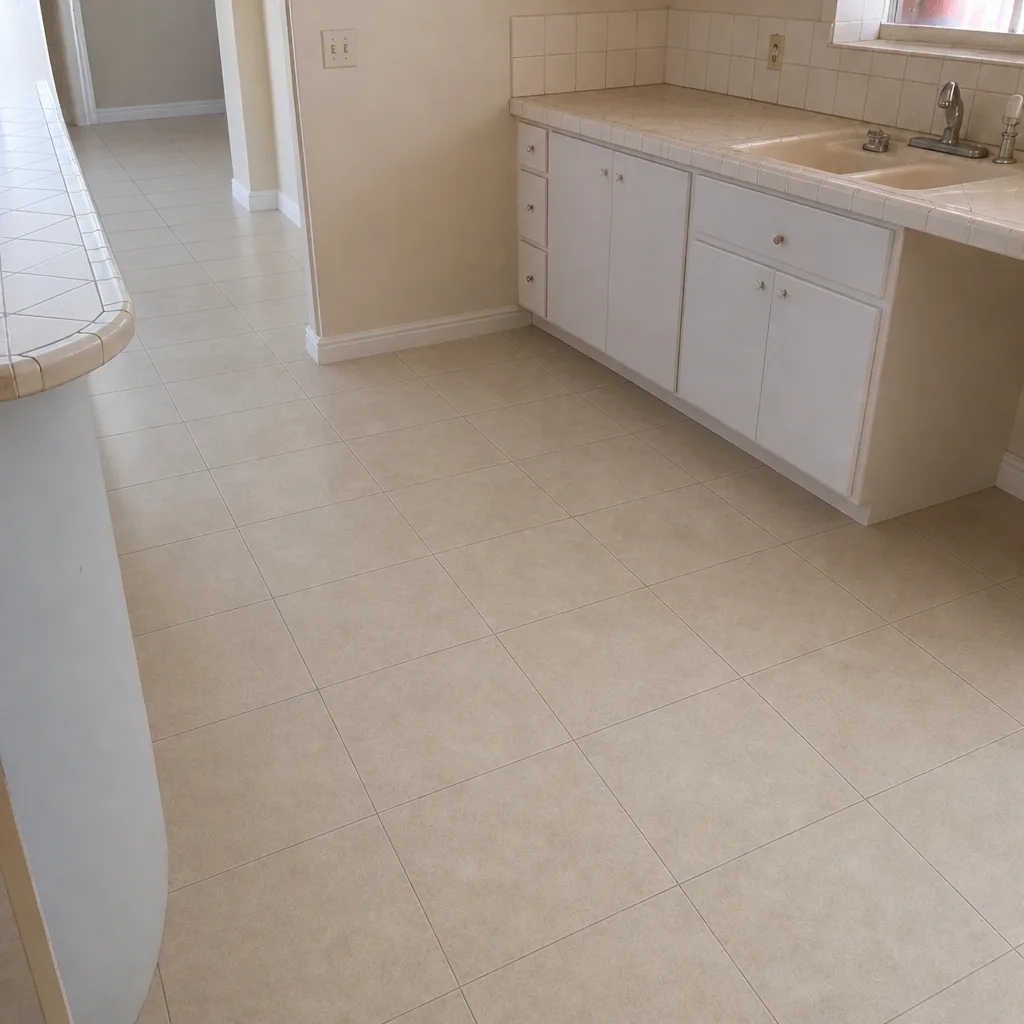 After
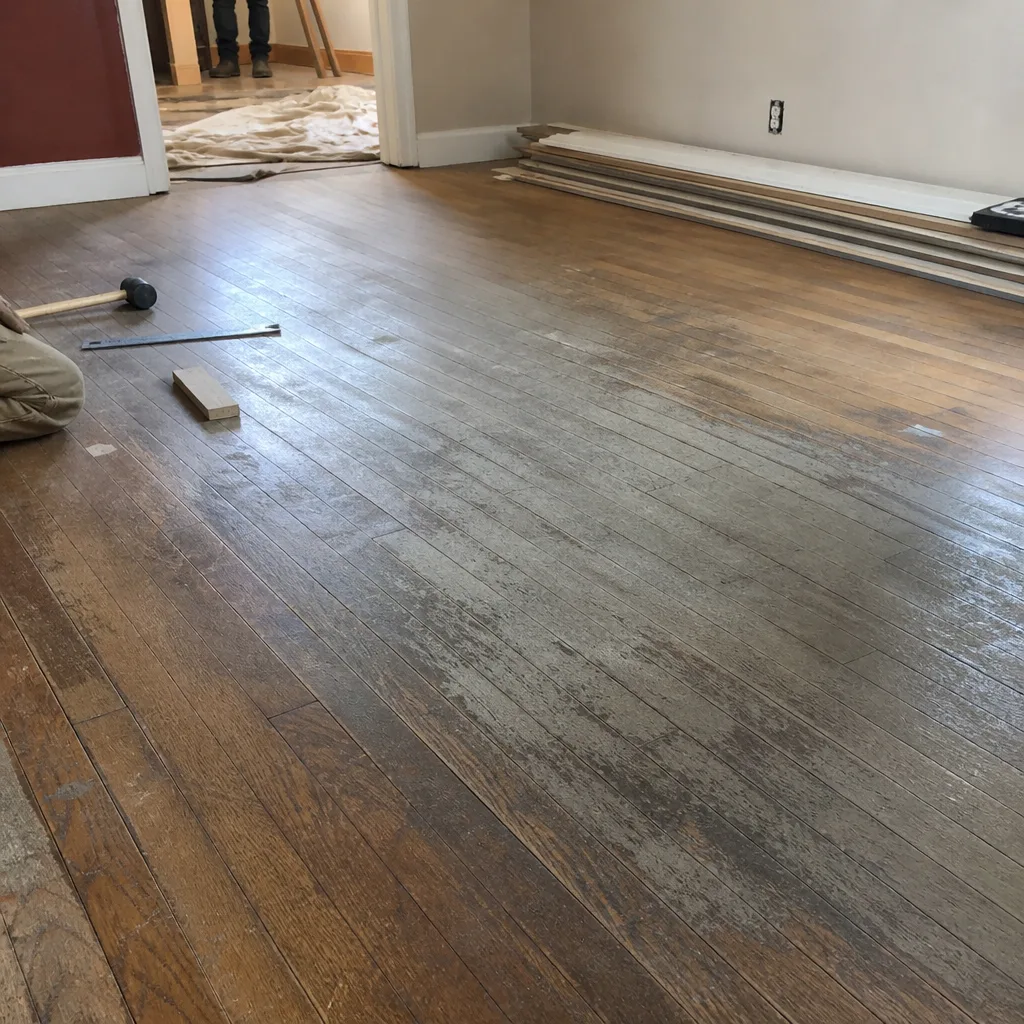 Before
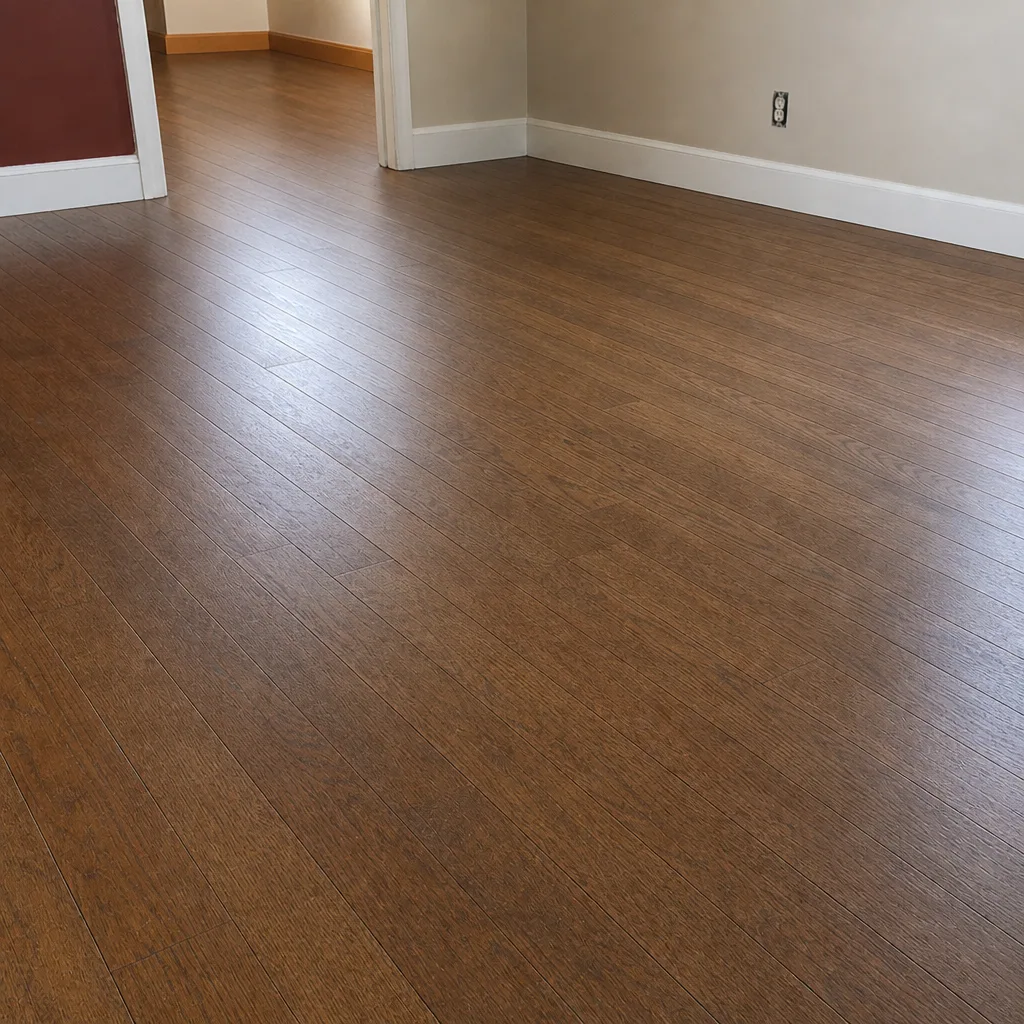 After
When to Call a Professional
Call for a free in-home estimate any time you’re considering carpet, tile, or hardwood refinishing and want a real number tied to your actual rooms. Scenarios that warrant a call: you’ve pulled a corner of old carpet and found something you don’t recognize underneath; your existing hardwood is dull and you’re not sure whether refinishing is possible; you’re tiling a kitchen or bathroom and want a moisture reading before you commit; or two other estimates came back with wildly different scopes and you want a third. Flooring Spring Valley offers free estimates in Spring Valley, and the visit is diagnostic from the first minute. Call (888) 350-5054 to schedule yours. We answer 24/7. Fast dispatch from 7am to 7pm, Sunday through Friday.
Frequently Asked Questions
Yes. The in-home estimate is free, and you’re under no obligation to book the install. The estimator measures your rooms, inspects the subfloor, checks moisture, and writes a fixed price; that’s the whole visit. Call (888) 350-5054 to schedule yours.
Most estimate visits run somewhere between 45 minutes and a couple of hours, depending on how many rooms are involved and whether the subfloor needs to be opened up. Larger Spring Valley homes with multiple flooring types can run longer because each transition has to be inspected. Call (888) 350-5054 for an idea of timing on your specific job.
The estimator measures every room; that’s part of the job. You’ll still want to do your own quick pre-measure so you can cross-check the totals against your sketch. The two numbers should be close, and if they aren’t, you’ll have the context to ask why. Call (888) 350-5054 to book the visit.
If the subfloor has real problems, the estimator will document them and the price will reflect the prep work needed, not a surprise later. Flatness, deflection, and stability are all things the estimator inspects, and any required fix belongs in the written scope. Call (888) 350-5054 to get a professional read on your subfloor.
Every job is priced per job by the written estimate, so the number depends on square footage, subfloor condition, prep work, product choice, and transitions. A reasonable first step is to know the ranges for the products you’re considering; the estimate converts that into a fixed number for your home. Call (888) 350-5054 for an exact quote, and estimates are free.
Yes. Hardwood refinishing is a distinct service and a legitimate first conversation if you already have hardwood in the home. Whether your floor can be refinished depends on the thickness of the wood and its condition, which the estimator checks at the visit. Call (888) 350-5054 to schedule a refinishing estimate in Spring Valley.
The Bottom Line
A free in-home flooring estimate is a diagnostic appointment. The estimator inspects the subfloor, checks moisture at floor level, confirms transitions and clearances, and measures every room so the written number holds through install. Your job is to cross-check the square footage with your own pre-measure, ask the scope questions that expose what’s not included, and insist on a fixed-cost alternative to any allowance. Normalize two estimates against each other before comparing totals. In Spring Valley, desert climate still means real moisture questions, so a floor-level reading belongs in every estimate. The written estimate sets the final price, and the visit itself is free.
Written by the team at Flooring Spring Valley.