
Last updated November 18, 2026
 Hardwood
 Engineered hardwood
 Luxury vinyl plank
 Laminate
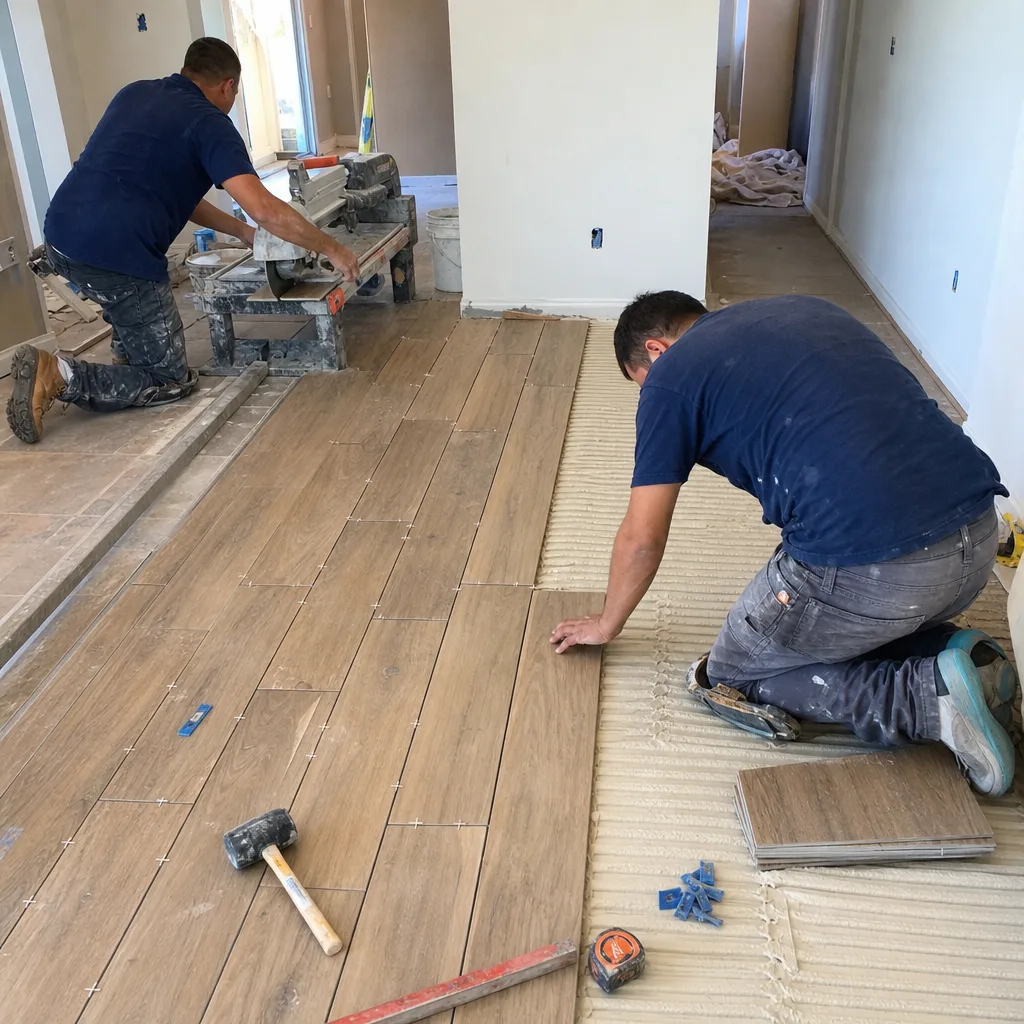
 Porcelain tile
 Carpet
 Shaw
 Mohawk
 COREtec
 Pergo
Free in-home measure and written estimate: Shaw, Mohawk, COREtec and Pergo lines compared on your own rooms, with carpet, tile, vinyl plank, laminate and hardwood laid out side by side
Get your free estimateFlooring Installation Questions to Ask Before You Sign
Most homeowners walk into a flooring decision with two questions: how much, and how long. The questions that actually protect you are different. They’re about who is responsible when the subfloor turns out to be uneven, whose warranty covers an installation that fails, and what happens when the material needs to be ordered a second time. Asking “what’s your warranty?” is nearly useless without the follow-up: “and whose warranty covers installation defects specifically, yours or the manufacturer’s?” This guide covers the questions that separate a smooth Spring Valley renovation from a costly dispute, and we’ll show you exactly how to get the answers in writing.
Quick Answer
The questions that matter most before you sign a flooring contract are about responsibility, not price: who is liable for subfloor failures, whether the warranty covers installation defects or only the material, what the overage policy is on materials, and how change orders are documented. Get each answer in writing, in the contract, before you sign. A clear quote with a fair price and vague wording is a bigger risk than a slightly higher quote with specific language.
Styles & brands we work with
- Hardwood
- Engineered hardwood
- Luxury vinyl plank
- Laminate
- Porcelain tile
- Carpet
- Shaw
- Mohawk
- COREtec
- Pergo
Table of Contents
- 1. Who Is Responsible for Subfloor Failures?
- 2. Whose Warranty Covers Installation Defects?
- 3. Will the Same Crew That Starts Your Job Finish It?
- 4. What’s the Material Overage Policy?
- 5. What Voids the Manufacturer’s Warranty?
- 6. How Are Change Orders Handled?
- 7. How Does Spring Valley’s Climate Affect the Installation?
- 8. What Contract Language Should You Look For?
1. Who Is Responsible for Subfloor Failures?
The installer is almost always responsible for subfloor prep, and the manufacturer is almost never responsible for it. That’s the short answer, and it’s the answer most homeowners don’t get in writing. When a floor fails because the subfloor wasn’t level or wasn’t dry, the manufacturer will typically point to the installer’s prep, and the installer will typically point to the product instructions. The homeowner is often caught between them.
Here in Spring Valley, subfloor issues come up more than you might expect. The region’s dry desert climate and the way homes are built on slab foundations mean concrete moisture and flatness matter a great deal. Whether a slab was poured to a level surface, whether a vapor barrier was correctly placed under a new install, and how the concrete has cured all feed into the conversation. We’ve seen plenty of jobs where the finished floor looked perfect for a year and then cupped, buckled, or popped loose because the prep question was never settled up front.
So the question to ask, specifically, is this: “Who is responsible for addressing subfloor conditions, and what is the process if the subfloor needs work that wasn’t anticipated in the original quote?” The right answer names the installer’s process for checking flatness and moisture, states what happens if issues are found, and confirms that any additional prep work will come as a written change order, not a verbal “we’ll have to add $X for that.”
- Ask whether the installer checks subfloor flatness and moisture before quoting.
- Ask who pays for unexpected prep work, and how that’s documented.
- Ask whether the installer’s warranty explicitly names subfloor preparation as their responsibility.
- Ask what happens if the floor fails and the manufacturer blames the prep.
Getting this in writing is the single most important protection you have. A flooring installation in Spring Valley is a significant purchase, and the difference between a smooth project and a dispute often comes down to whether this question was asked before the work started. If you want to see how we approach it, our Flooring Spring Valley service pages spell out our process step by step.
2. Whose Warranty Covers Installation Defects?
Manufacturer warranties cover the material. They do not cover how it was installed. That’s the gap that catches most homeowners. If Shaw laminate starts to peel or Mohawk carpet shows a seam separation, the manufacturer will ask how the floor was installed before they’ll honor the claim. If the installation was done wrong, the manufacturer warranty doesn’t apply, and you’re back to asking the installer to make it right.
The question to ask, then, is: “Does your warranty cover installation defects, and can I see it in writing?” A good answer specifies the length of the installation warranty, what it covers, whether it’s transferable, and how to file a claim. A bad answer is a verbal “don’t worry, we stand behind our work.” That sentence means nothing in a dispute.
Ask for both warranties together:
- The manufacturer’s written warranty. Ask for the actual document, not a summary. Read the exclusions carefully, especially the sections on subfloor, moisture, and installation method.
- The installation warranty. Ask for the length, coverage, and process. Get it attached to your contract.
- The warranty handoff. Ask who you call if something goes wrong, the manufacturer or the installer. You want a clear answer.
In our experience, most flooring disputes aren’t about the product. They’re about the space between the product warranty and the installation warranty, and who fills it. Asking this question up front takes about five minutes and can save you months of back-and-forth. If you’re weighing a carpet project, our guide to carpet installation covers how the warranties typically stack up.
3. Will the Same Crew That Starts Your Job Finish It?
Crew continuity is one of the least-asked and most-consequential questions in flooring. A job that starts with one crew and finishes with another often shows it, especially at seams, transitions, and edges where materials meet. Each crew has its own habits and its own tolerance for detail.
Ask: “Will the same crew that starts my install finish it, and does the quote change if it doesn’t?” The follow-up matters more than the first part. A contractor who says “we use a rotating crew” and doesn’t adjust the price when the crew changes is telling you something. A contractor who says “the same lead installer will be on site the entire time, and if that changes for any reason, we’ll let you know before work begins” is giving you a real answer.
Ask specifically:
- Who is the lead installer on your job, and who is on the crew?
- Is the crew a subcontractor or staff? Both are legitimate, but you want to know.
- What happens if the lead installer is unavailable mid-job?
- Will the same crew return for any follow-up work under warranty?
Flooring installations are best when there’s one point of accountability from the measure through the final walkdown. Our technicians have up to 14 years of experience, and the lead on your job is the same person who signs off on the finished floor. That’s not a guarantee of perfection; it’s a guarantee of clarity.
4. What’s the Material Overage Policy?
Every flooring quote should include material above the measured square footage, because cuts, closets, transitions, and mistakes eat into the material. The question is: how much, and who owns the leftover?
Ask: “How much material are you ordering above the measured square footage, and who keeps the leftovers?” The answer should be specific. Carpet manufacturers typically call for a certain overage to account for pattern matching and seams; hard surface products like Pergo laminate or COREtec planks need enough overage to handle cuts and allow for future repairs. A contractor who can’t give you a clear number is guessing.
The leftover question is separate and equally important. Ask:
- How many boxes or rolls will you order above the measured area? The answer should be a specific percentage or count, not “we’ll order extra.”
- What happens to the leftover material? Do you keep it, or does the contractor? Either is fine, but get it in writing.
- Where will the leftover be stored? If you’re keeping it, you need to know it’ll be dry and accessible for future repairs.
- What’s the return policy on unused material? Ask what happens if the install uses less than expected and whether the supplier accepts returns. Don’t assume.
Keeping the leftovers is often the right move for homeowners. If a plank gets damaged in five years, having matching material on hand saves a much larger repair. If you don’t want to store it, ask whether the contractor will take it back and whether any credit flows to you.
5. What Voids the Manufacturer’s Warranty?
Manufacturer warranties come with conditions, and most homeowners never read them. Common conditions include installation method, subfloor preparation, use in specific environments, and maintenance. If the contractor’s practices don’t meet those conditions, the warranty is technically void before the job even starts, no matter what the paperwork says.
Ask: “What specific installation practices does this product’s warranty require, and does your process meet them?” A contractor who knows the product line will answer without hesitation. One who doesn’t knows it won’t.
Common warranty conditions to ask about:
- Installation method. Whether the product needs to be glued, floated, or stapled matters, and the warranty specifies.
- Subfloor preparation. Most hard surface warranties require a specific level of subfloor flatness and cleanliness.
- Acclimation. Many products need to sit in the home before installation, and the required time varies by product and by the home’s conditions. Ask whether the contractor’s schedule includes it.
- Moisture limits. Whether it’s a concrete slab or a wood subfloor, most warranties set limits on moisture content. Ask how those are tested before installation.
- Maintenance. Some warranties require specific cleaning products or methods; using the wrong ones can void coverage for finish issues.
We won’t quote a number of days or a moisture percentage here, because those depend on the product and the home. What we will say is that this is exactly what we check at the estimate visit, before the written quote goes out. If you’re considering a tile flooring installation, Daltile has its own installation requirements, and we walk through them before we sign anything.
6. How Are Change Orders Handled?
Change orders are where the friction usually shows up. A change order is any addition or modification to the original scope: extra prep work, a different underlayment, a repaired joist, an unexpected room not in the original measurement. How a contractor handles change orders tells you more about their business than the sales pitch does.
Ask: “How do you document changes to the scope, and what happens if the subfloor requires prep work that wasn’t in the original quote?” The answer should be specific: the change gets priced in writing, approved in writing, and added to the contract before the work proceeds.
Specific contract language to look for:
- “Any work not described in this estimate will be priced in a written change order and approved by the homeowner before proceeding.” This is the clause you want. It means no surprise charges and no work performed without your sign-off.
- “Subfloor prep included up to [defined scope].” If the quote includes some prep but not all, you want to know exactly where the line is. If there’s no defined scope at all, ask why.
- “Verbal changes are not binding.” Good. This protects both sides and forces clarity.
- “If additional prep is required, we will pause work and provide a written change order within [timeframe].” A clear process for the pause is worth asking about.
- Payment schedule tied to milestones, not to a verbal request. You should know when each payment is due and what triggers it.
The household reality is that most subfloor surprises happen in older homes or in rooms where a previous install left a mess behind. Getting the change-order process in writing before the first box is opened is worth more than any discount you can negotiate on the day.
7. How Does Spring Valley’s Climate Affect the Installation?
Spring Valley’s dry desert climate is generally kind to flooring compared to humid coastal regions, but it creates its own set of conditions. The low humidity means wood floors can dry out and shrink if the home isn’t properly humidified; it also means some products perform differently than the manufacturer’s baseline assumes. Indoor humidity swings with the seasons, and the floor adjusts to the home’s conditions, not to the warehouse where it was stored.
Ask: “How do you account for Spring Valley’s climate in the installation, and what products do you recommend for the rooms with the most temperature and humidity variation?” A good contractor will talk about products by room: what works well in the kitchen, what works in bedrooms, what works on a slab. We keep Shaw and Mohawk carpet lines in mind for bedrooms where comfort matters, and Pergo or COREtec in the rooms where water resistance is the priority.
Other climate-related questions worth asking:
- What’s the recommended indoor humidity range for the product being installed?
- How does the product’s warranty handle the home’s humidity conditions?
- What’s the process for checking concrete moisture before installing over a slab?
- Does the product need to acclimate, and if so, how does that fit your schedule?
These are the questions that separate a floor that lasts from one that doesn’t. None of them are about price. All of them are about preparation.
8. What Contract Language Should You Look For?
The contract is where all your good questions either become protection or disappear. A written estimate and a signed contract aren’t the same thing, and the language in the contract matters more than the verbals you heard during the estimate.
Look for:
- A written estimate with line items. Not “furnish and install flooring,” but specific: product, brand, square footage, prep, removal, disposal, transitions, trim.
- A defined scope for subfloor prep. What’s included, and what triggers a change order.
- The installation warranty in writing. Length, coverage, claim process, contact.
- The overage policy. How much is being ordered, and who keeps the leftovers.
- Payment schedule tied to milestones. Not “50% at signing,” but a schedule that reflects the work actually performed.
- A change-order clause. Written approval required before any additional work proceeds.
- A completion walkdown. A signed checklist of what was done, what was inspected, and what to do if issues come up.
If any of these are missing from a quote, ask for them. A contractor who can’t produce a written contract with these elements is telling you something about how they handle disputes.
Common Mistakes to Avoid
- Asking about price first and responsibility second. Price is easy to compare; responsibility isn’t. A quote that’s $300 cheaper but leaves the subfloor prep unclear can cost you far more in a year.
- Accepting a verbal answer to the warranty question. If the answer isn’t in the contract, it doesn’t exist. Ask for the warranty documents in writing.
- Not asking who keeps the leftover material. Leftovers are your repair fund. If the contractor takes them home, you’ve lost a small insurance policy for the floor you just paid for.
- Skipping the acclimation question. Whether a product needs to sit in your home before installation depends on the product and the conditions. Ask whether it’s part of the schedule.
- Assuming the manufacturer warranty covers installation. It usually doesn’t. The gap between the two warranties is where most disputes happen.
- Not asking about crew continuity. A floor that’s started by one crew and finished by another often shows it. Ask who’s on your job from start to finish.
- Accepting a verbal change order. “We’ll add a little for the extra prep” is not a contract. It’s a future argument.
See the difference
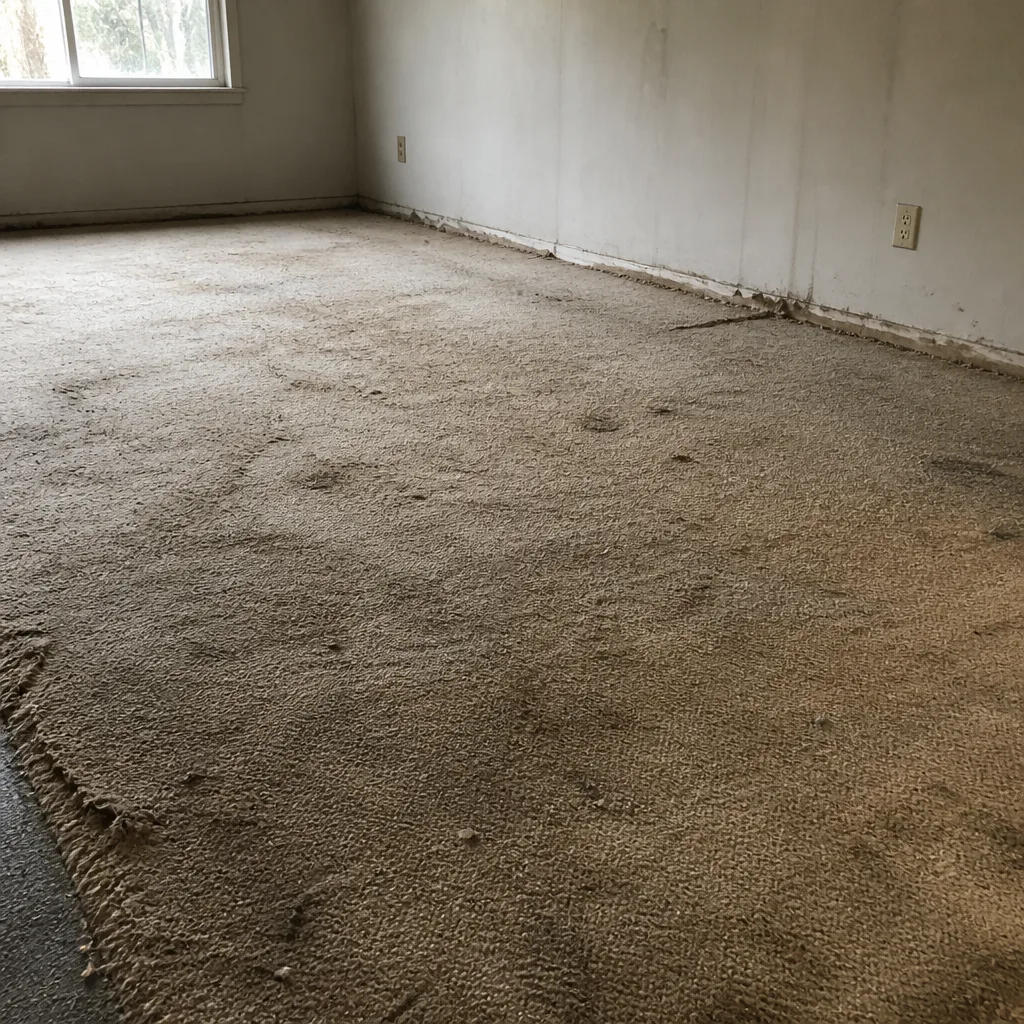 Before
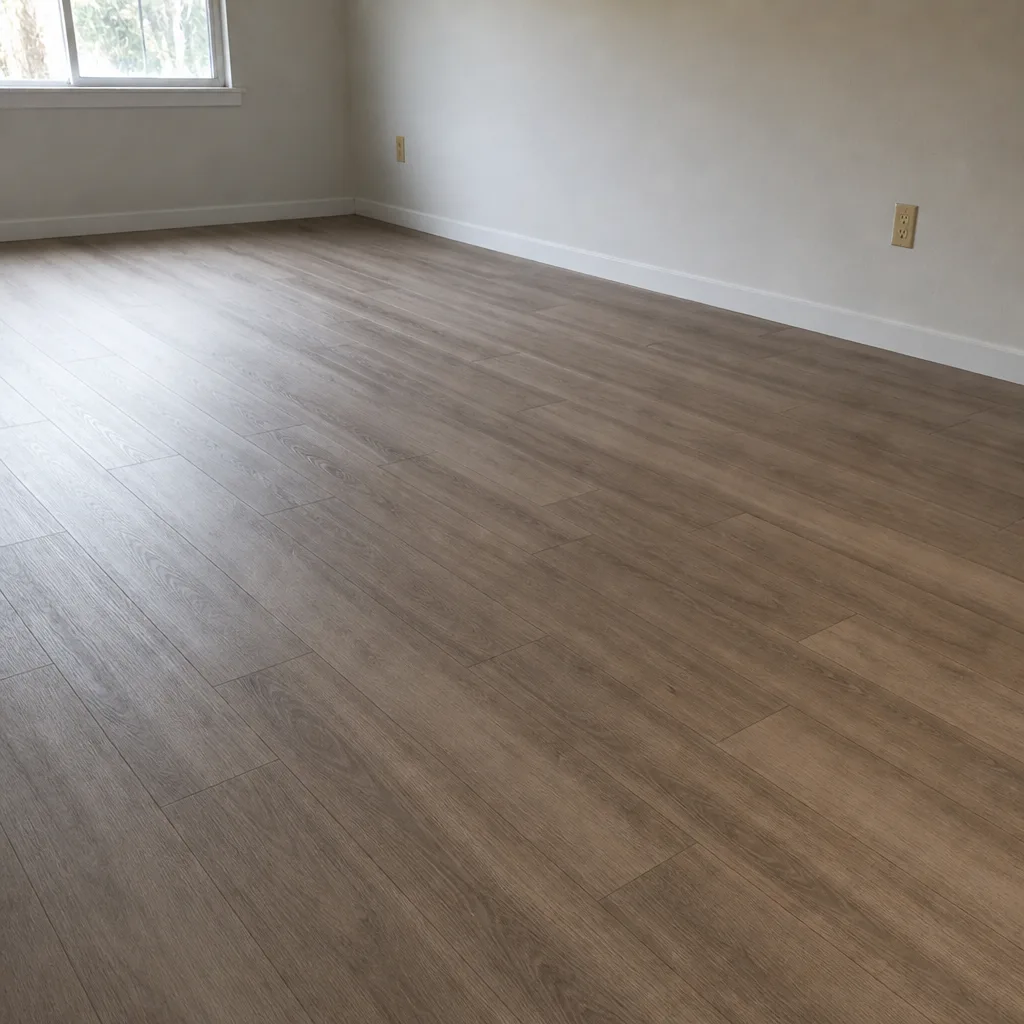 After
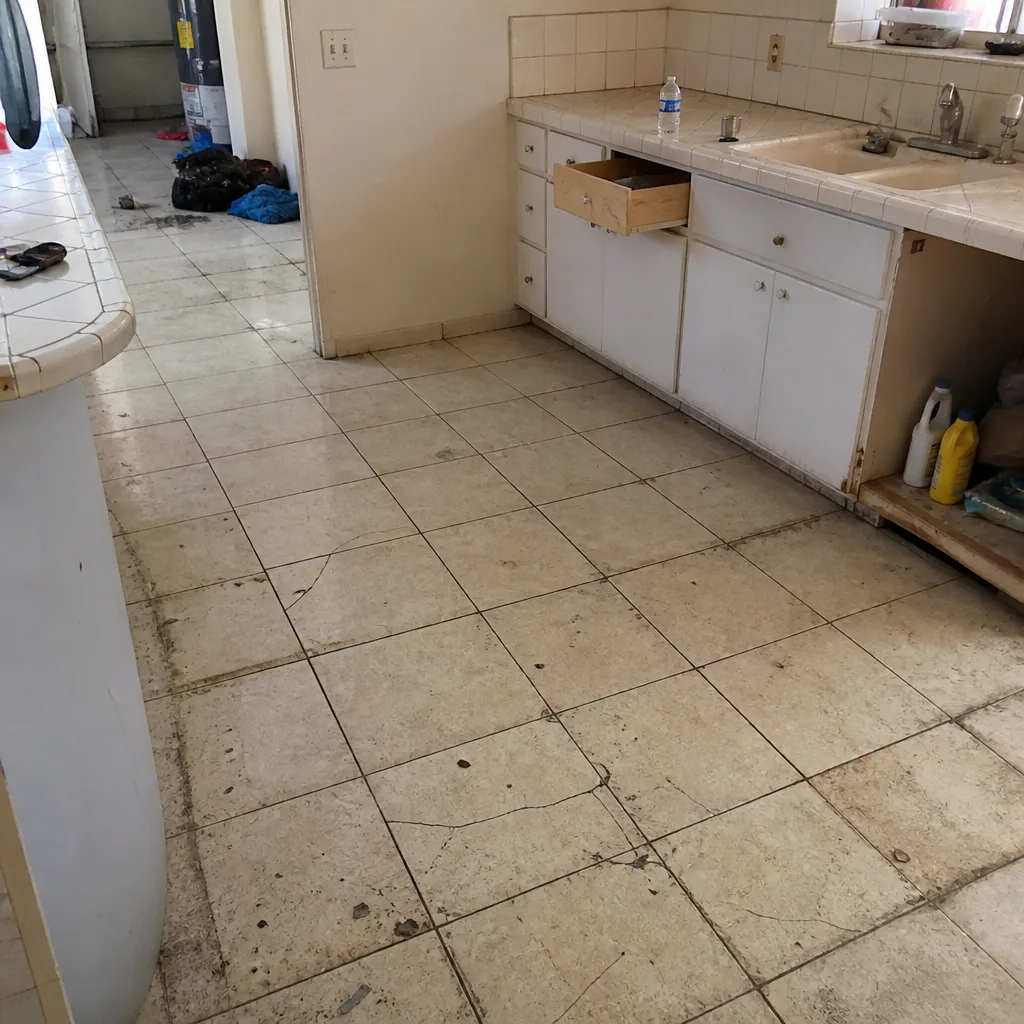 Before
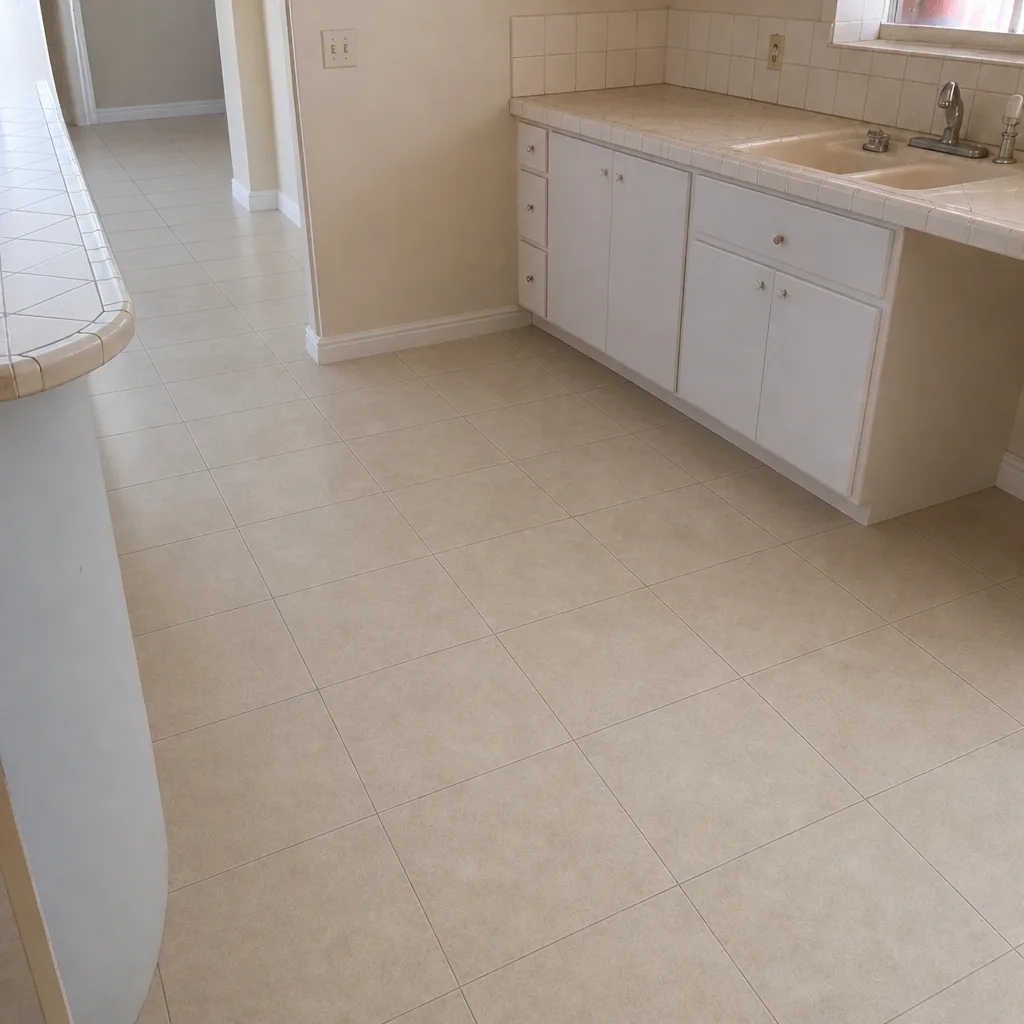 After
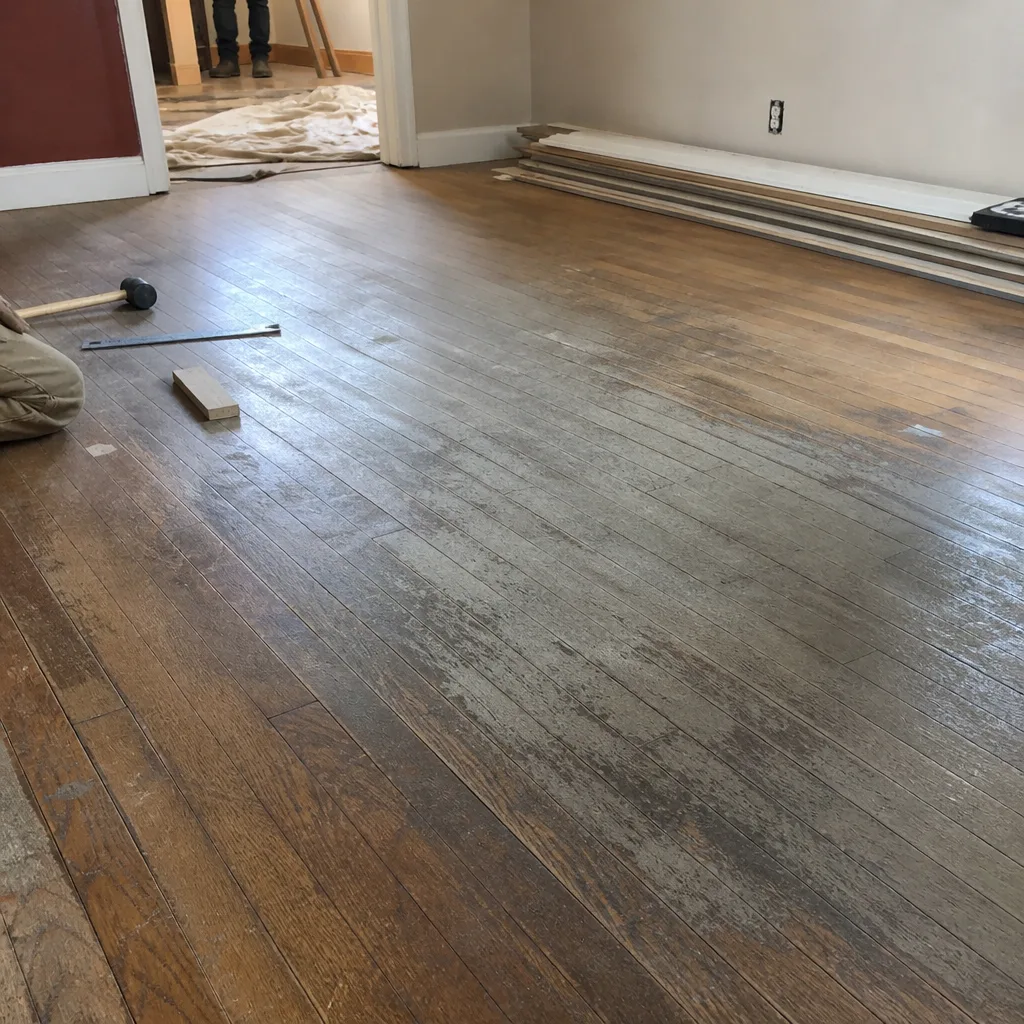 Before
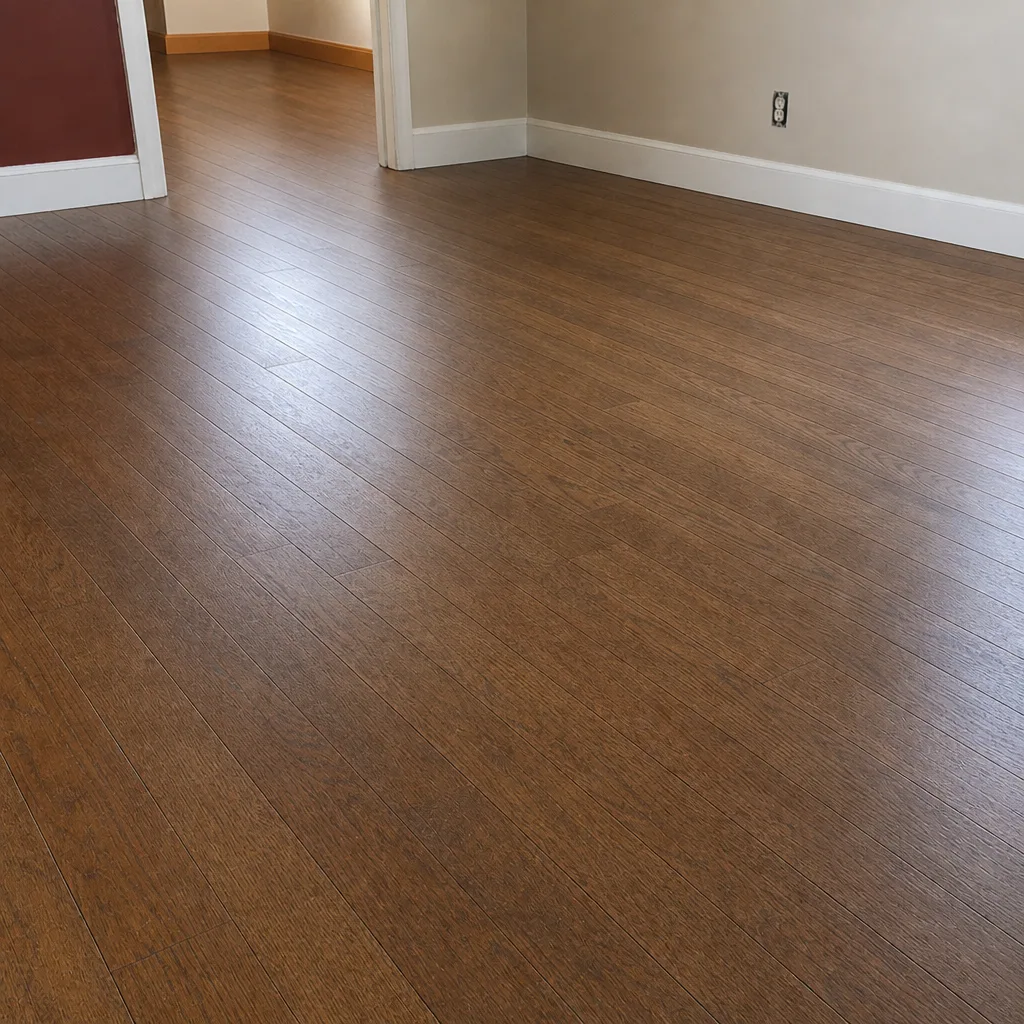 After
When to Call a Professional
Some questions are best answered at the estimate visit, by someone who can see the subfloor, check the moisture, and look at how the room actually gets used. If you’re replacing flooring in a bath or kitchen, if you’re refinishing existing hardwood, or if you’re doing a whole-home project and need to keep the phases coordinated, it’s worth having the conversation with a professional before you commit. Flooring Spring Valley offers free estimates in Spring Valley. Call (888) 350-5054. We answer 24/7. Fast dispatch from 7am to 7pm, Sunday through Friday. The written estimate sets the final price, and every one of the questions above gets answered in it.
Frequently Asked Questions
The most important question is who is responsible for subfloor failures. Installer or manufacturer, that gap is where most disputes start, and getting the answer in writing before work begins is the best protection you have. Call (888) 350-5054 to walk through it with us – estimates are free.
No. Manufacturer warranties cover the material, not how it was installed. You need a separate installation warranty from the contractor, in writing, that spells out what’s covered and how to file a claim. Call (888) 350-5054 for an exact quote – estimates are free.
It depends on the product, the room, and the subfloor. The written estimate you receive at the free in-home measure sets the final price. Call (888) 350-5054 to schedule yours.
Ask this question directly, and ask what happens if the answer is no. A clear contractor will name the lead installer and confirm continuity, or explain exactly how a change would be handled. Call (888) 350-5054 to talk through your job – estimates are free.
It should trigger a written change order before any additional work proceeds. That’s the language to look for in the contract, and it protects you from surprise charges. Call (888) 350-5054 for a free estimate that spells out the subfloor scope.
Often yes, and it’s worth asking before you replace. Whether a floor can be refinished depends on the thickness of the wood and its condition, which we check at the estimate visit. Call (888) 350-5054 to schedule a free assessment.
The Bottom Line
The best flooring decision you can make isn’t about which brand to choose – it’s about which questions you ask before you sign. Subfloor responsibility, warranty coverage, crew continuity, material overage, warranty conditions, and change-order language all matter more than the price per square foot. Get the answers in writing, and the price becomes a smaller part of a bigger, safer picture. If you’re ready to walk through these questions with someone who can see the floor, call (888) 350-5054 for a free estimate with Flooring Spring Valley.
Written by the team at Flooring Spring Valley.