
Last updated November 18, 2026
 Hardwood
 Engineered hardwood
 Luxury vinyl plank
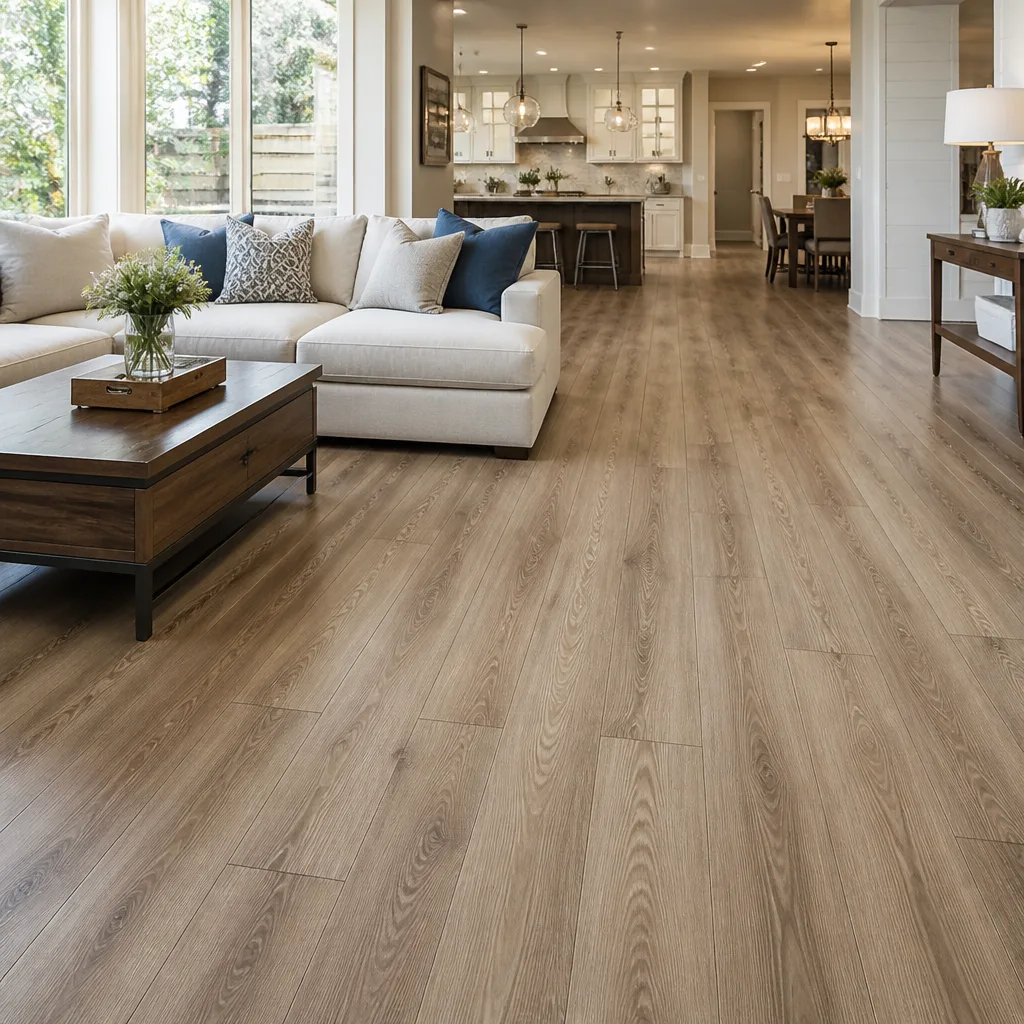 Laminate
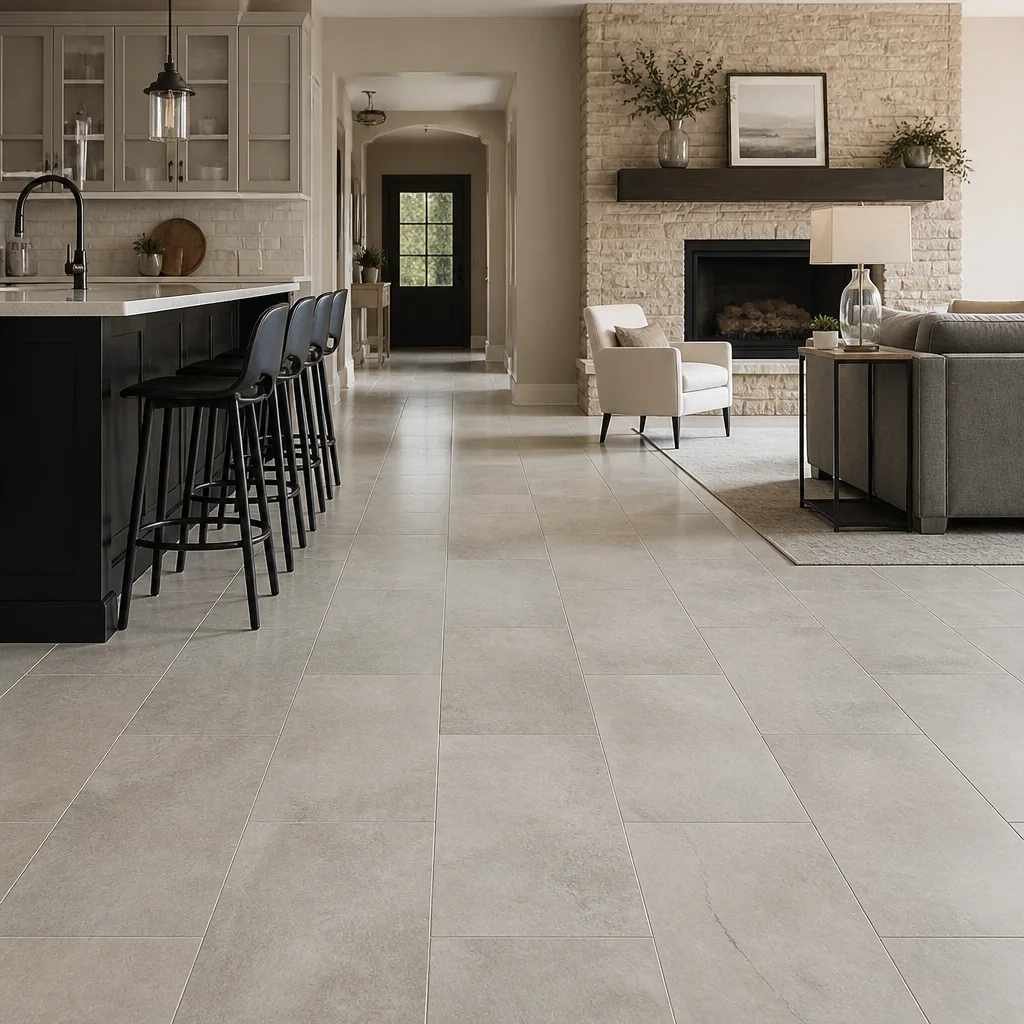 Porcelain tile
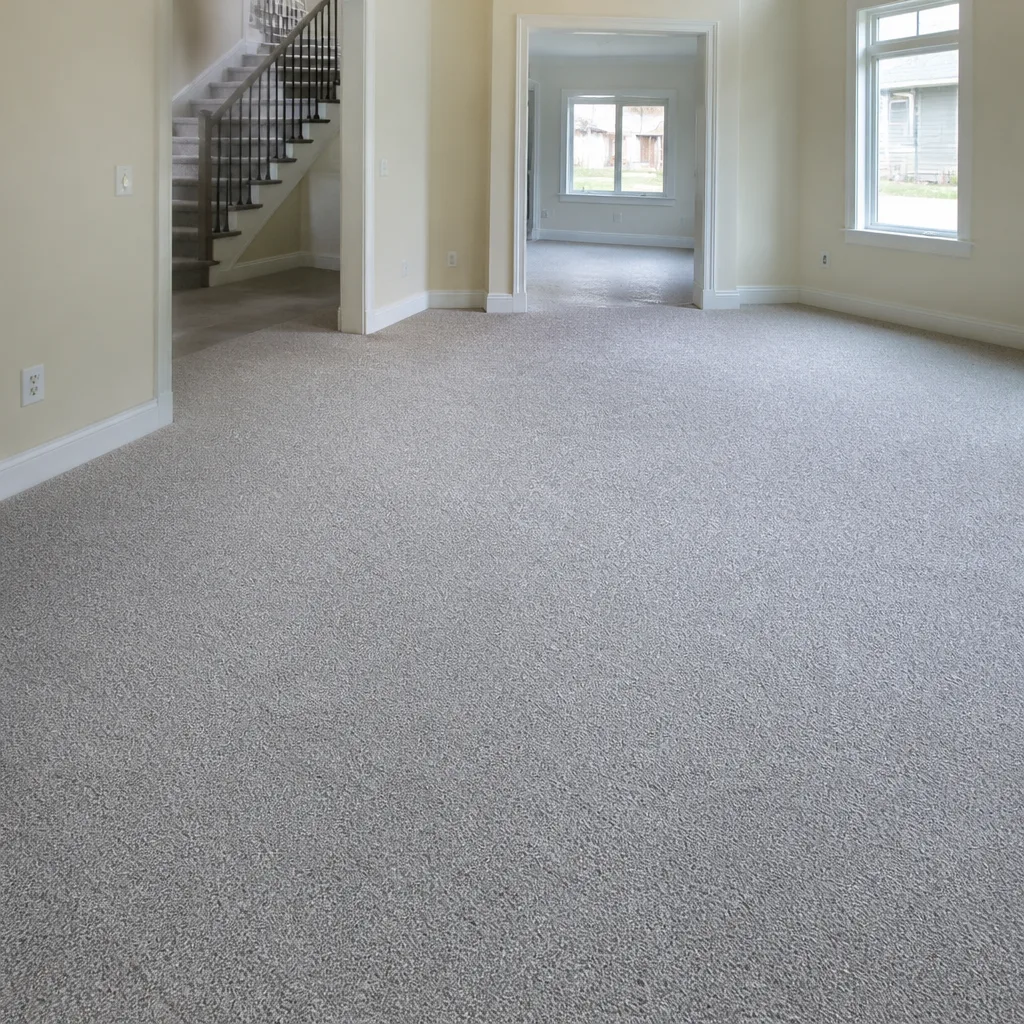 Carpet
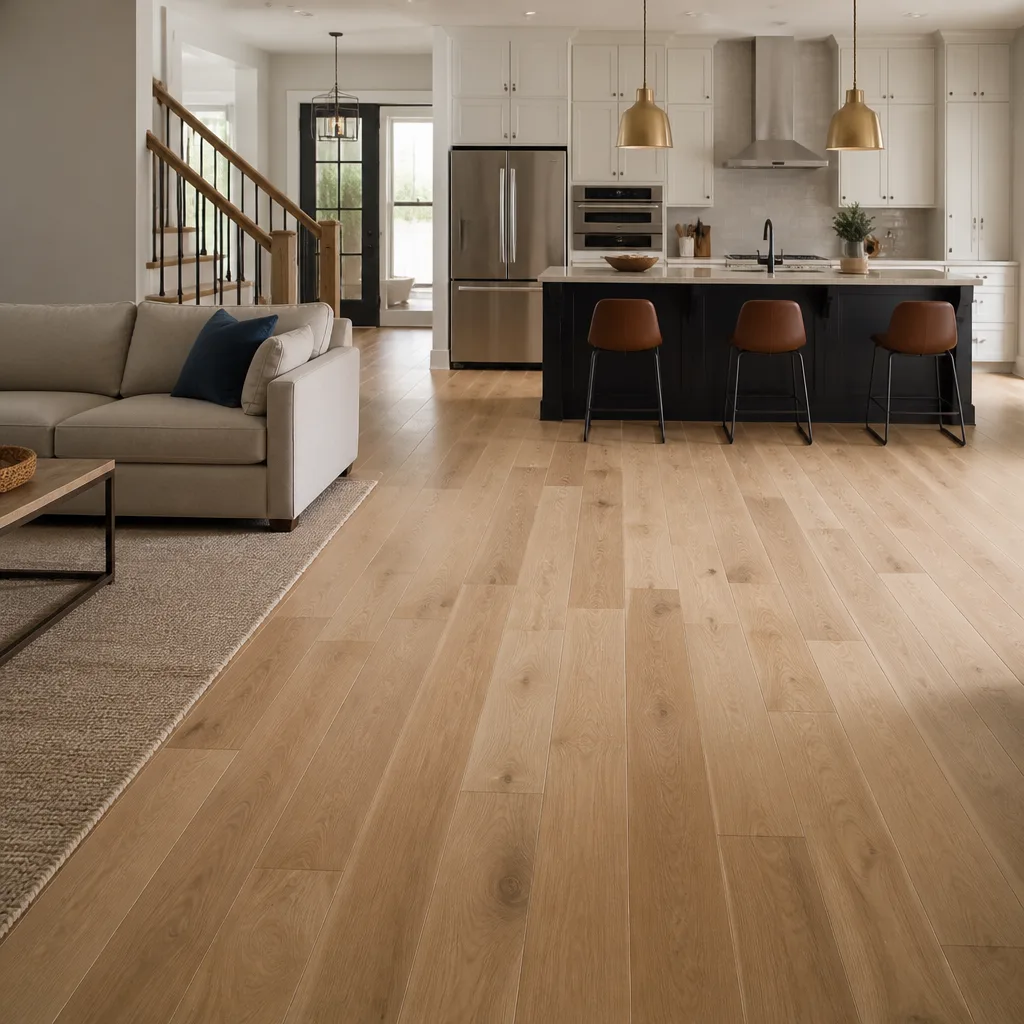
 Shaw
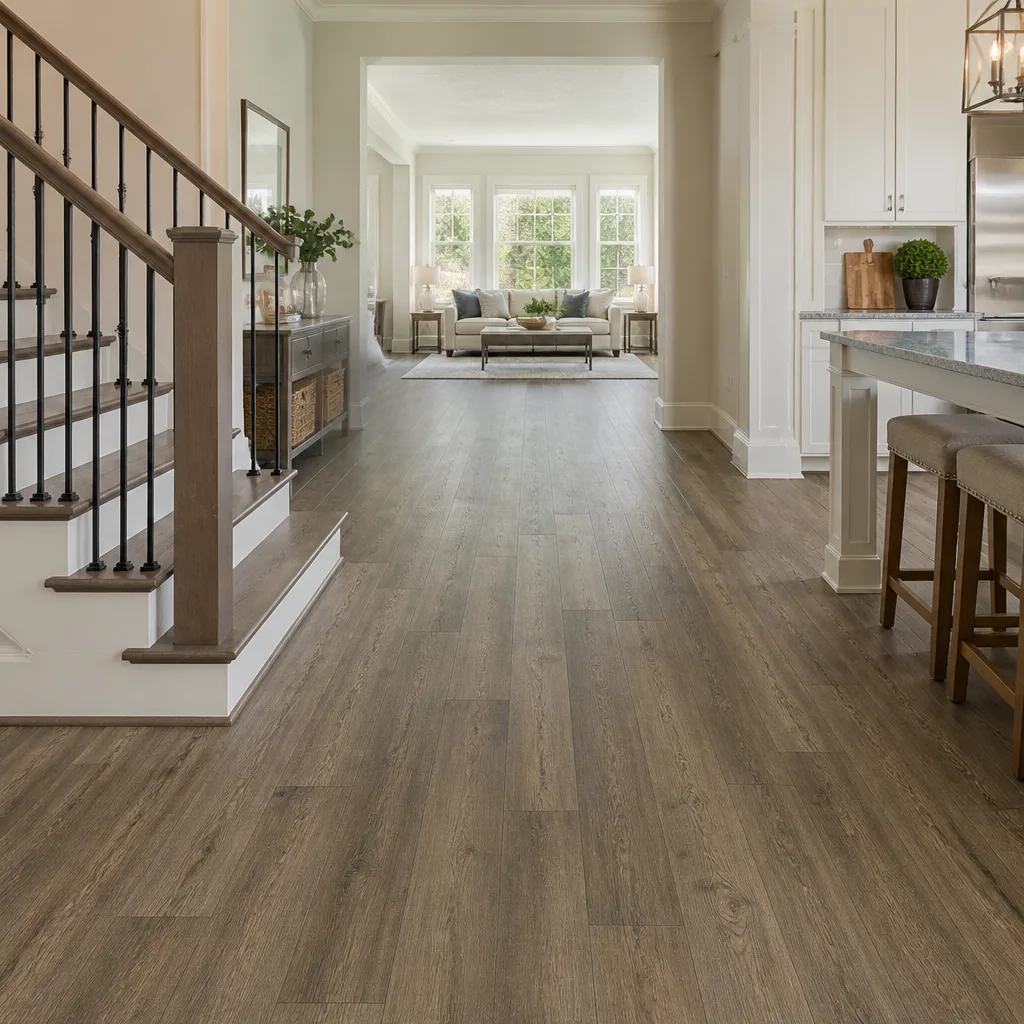
 Mohawk
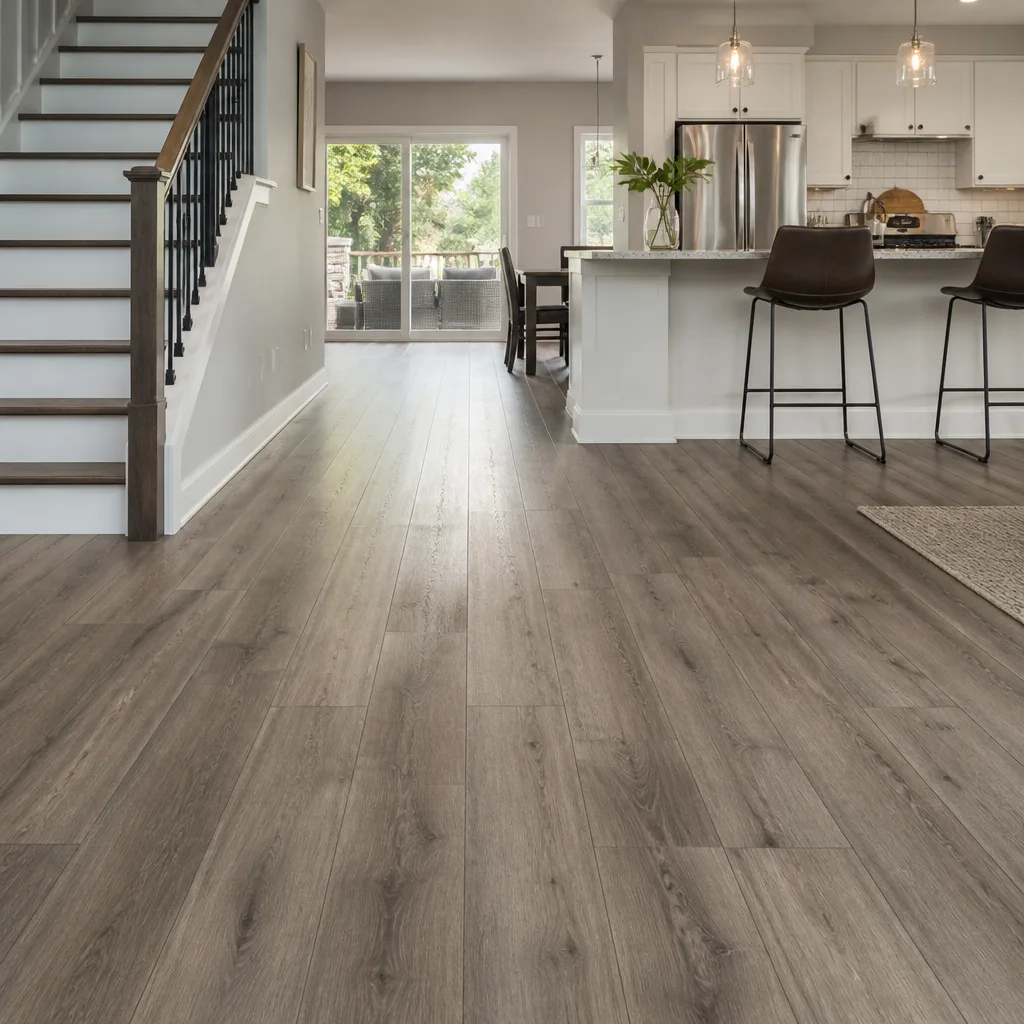
 COREtec
 Pergo
Free in-home measure and written estimate: Shaw, Mohawk, COREtec and Pergo lines compared on your own rooms, with carpet, tile, vinyl plank, laminate and hardwood laid out side by side
Get your free estimateFlooring Cost Breakdown: The Spring Valley Homeowner’s Reference for 2026
Here’s the part nobody puts on the sales tag. A vinyl plank listed at $3.50 per square foot can land near $7.00 per square foot once the floor is actually installed, and that gap isn’t price gouging. It’s prep, demolition, disposal, trim, and the small line items that only show up after the existing floor comes out. The per-square-foot sticker is the material. The installed cost is the whole project. In this reference, we’ll walk through exactly what drives that gap in Spring Valley, show you itemized ranges for every major flooring type, and explain the questions to ask before you sign anything.
Quick Answer
Installed flooring in Spring Valley for 2026 typically runs roughly $4 to $12 per square foot for carpet, $6 to $16 for luxury vinyl plank and laminate, $9 to $20 for tile, and $8 to $18 for hardwood installation, before subfloor prep, trim, and disposal. Hardwood refinishing generally lands well below the cost of new hardwood because you’re keeping the floor you already own. The written estimate from your installer sets the final number, and the ranges here are meant to help you read that estimate, not replace it.
Styles & brands we work with
- Hardwood
- Engineered hardwood
- Luxury vinyl plank
- Laminate
- Porcelain tile
- Carpet
- Shaw
- Mohawk
- COREtec
- Pergo
Table of Contents
- Why the Sticker Price and the Installed Price Never Match
- Itemized Cost Ranges by Flooring Type
- Spring Valley Slabs and Moisture Mitigation
- How Square Footage Thresholds Change Your Per-Unit Price
- The Hidden Cost of Skipping Transitions and Trim
- 10-Year Cost of Ownership: Carpet, LVP, Laminate, Tile, and Hardwood
- Refinish Before You Replace: The Hardwood Conversation
- What to Ask at the Estimate Visit
Why the Sticker Price and the Installed Price Never Match
The per-square-foot number you see in an ad is a material price. It assumes a clean, flat, dry subfloor, a simple rectangular room, and no surprises underneath. Real homes in Spring Valley rarely meet all three. When we walk into a home to measure, we’re looking at what’s under the existing floor, how much furniture needs to move, whether the baseboards and door casings will survive removal, and how many transitions separate one room from the next. Each of those items has a real labor cost, and each one has to be accounted for before anyone can hand you a written price.
The gap between the sticker and the installed cost usually comes down to a handful of line items:
- Subfloor preparation – patching, leveling, or repairing what’s underneath
- Demolition – pulling up old flooring, tack strips, or glued-down material
- Disposal – hauling old material off the property
- Furniture moving – clearing and resetting the room
- Trim and transitions – baseboards, quarter round, thresholds, and stair nosing
- Materials waste – every install needs extra material for cuts, corners, and future repairs
None of these are padding. They’re the work that makes a floor last. The reason the gap feels surprising is that sticker pricing quietly assumes all of them away. A trustworthy estimate makes them visible line by line, so nothing comes back as a surprise mid-project. That’s the standard we hold to when we put together a quote in Spring Valley.
Itemized Cost Ranges by Flooring Type
Below are typical installed ranges by material for Spring Valley homes. All numbers are estimates, all assume a typical room with minor prep, and all are before unusual subfloor repair or structural work. The written estimate is what governs.
| Flooring Type | Typical Installed Range (per sq ft) | Notes |
|---|---|---|
| Carpet (installed with pad) | $4 to $12 | Wide range based on face weight and fiber; pad and install included |
| Luxury vinyl plank / laminate | $6 to $16 | Higher end reflects underlayment, thicker wear layers, and complex layouts |
| Tile (ceramic, porcelain, or stone) | $9 to $20 | Labor and setting materials drive most of the spread; large-format and intricate patterns cost more |
| Hardwood (new install) | $8 to $18 | Material grade and species are the biggest drivers |
| Hardwood refinishing | Not priced per square foot of new material | Cost is based on floor area, condition, and finish selected; usually a fraction of new hardwood |
Those ranges cover material and installation together. Now the line items that sit outside them:
- Material: included in the range above; varies by brand and line (Armstrong and Pergo sit toward the accessible end, Karndean and COREtec toward the premium end)
- Labor: typically the largest single line in any flooring quote for Spring Valley homes
- Subfloor prep: minor patching common in most jobs; larger repair scales with the extent of the problem
- Demo: pulling up old flooring; glued-down or tile floors take more labor than floating or stapled materials
- Disposal: hauling old material off the property; charged per load or included in the quote
- Trim and transitions: baseboards, quarter round, T-molds, stair nosing; small per-piece costs that add up across a whole home
For a deeper walk-through of how one material type is priced room by room, our guide to carpet installation covers pad, pile, and traffic considerations in more detail.
Spring Valley Slabs and Moisture Mitigation
Most homes in Spring Valley sit on concrete slab foundations, which is why moisture testing shows up on more flooring quotes here than it would in a basement-heavy market. Concrete can wick moisture from the soil below, and that moisture has to be measured and managed before certain flooring goes down. It isn’t a reason to panic. It’s a reason the estimate may include a vapor barrier, a moisture-mitigating underlayment, or a sealing product that wouldn’t appear on a job with a framed subfloor.
What this looks like in practice:
- Moisture testing at the estimate. A reading is taken before a product is specified. The product instructions and the written estimate set what’s acceptable for your specific floor.
- Underlayment selection. Carpet pad, LVP, and laminate all have different requirements. A product that’s water-resistant over the material face still needs the moisture below handled.
- Vapor barriers where needed. Some products call for a barrier; others have it built in. The product instructions decide which.
- Cracked or uneven slab repair. Patching, filling, and leveling the surface before the new floor goes down.
In Spring Valley, slab moisture mitigation doesn’t show up in every quote, but it appears in more than homeowners expect. Anyone handing you a price without asking about the slab isn’t doing the full measurement. We test the slab at the estimate so the written number is the number you actually pay.
How Square Footage Thresholds Change Your Per-Unit Price
Per-square-foot pricing moves with job size. A small bathroom, a single bedroom, or a hallway alone often carries a higher per-square-foot cost because setup, travel, material waste, and finishing time are spread across fewer square feet. A whole-home job spreads the same fixed costs across far more area, which is why the per-square-foot number drops. The material itself is the same price per box. The labor is the same per hour. What changes is how much that labor has to cover.
Here’s the practical rule we walk customers through at estimates:
- Under 200 sq ft: expect the highest per-square-foot labor cost; setup and waste dominate the process
- 200 to 500 sq ft: the sweet spot for most single-room projects; fixed costs are diluted but the job stays manageable
- 500 sq ft and up: per-square-foot labor continues to drop as the job scales
- Whole-home: the lowest per-square-foot labor, but the longest material lead time and the most prep work up front
This is why it makes sense to add an adjacent room to a job you’re already doing. If you’re having carpet installed in a bedroom, the cost to carry the same install into the hallway or the next bedroom is usually far lower per square foot than doing two separate jobs. You’ve already paid for the setup, the material delivery, and the scheduling. Adding rooms to a booked job is almost always the cheaper way to expand the scope.
If you’re weighing a larger scope, our overview of Flooring Spring Valley walks through the three services we install and how to think about combining them in one project. If you’re tiling a kitchen, the same logic applies to tile flooring installation.
The Hidden Cost of Skipping Transitions and Trim
Skipping transitions and trim is one of the most expensive corners a homeowner can cut, and the cost shows up 18 months later, not on install day. A transition strip (also called a T-mold or threshold) is what covers the seam where two floors meet. Without one, the seam becomes a trap: dirt collects at the joint, one floor edges higher than the other, and the gap opens up over time from seasonal expansion and contraction. Baseboards and quarter round serve a similar purpose along the wall, covering the perimeter gap that lets the floor move without buckling.
What skipping them actually looks like over time:
- The seam curls or opens. One floor lifts at the joint; the other stays put. You feel the difference when you walk across it.
- The perimeter gap widens. Without baseboard cover, you see the gap. With tile, you may find grout cracking where the floor meets the wall.
- Water reaches the subfloor. In a kitchen or bath, a missing seal at a transition or wall edge lets spills and cleaning water reach the slab.
- A callback is scheduled. The fix usually means pulling baseboards, resetting trim, and in some cases removing and reinstalling the last few rows of flooring to correct the gap.
Transitions and trim are inexpensive per piece. The cost of skipping them is not. On every estimate we do in Spring Valley, we itemize trim and transitions so they don’t get cut to make the bottom line look smaller.
10-Year Cost of Ownership: Carpet, LVP, Laminate, Tile, and Hardwood
The lowest install price doesn’t always produce the lowest cost over 10 years. That’s the comparison most homeowners never make, and it decides which material fits their budget best over time. A floor that costs less up front but needs to be replaced sooner can cost more than a floor that costs more up front but lasts. This comparison is general guidance, not a promise. Lifespan varies with traffic, pets, maintenance, and product line.
Here’s how the five major categories hold up over a decade in terms of what they typically need:
- Carpet: usually the lowest install cost; often replaced sooner than hard floors in high-traffic areas because fiber crush, staining, and matting drive the replacement decision
- Luxury vinyl plank: mid-range install cost; the water-resistant categories (like COREtec and LifeProof) hold up well in kitchens and baths when the slab moisture is managed
- Laminate: mid-range install cost; more sensitive to standing water and moisture at edges than LVP, so it needs the seams and transitions maintained
- Tile: higher install cost; among the longest-lived surfaces in a home, with the caveat that grout and setting materials need the right install quality to hold up
- Hardwood: higher install cost; the advantage is that existing hardwood can be refinished rather than replaced when the finish wears through, which resets the clock and is why refinishing usually costs far less than new hardwood
The honest takeaway: if you’re choosing a floor for the next decade, factor in the likely replacement year, not just the install day. Our technicians have up to 14 years of experience across these materials, and the one pattern we consistently see is that the cheapest material often has the shortest life in high-traffic rooms. Choosing the brand to fit the room (a water-resistant line like LifeProof under a sink area, a premium LVP like COREtec for a lived-in family room, a designer finish like Karndean when the look carries the room) usually produces the lowest 10-year cost, not the lowest install cost.
Refinish Before You Replace: The Hardwood Conversation
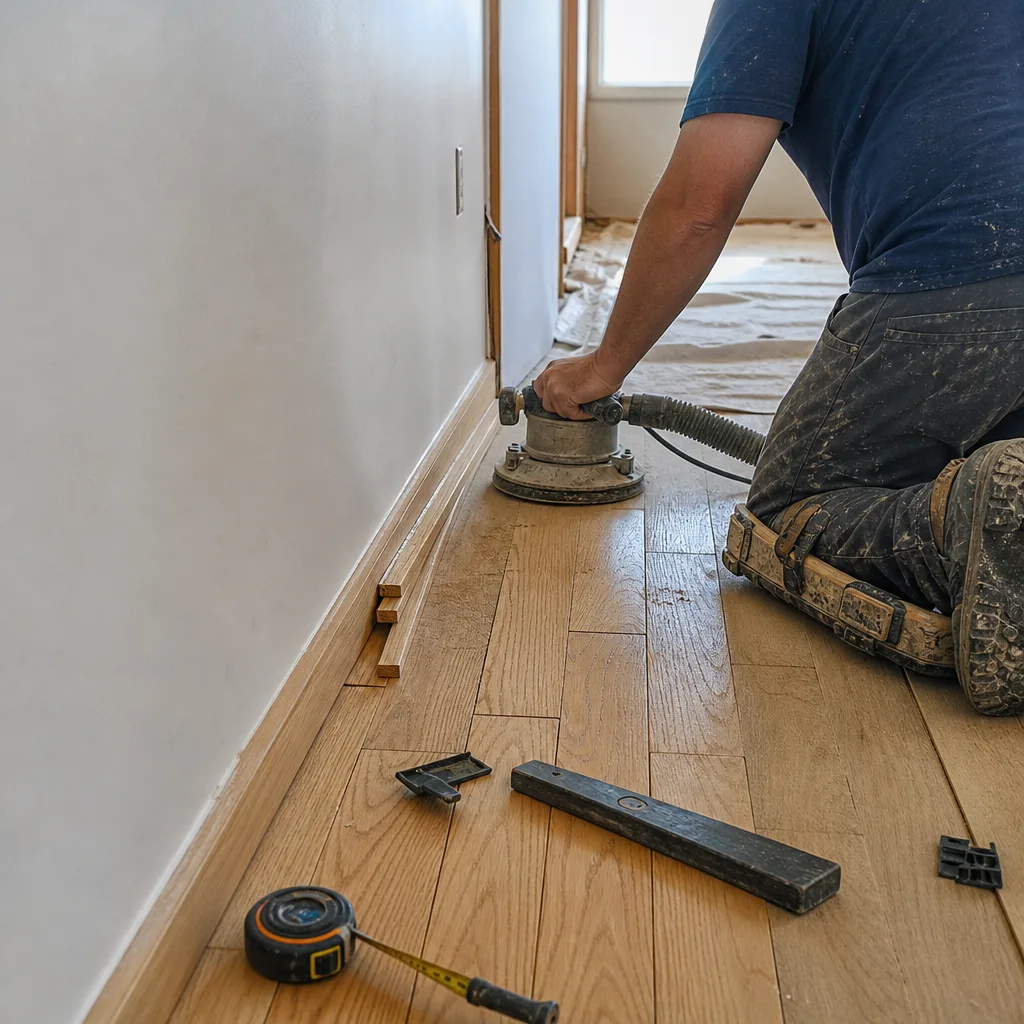
If you already have hardwood floors, refinishing them is the first conversation to have before pricing a replacement. Refinishing means sanding back the worn finish, repairing any damaged boards, and applying a new finish. You keep the floor you already own, and the cost of the project is usually far below the cost of new hardwood install. That’s why hardwood refinishing exists as a standalone service and why most flooring shops don’t lead with it: it doesn’t move material.
Not every floor can be refinished, though, and the answer depends on the thickness of the wood and its current condition. Some floors have been sanded down so many times that there isn’t enough material left for another pass. Some have damage that’s better addressed by replacement. Some are engineered rather than solid, and the refinishable layer is thin or nonexistent. That determination has to be made at the estimate visit by looking at the actual floor, not from a photo.
Refinishing also isn’t a promise of an exact color match to a sample or a specific stain result. Wood takes stain unevenly depending on species, age, and previous finish. A reputable shop will show you samples and set the expectation that the finished result depends on the wood, and the product instructions set the finish requirements. In Spring Valley, we see a steady demand for refinishing as an alternative to replacement, because the math often makes sense when the floor underneath a worn finish is still solid. Bring us the room and we’ll tell you honestly whether refinishing is the right move or replacement is.
What to Ask at the Estimate Visit
Every estimate visit is your chance to ask the questions that separate a real quote from a guess. In our experience, the estimates that hold up over a project are the ones where the customer asked the same handful of questions up front, no matter who they called. Here’s the list we recommend:
- “Is the subfloor included, and what does prep cost?” A quote that doesn’t mention subfloor prep either assumes a perfect slab or is leaving it for later.
- “Is demo and disposal in the price?” Pulling up the old floor and hauling it away are labor and haul costs that belong in the written price.
- “What’s the material waste allowance?” Every floor needs extra material for cuts, corners, and future patches. Ask how much.
- “Are transitions and trim line-itemed?” If they’re not on the quote, they’re not in the price.
- “Is furniture moving included, and to where?” Know whether you’re clearing the room or the crew is.
- “Which brand and line are we pricing, and why?” A good installer can tell you why a Mohawk or Pergo line fits your room versus why you’d step up to COREtec or Karndean.
- “What’s the schedule?” The install is a booked job; the estimate visit sets the day. Ask what lead time looks like for the product you’ve chosen.
Get those seven answers in writing and you’ll be able to compare any two estimates on the same footing. The per-square-foot number will make sense in context of the full scope.
Common Mistakes to Avoid
- Comparing quotes on the per-square-foot number alone. A $6 per square foot quote with subfloor prep, demo, and disposal included can be cheaper in the end than a $4 quote without them. Compare the full itemized scope, not the headline number.
- Skipping the subfloor check on a slab home. Spring Valley’s slab foundations can wick moisture. Any installer who doesn’t test the slab at the estimate is guessing on the underlayment requirements.
- Under-buying material. Ordering exactly the square footage of the room leaves no margin for cuts, corners, or future repairs. A common mistake that forces a second order at full price later.
- Removing transitions to save cost. Transition strips look minor on the quote. Skipping them self-inflicts a callback within a couple of years, and creates water access at every seam.
- Picking the cheapest material for a high-traffic room. The lowest install price often has the shortest life under real traffic. Choose the material for the room, not for the invoice.
- Not asking about the brand. Two LVP products that look similar on the sample board can differ widely in wear layers and moisture tolerance. Ask what line is being priced and why.
- Refinishing without checking the wood thickness. Not every hardwood floor has enough material left to sand again. A refinish attempt on a floor that’s too thin causes damage that can only be corrected by replacement.
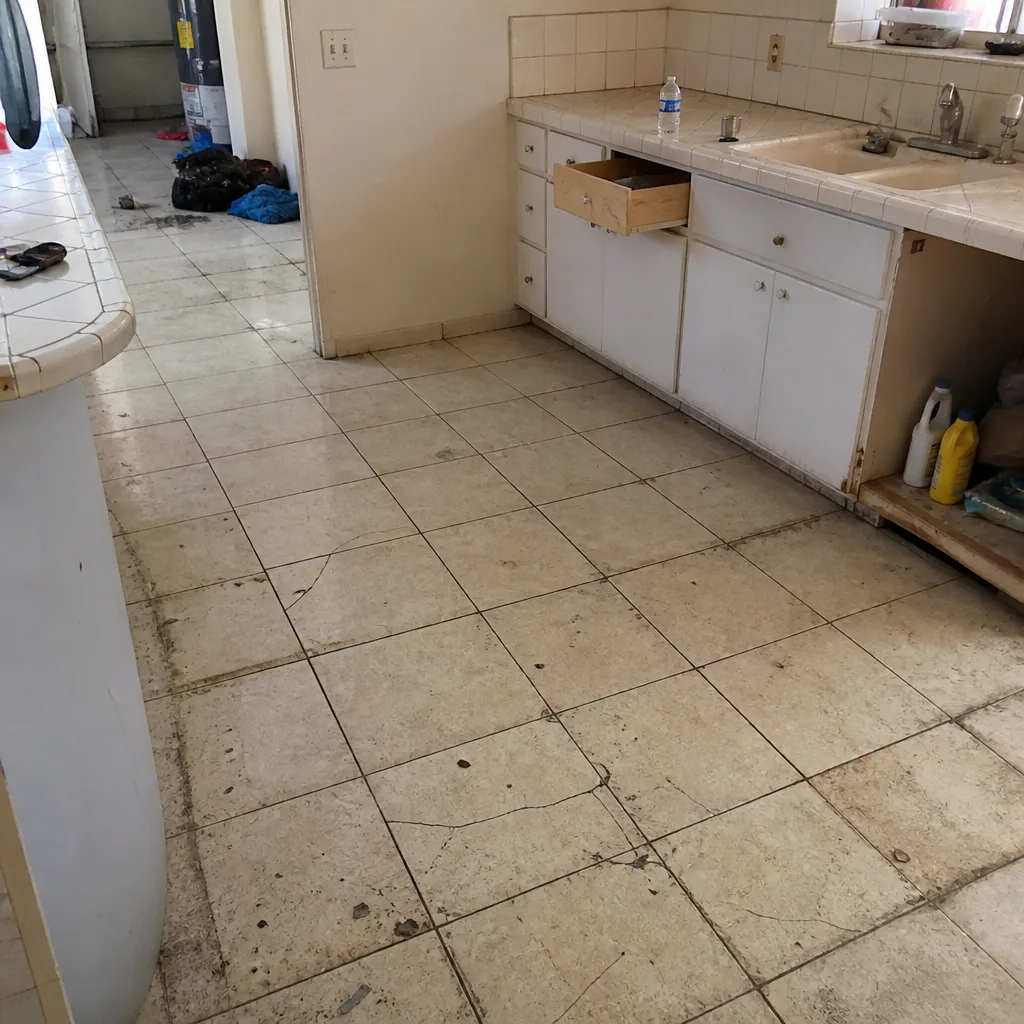
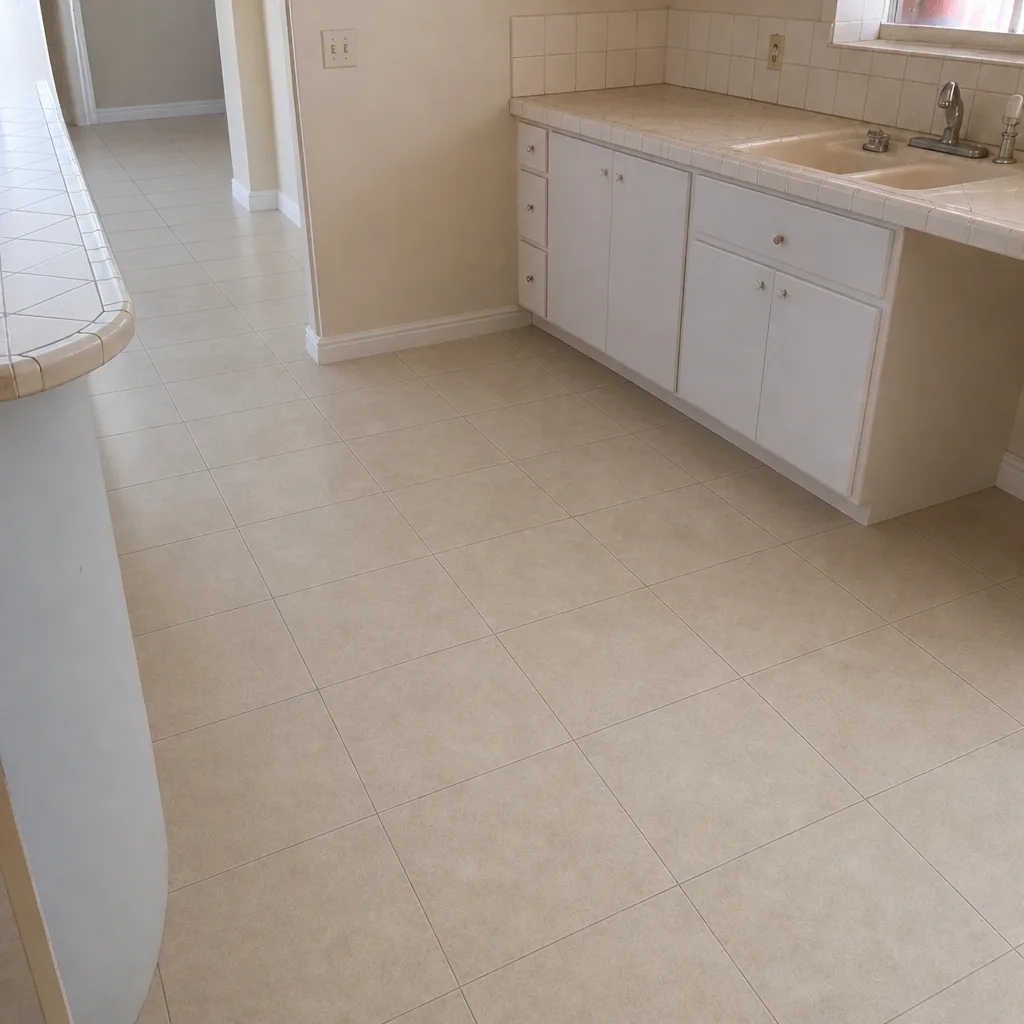
See the difference
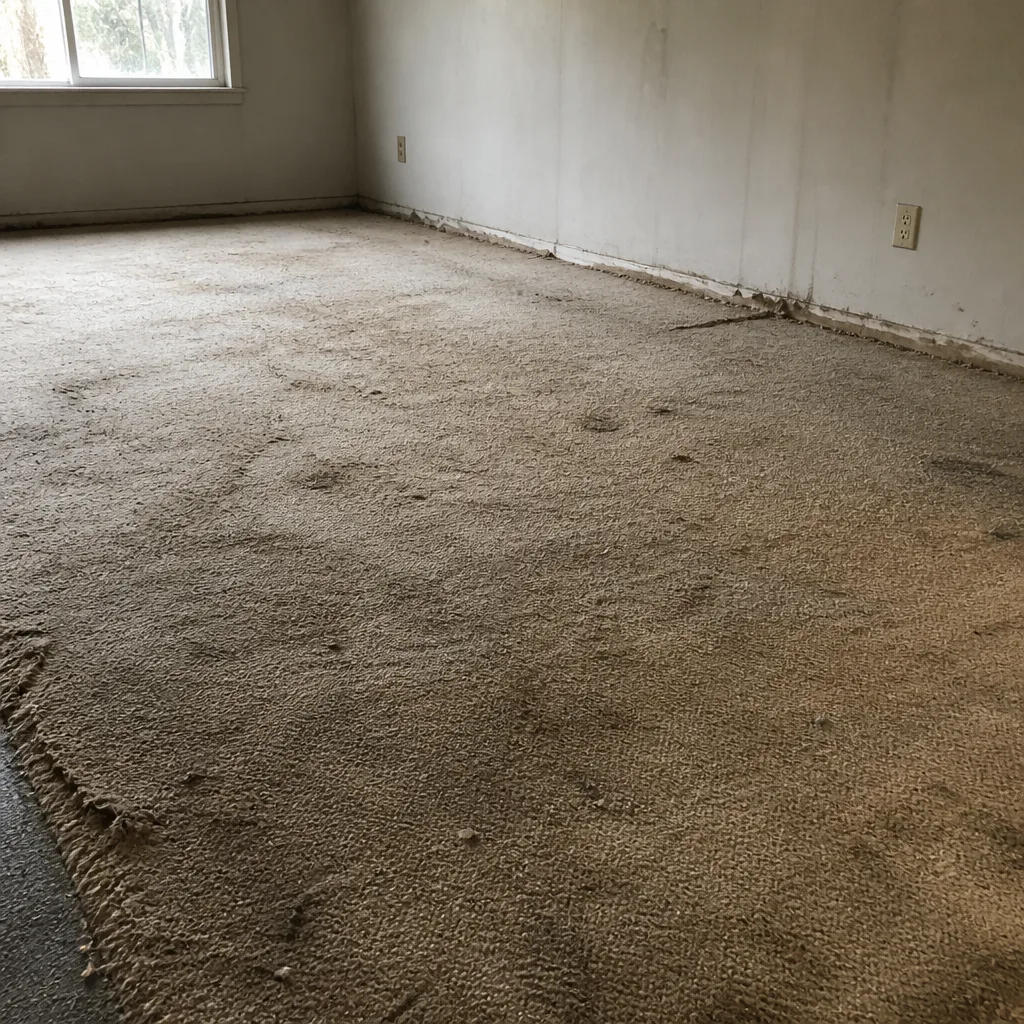 Before
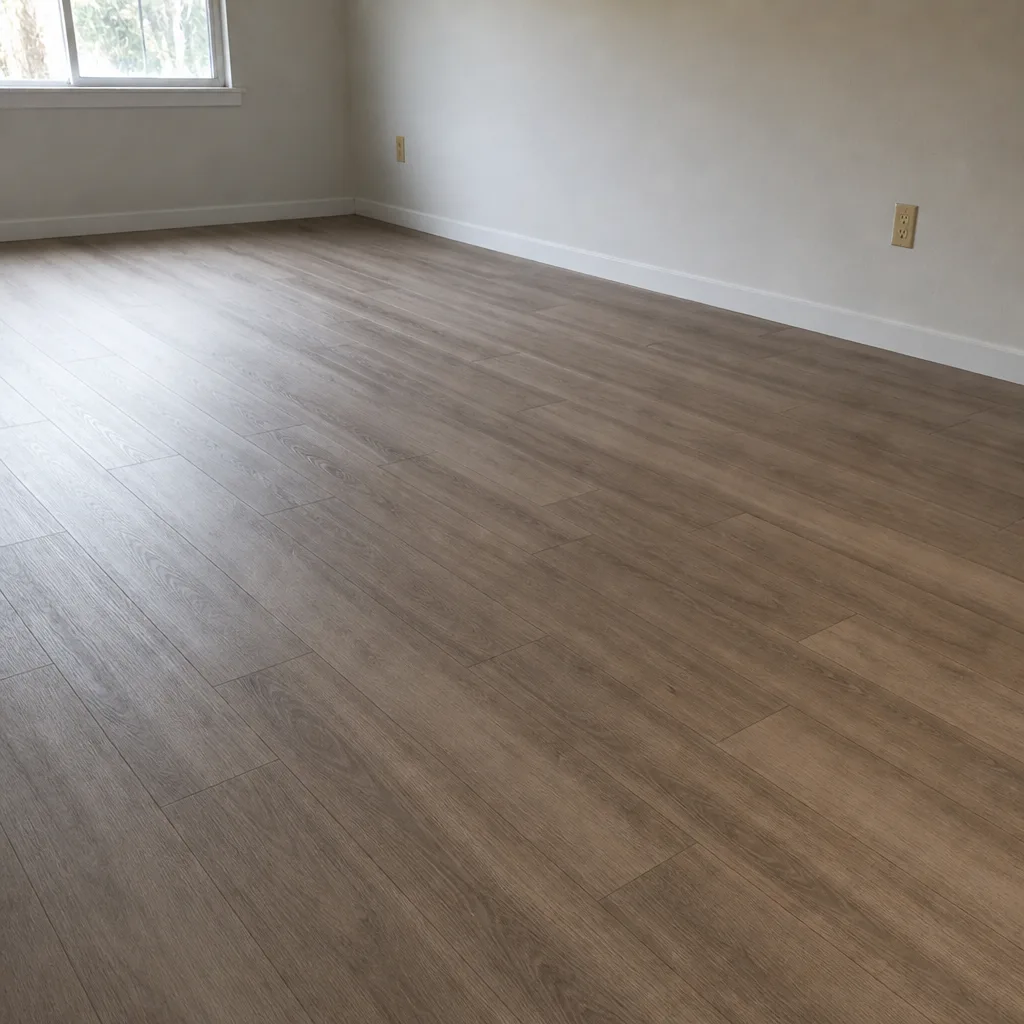 After
 Before
 After
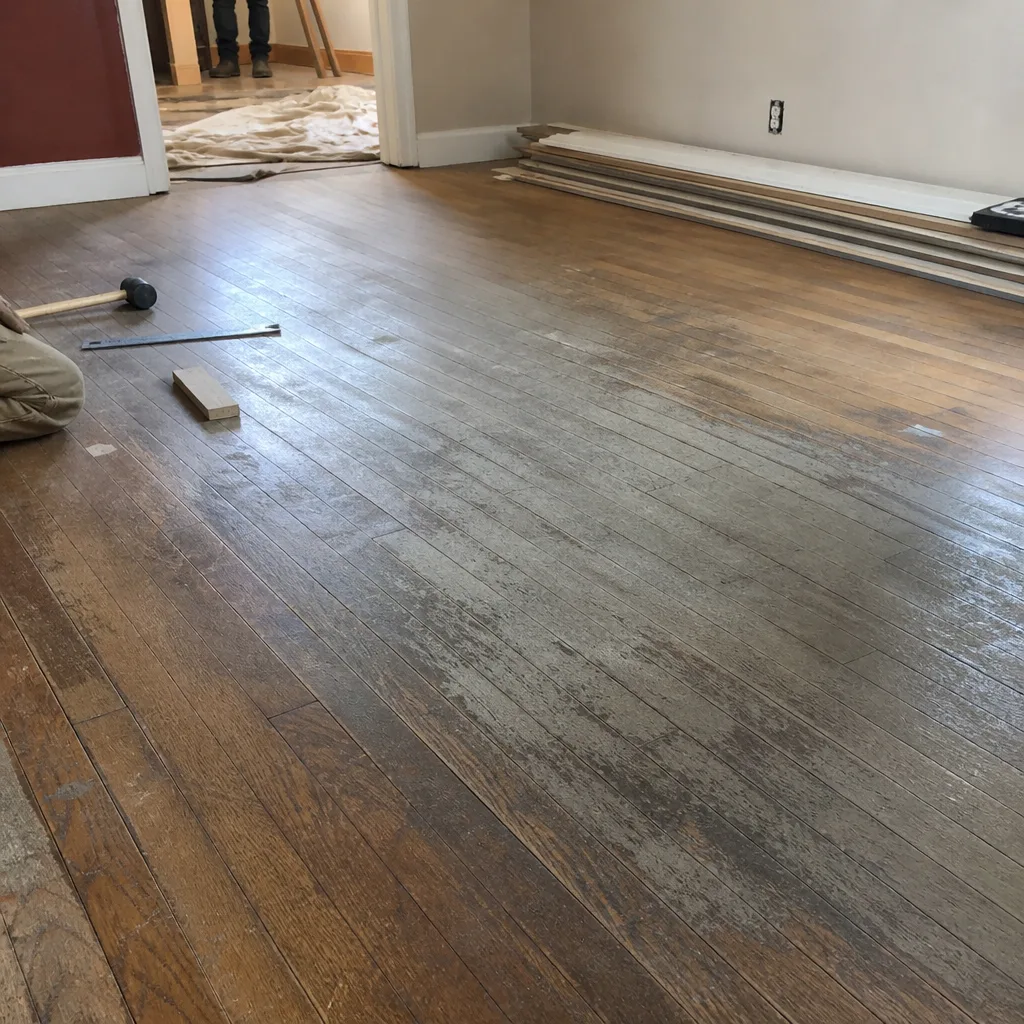 Before
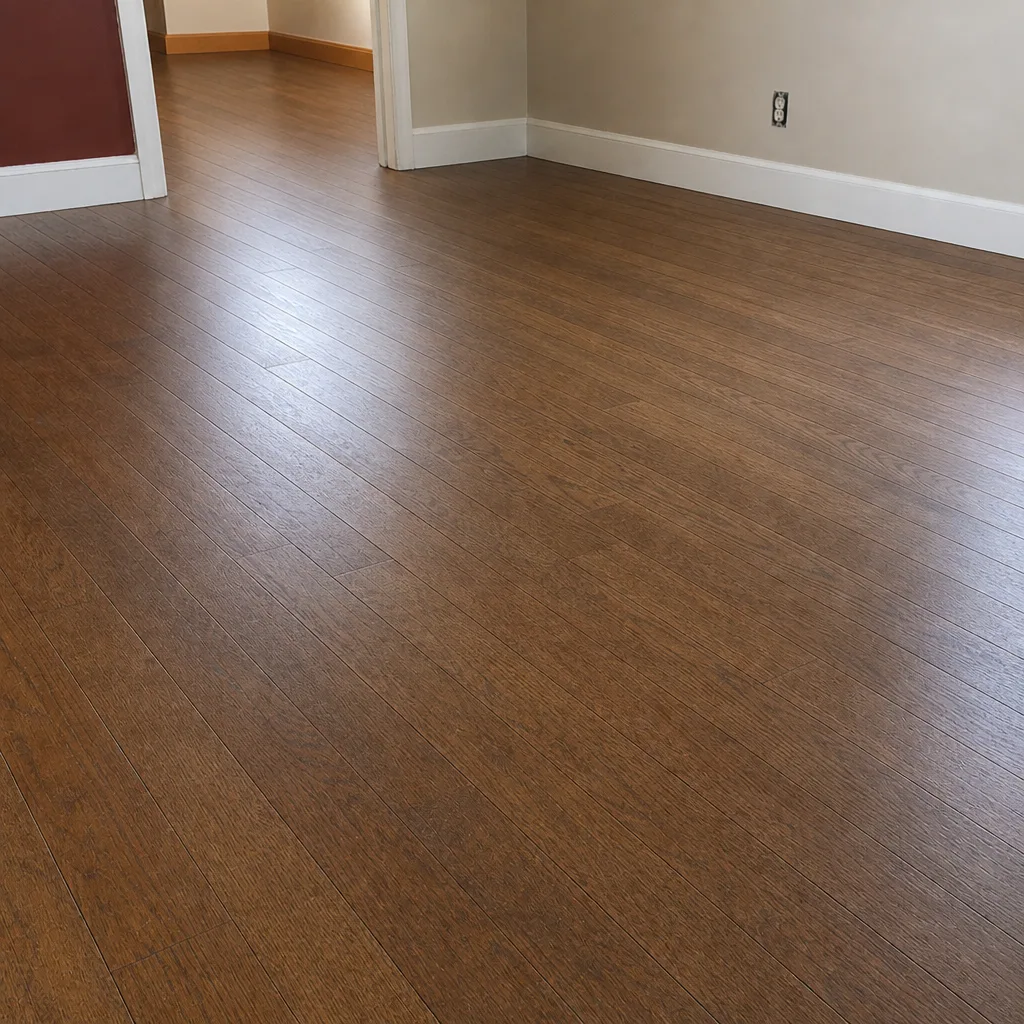 After
When to Call a Professional
Flooring installation looks like a weekend project and almost never stays one. Cracked slabs, moisture under a glue-down, uneven transitions, and door casings that need to be trimmed in place all need tools and experience that aren’t in a homeowner’s garage. If you’re pulling up glued-down flooring, dealing with a slab that’s shown moisture, choosing a product for a kitchen or bathroom, considering hardwood refinishing, or trying to compare quotes that don’t match, that’s a professional conversation. Hardwood refinishing in particular is not a DIY-friendly job: sanding and refinishing exposes finishes and dust that aren’t worth handling without the right setup, and a bad stain job is expensive to correct. Flooring Spring Valley offers free estimates in Spring Valley. Call (888) 350-5054 to schedule yours.
Frequently Asked Questions
Typical installed ranges in Spring Valley for 2026 land around $4 to $12 per square foot for carpet, $6 to $16 for LVP and laminate, $9 to $20 for tile, and $8 to $18 for new hardwood, before subfloor prep, trim, and disposal. Those numbers are typical ranges and estimates, not quotes. Call (888) 350-5054 for an exact quote on your rooms; estimates are free.
The box price is material only. Installed cost adds labor, subfloor prep, demolition of the old floor, disposal, trim, transitions, and material waste. Those line items are real work, not padding. Call (888) 350-5054 and we’ll walk you through what’s in your install; estimates are free.
Yes. We measure, test the slab, and put together a written estimate at no cost. There’s no service-call fee or dispatch charge to get a quote. Call (888) 350-5054 to schedule yours; estimates are free, and the written estimate sets the final price.
Often, yes. Concrete slabs can wick moisture from the soil below, and some flooring requires a vapor barrier or mitigation underlayment before install. The product instructions and the written estimate set what’s needed for your specific floor. A visit is the only way to know what your slab actually requires. Call (888) 350-5054 for a free estimate.
Usually, yes. Refinishing keeps the floor you already own and typically costs much less than new hardwood install. Whether refinishing is possible depends on the thickness of the wood and its condition, which we determine at the estimate visit. Call (888) 350-5054 for a free refinishing estimate.
The schedule is set at the estimate. Install length depends on the product, the room count, subfloor prep, and moisture mitigation needed. Once you have the material and a booked install day, we walk you through the expected window before the job starts. Call (888) 350-5054 to get on the schedule; estimates are free.
The Bottom Line
The price on the sticker is material. The installed cost is the whole project: prep, demo, disposal, trim, transitions, and the moisture handling that the Spring Valley slab may require. Those line items explain the gap between a $3.50 per square foot ad and a $7.00 per square foot installed job, and knowing them is how you compare estimates fairly. Whether you’re choosing between a Mohawk, Pergo, COREtec, or LifeProof line, or deciding whether to refinish your existing hardwood instead of replacing it, the estimate visit is where the math gets clear. Nine brands, three services, one contractor. That’s the scope of the conversation.
If you’re planning a flooring project in Spring Valley, we’d like to look at your rooms and give you a written price. Call (888) 350-5054 for a free estimate. We answer 24/7. Fast dispatch from 7am to 7pm, Sunday through Friday. The written estimate sets the final price, and there’s no obligation to book.
Written by the team at Flooring Spring Valley.