
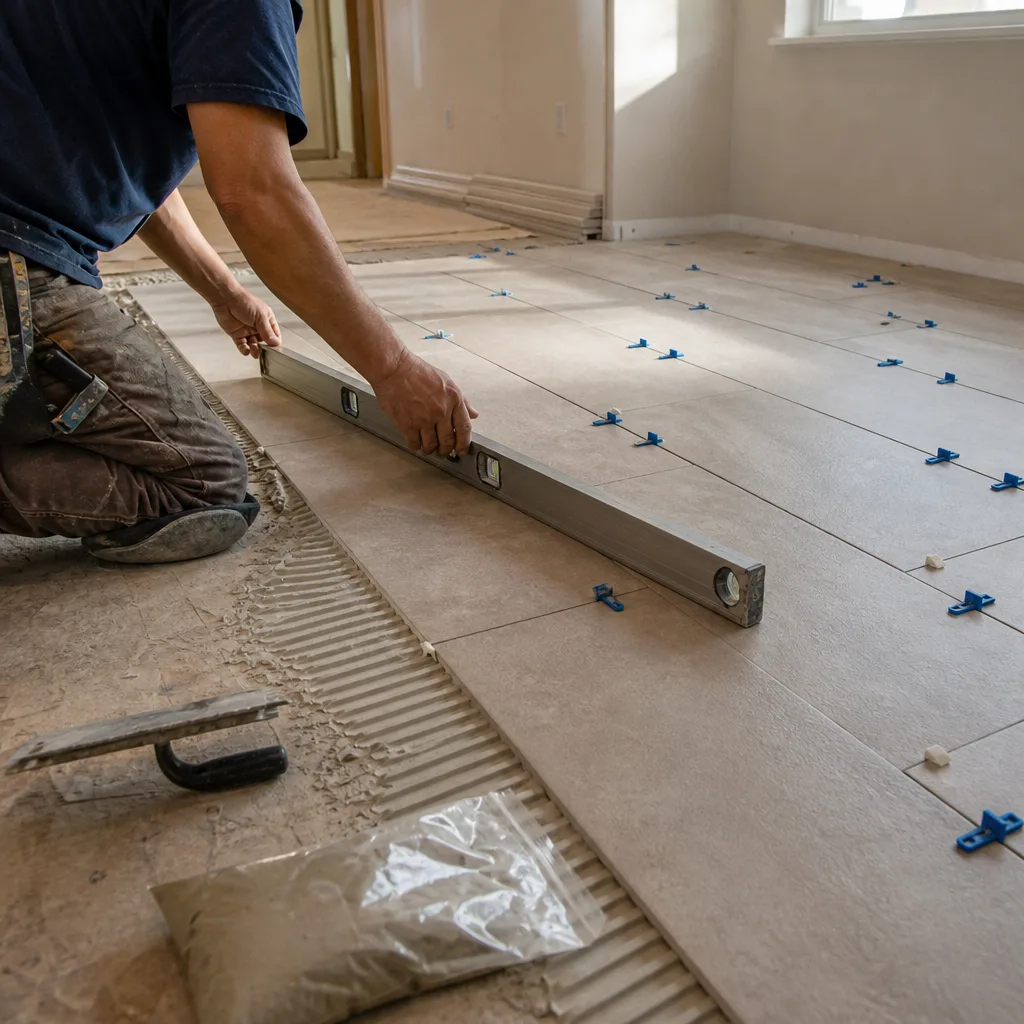
Last updated November 18, 2026
 Hardwood
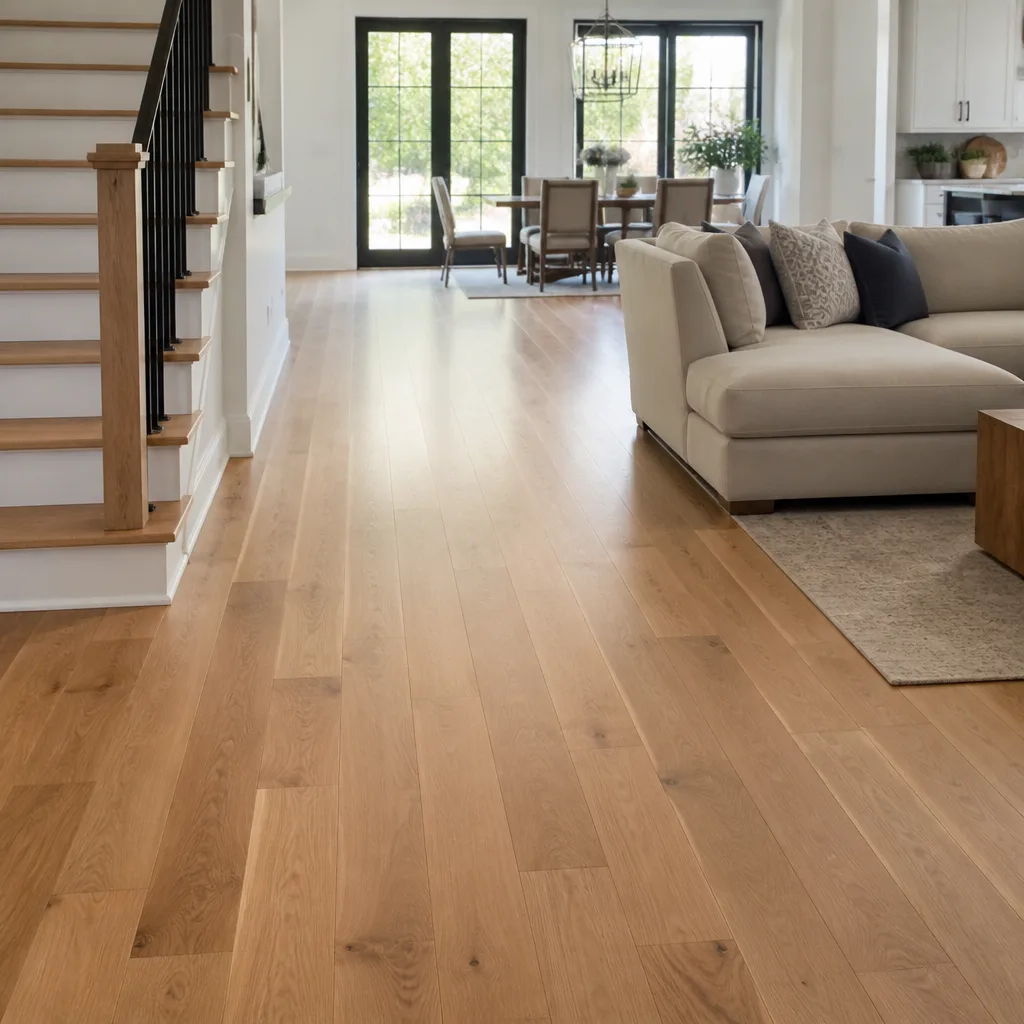 Engineered hardwood
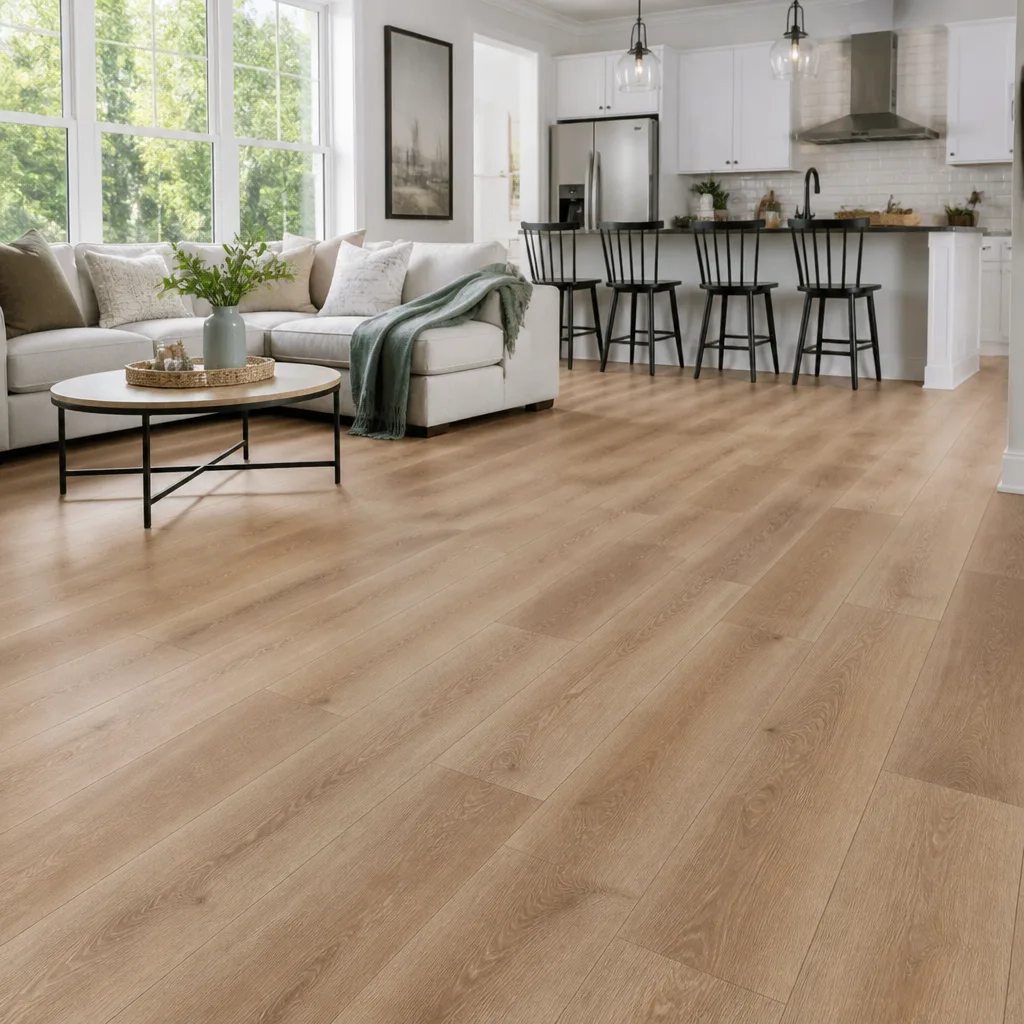 Luxury vinyl plank
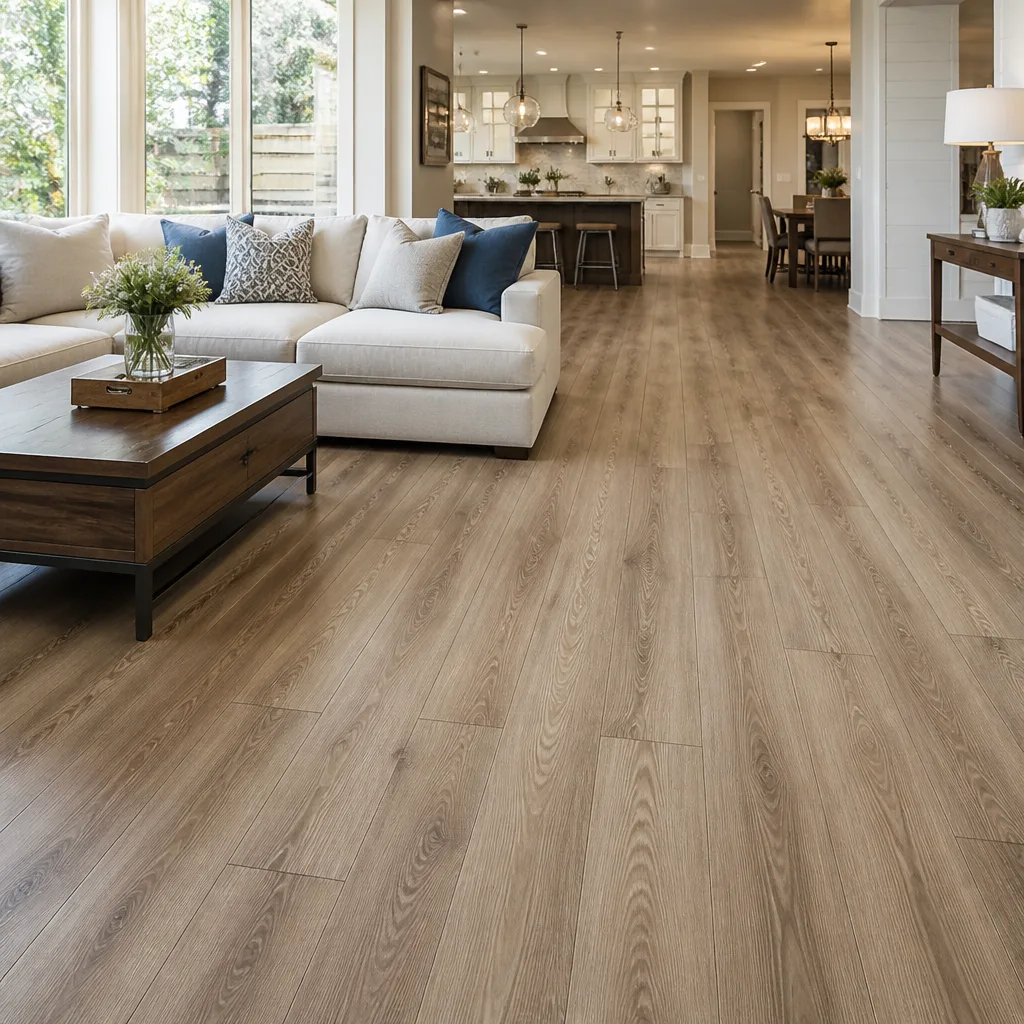 Laminate
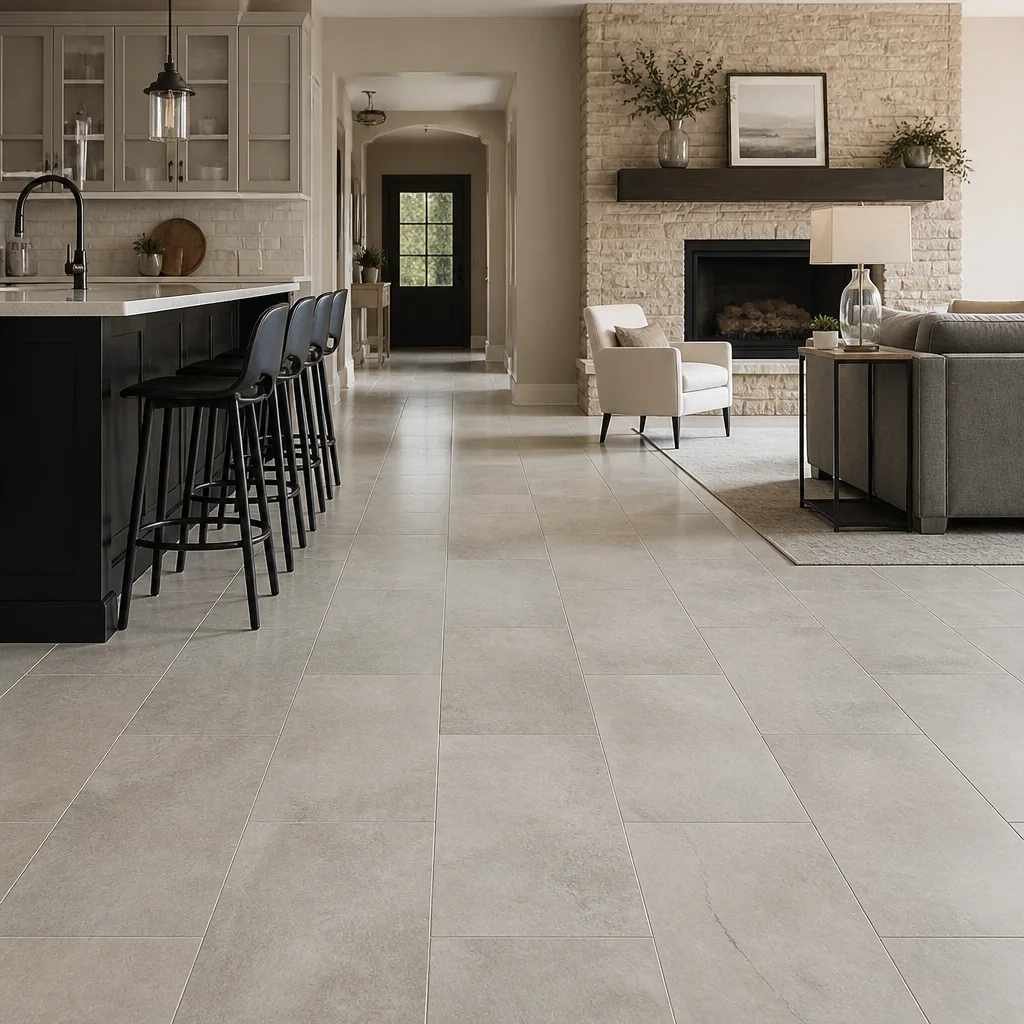 Porcelain tile
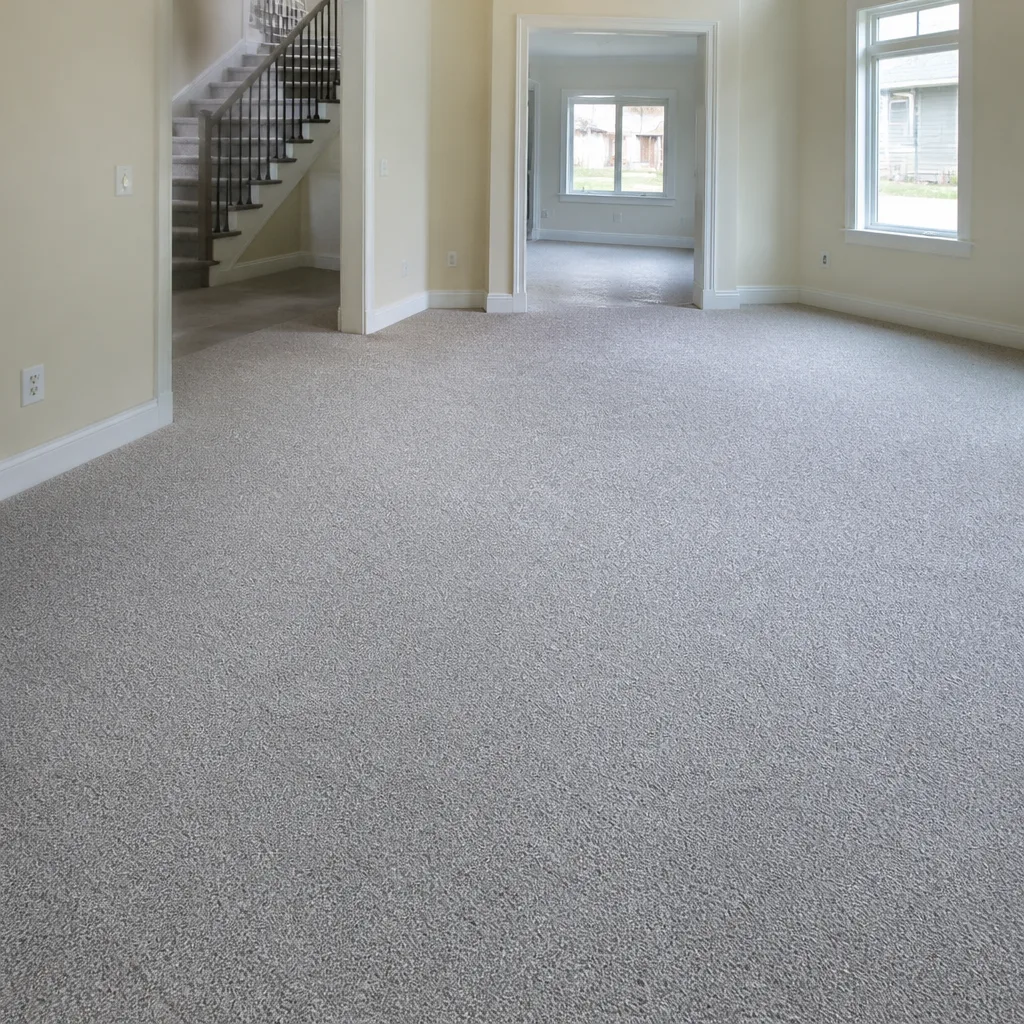 Carpet
 Shaw
 Mohawk
 COREtec
 Pergo
Free in-home measure and written estimate: Shaw, Mohawk, COREtec and Pergo lines compared on your own rooms, with carpet, tile, vinyl plank, laminate and hardwood laid out side by side
Get your free estimateHow to Care for New Flooring: Hardwood, Vinyl, Laminate, Tile and Carpet
The number one cause of finish wear in Spring Valley homes isn’t foot traffic. It’s the fine desert grit that gets tracked in and never fully comes up with a standard broom. This dust acts like sandpaper underfoot, and every step grinds it across the surface a little more. A new floor in this climate needs a care routine built for dust, not the humid-region guidance printed on most product care sheets. This guide covers what each flooring type actually needs here, from daily dust control to when a hardwood refinishing job makes more sense than a replacement.
Quick Answer
In Spring Valley, new floors last longest when you dust-mop with microfiber far more often than national care guidelines suggest, use pH-neutral cleaners on vinyl and laminate, seal tile grout on a schedule built for hard water, and vacuum high-traffic carpet zones several times a week. Match the care protocol to the material, and most floors hold up well through years of dry, dusty air.
Styles & brands we work with
- Hardwood
- Engineered hardwood
- Luxury vinyl plank
- Laminate
- Porcelain tile
- Carpet
- Shaw
- Mohawk
- COREtec
- Pergo
Table of Contents
- Why Desert Grit Changes the Care Rules
- Caring for Hardwood and Refinishing Intervals
- Vinyl Care and the pH Question
- Laminate: Moisture Control and Dust
- Tile and Grout in Hard Water
- Carpet Care for Dust and Pet Dander
- A Simple Weekly Cleaning Routine
- Common Mistakes to Avoid
Why Desert Grit Changes the Care Rules
Most flooring care guidance is written by manufacturers whose biggest market is humid. That guidance assumes dust is soft and rare. In Spring Valley, dust is fine, abrasive, and constant. Wind carries it in from open ground, it settles on every surface, and the particles are small enough to slip under a broom’s bristles and stay put. Walk across a floor with that grit on it and you’re grinding mineral dust into the finish with every step.
A broom alone won’t clear it. The fibers ride over the grit instead of lifting it. A microfiber dust mop, by contrast, uses static and dense fiber to trap fine particles. In practice, that means dust-mopping frequency here should be higher than the “manufacturer recommends” language you’ll read on product inserts. If you have doors and windows open often, or a pet that comes in and out, it’s higher still.
Two other local factors matter:
- Low humidity. Spring Valley air is dry most of the year. Wood shrinks slightly and gaps between boards can open. Humidity control in the home softens that cycling.
- Hard water. Mineral content in the water leaves scale on tile grout and film on vinyl if you mop with tap water alone. A neutral floor cleaner avoids the buildup.
None of this means a good floor can’t perform here. It means the care routine has to account for the climate you actually live in. Homeowners doing a whole-room refresh often call us through Flooring Spring Valley after a new install and ask why the showroom care sheet doesn’t seem to keep up. Usually it’s because the sheet was written for a different climate.
Caring for Hardwood and Refinishing Intervals
Hardwood needs the most careful handling in a desert home. The wood moves as indoor humidity swings, and the finish is the protective layer that takes the abuse. What matters most is keeping grit off it and knowing when the finish is wearing down.
Daily and weekly care
- Dust-mop with microfiber several times a week, or daily in high-traffic rooms.
- Vacuum with a hard-floor attachment that has soft bristles, not a beater bar.
- Wipe up spills quickly. Standing water is the enemy of any wood floor.
- Use a wood-safe cleaner, applied lightly. Never soak the surface.
- Put doormats at every exterior door to catch grit before it reaches the wood.
When to refinish instead of replace
Refinishing is a sanding and re-coating of the existing wood, not a full replacement. In Spring Valley’s dry air, finishes tend to wear on traffic paths first, and a home can go years between refinishes. The timing depends on how the floor looks and behaves, not a fixed calendar. Here’s how to check whether a finish is wearing toward the wood:
- Look for dull traffic lanes. The shine dulling in the middle of a walkway and staying bright near the walls is an early sign the top coat is wearing.
- Test with a small drop of water. If a drop beads on the surface, the finish is still protecting. If it darkens the wood or soaks in, the barrier is compromised.
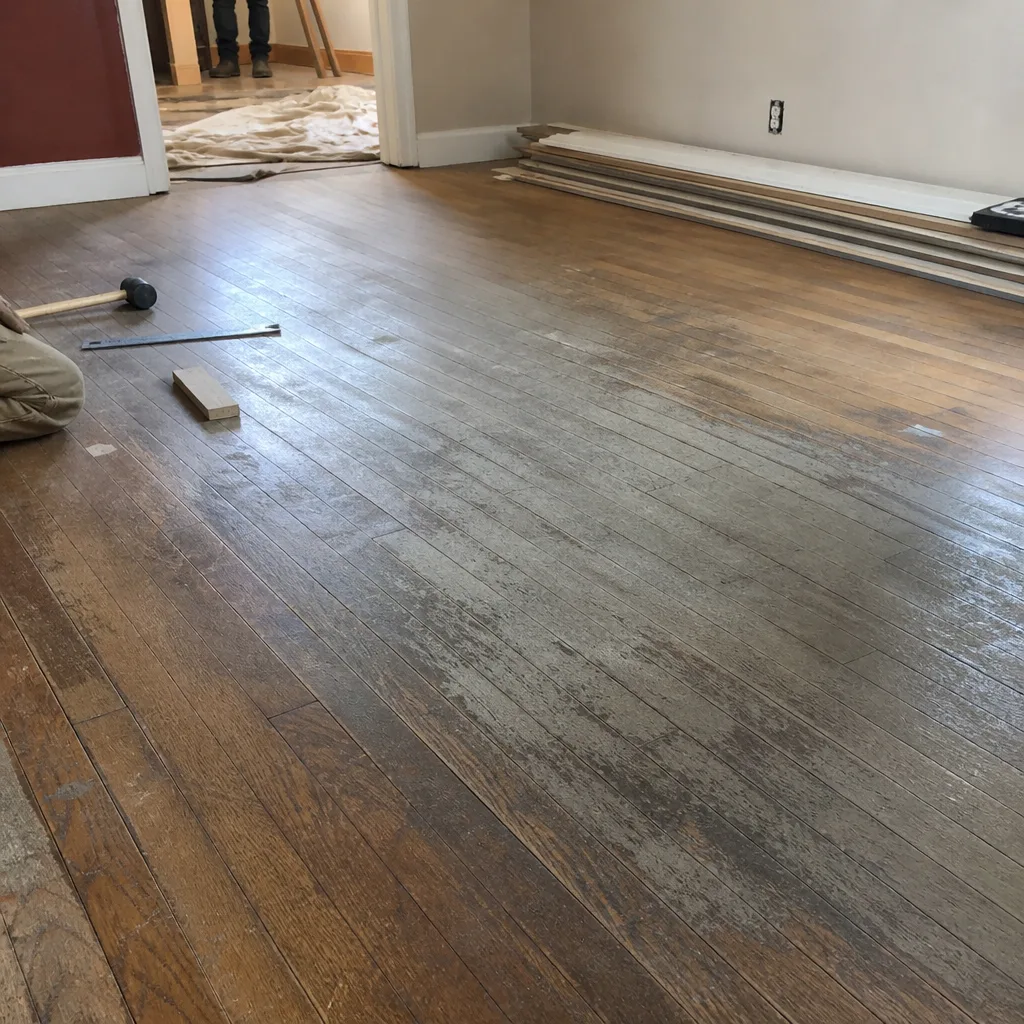
- Check for gray or lifeless patches. Bare wood shows up matte and darker where finish has worn through.
- Use a fingernail test cautiously. A gentle scratch test in an out-of-the-way spot can reveal whether you’re touching finish or bare wood.
Refinishing isn’t guaranteed on every floor. Whether it’s possible depends on the thickness of the wood and its condition. The safest path is to have it checked at an in-home visit before deciding. “Refinish before you replace” is the conversation we encourage any hardwood owner to have first, because preserving a usable floor usually costs less than tearing one out. For more on how that service works, see our Spring Valley service overview.
Vinyl Care and the pH Question
Vinyl plank and sheet flooring is among the easiest surfaces to live with, and that’s why so many Spring Valley homes use it in kitchens, bathrooms, and busy hallways. But “easy” doesn’t mean “anything works as a cleaner.” The wear layer on a vinyl floor is a thin protective film, and the wrong cleaner slowly clouds it.
Here’s the core rule: use a neutral pH cleaner for vinyl. Many household cleaners fall outside the safe range. Acidic cleaners can dull a finish, and heavily alkaline cleaners can leave a film that builds up over time. That film is what people mistake for a worn-out floor. The surface isn’t scratched; it’s coated in cleaner residue.
What to use and avoid
- Use: a pH-neutral floor cleaner diluted per the label, plus plain water for a final pass.
- Avoid: vinegar solutions, bleach-heavy cleaners, and anything with a heavy wax or polish.
- Avoid: abrasive pads, steel wool, and stiff scrubbing brushes that scratch the wear layer.
- Handle moisture: water-resistant vinyl handles splashes, but standing water and moisture wicking up from below are still a problem. Deal with leaks and basement dampness at the source.
For grit, the same microfiber dust-mop routine you’d use on hardwood applies to vinyl. Vacuum with a hard-floor head once or twice a week to clear the fine dust, then damp-mop with the neutral cleaner. If you’re choosing a vinyl floor and want the brand conversation handled as part of the process, we install products from carpet installation through our vinyl and tile lines, and our free in-home estimate is where the right product gets matched to your room.
Brands come into it here. Products designed for high-moisture rooms hold up best in bathrooms and kitchens, and that’s why homeowners often look at LifeProof and COREtec lines. For a designer-level finish, Karndean is worth a look. We install and service the floor you choose; the brand should match the room’s real use, not a salesperson’s preference.
Laminate: Moisture Control and Dust
Laminate is built on a dense core with a printed and protected wear layer. It’s tough against foot traffic, but two things threaten it in a Spring Valley home: grit on the surface and moisture at the seams. Handle both and laminate gives you years of easy service.
The care routine
- Dust-mop daily in traffic lanes. Laminate’s tight surface shows fine scratches fast, and the grit that causes them is the same desert dust affecting every floor in the house.
- Vacuum weekly with a soft hard-floor head and yes, clean the vacuum filter. Dust-filled filters stop lifting fine particles.
- Damp-mop with a neutral cleaner and a barely-wet mop. Wring the mop out so no water pools at seams.
- Wipe up spills immediately. Laminate is water-resistant in short contact, but seams are the weak point.
- Felt pads on all furniture legs and area rugs in high-traffic paths to slow the dust-scuffing.
Don’t use steam mops on laminate. The heat and moisture can work into seams. Avoid soaking the surface and skip the wax products. If you live near an open lot or have a large backyard with exposed ground, expect to dust-mop more often during windy stretches. That’s the pattern in most homes here.
Tile and Grout in Hard Water
Tile is the most forgiving floor in this climate. It handles dust, doesn’t care about humidity swings, and cleans up easily. The part that needs attention is grout. Spring Valley water carries minerals, and those minerals deposit into grout lines as scale. Add in the fine dust settling into open grout pores and you can get lines that slowly darken and stain.
Grout sealing and cleaning
- Sealing schedule: grout should be resealed regularly, with the interval depending on the type of grout and how much traffic the floor sees. Ask about the recommended schedule at your estimate, and re-test with a small water drop: if it soaks in instead of beading, it’s time to reseal.
- Cleaning: a pH-neutral cleaner for routine mopping keeps mineral scale down. For heavy scale in hard-water households, use a cleaner made for tile and grout and follow the label.
- Avoid: acidic cleaners on natural stone and abrasive powders on polished tile.
- Dust first, then mop. Sweeping tile with a broom on a dusty day pushes grit around. A microfiber mop picks it up.
Large tile projects are where product sourcing matters. Daltile access gives tile customers a commercial-grade supplier with more SKU depth and more consistent availability for a whole-home or large-footprint job. For more on how we handle it, our tile flooring installation page lays out the process from selection to finished floor. Tile flooring installation is one of the three core services at Flooring Spring Valley, alongside carpet and hardwood refinishing.
Carpet Care for Dust and Pet Dander
Carpet is the toughest floor to keep clean in Spring Valley, and it isn’t because of traffic. It’s because fine dust filters down into the fibers and, unlike a hard surface, doesn’t get caught by a mop. Pet dander compounds the problem: it clings to dust and settles into the pile, and once it’s there, a quick pass with a vacuum doesn’t lift it out.
Standard vacuuming schedules underperform here because they’re built for homes with less airborne dust. The fix is frequency plus the right method.
What actually works
- Vacuum high-traffic zones several times a week. Not once a week. Dust accumulates daily in this climate.
- Use a vacuum with strong suction and a HEPA filter. A filter that traps fine particles keeps them from blowing back into the room.
- Make slow passes. A single fast stroke doesn’t lift embedded dust. Go over a zone two or three times slowly.
- Vacuum edges and corners regularly. The dust that collects under furniture and along baseboards is the densest in the room.
- Have the carpet cleaned professionally periodically. The interval depends on household use and pets; ask at the estimate.
For pet households, look at brands and fibers built for resilience and easy cleaning. Shaw and Mohawk are the two brands most homeowners ask about first, and when we bring samples to your estimate, you can see how each one handles in your space. If you’re getting new carpet, plan the care routine around your dust level, not the bag’s general instructions. Our carpet installation page covers the selection side in more depth.
A Simple Weekly Cleaning Routine
Here’s a routine that handles the desert-dust problem across any flooring mix in the house. Adjust the frequency by traffic, but don’t reduce it because a manufacturer’s care sheet says less often. Those sheets aren’t written for Spring Valley.
- Daily: microfiber dust-mop kitchen, entry, and main hallway. Empty the mop head or shake it out over a trash bin, not back onto the floor.
- Twice weekly: vacuum all hard floors with a soft bristle attachment; vacuum carpet high-traffic zones fully.
- Weekly: damp-mop hard floors with the correct cleaner for the material; vacuum carpet edges and under furniture; wipe tile baseboards.
- Monthly: spot-treat grout and check seal condition; inspect hardwood finish on walking lanes; wash doormats and entry rugs.
- Seasonally: check window/door weatherstripping to cut down dust intrusion; have floors inspected for refinish or professional carpet cleaning timing.
Keep the right tools in one place: a microfiber dust mop, a separate microfiber damp mop, a good vacuum with hard-floor and carpet heads, a neutral floor cleaner, and a material-specific cleaner for tile grout and wood. The right tools do more for floor life than any single product will.
Common Mistakes to Avoid
- Relying on a broom alone. A broom pushes fine desert dust around but leaves the smallest particles, which are the ones that grind into a finish. Use microfiber for the real lift.
- Using hot water and vinegar on vinyl. These fall outside the safe pH range for vinyl wear layers and can cloud the surface. A neutral cleaner does the job without the film.
- Soaking laminate or wood floors. Standing water is a real problem for both, and in a dry climate the temptation to “wet it down” is strong. Damp-mop, don’t flood.
- Skipping grout sealing in hard water. Grout left unsealed in a hard-water home stains faster and doesn’t clean up as easily. Reseal on schedule and test with a water drop between coats.
- Vacuuming carpet once a week and calling it done. In a dusty climate that’s not enough. Several passes a week in busy zones makes a real difference.
- Waiting until hardwood finish is worn to the wood. Refinishing works best when there’s still a barrier left. Test the finish early rather than late.
- Buying a floor care product section by section. One cleaner intended for all surfaces tends to be right for none of them. Match the cleaner to each material.
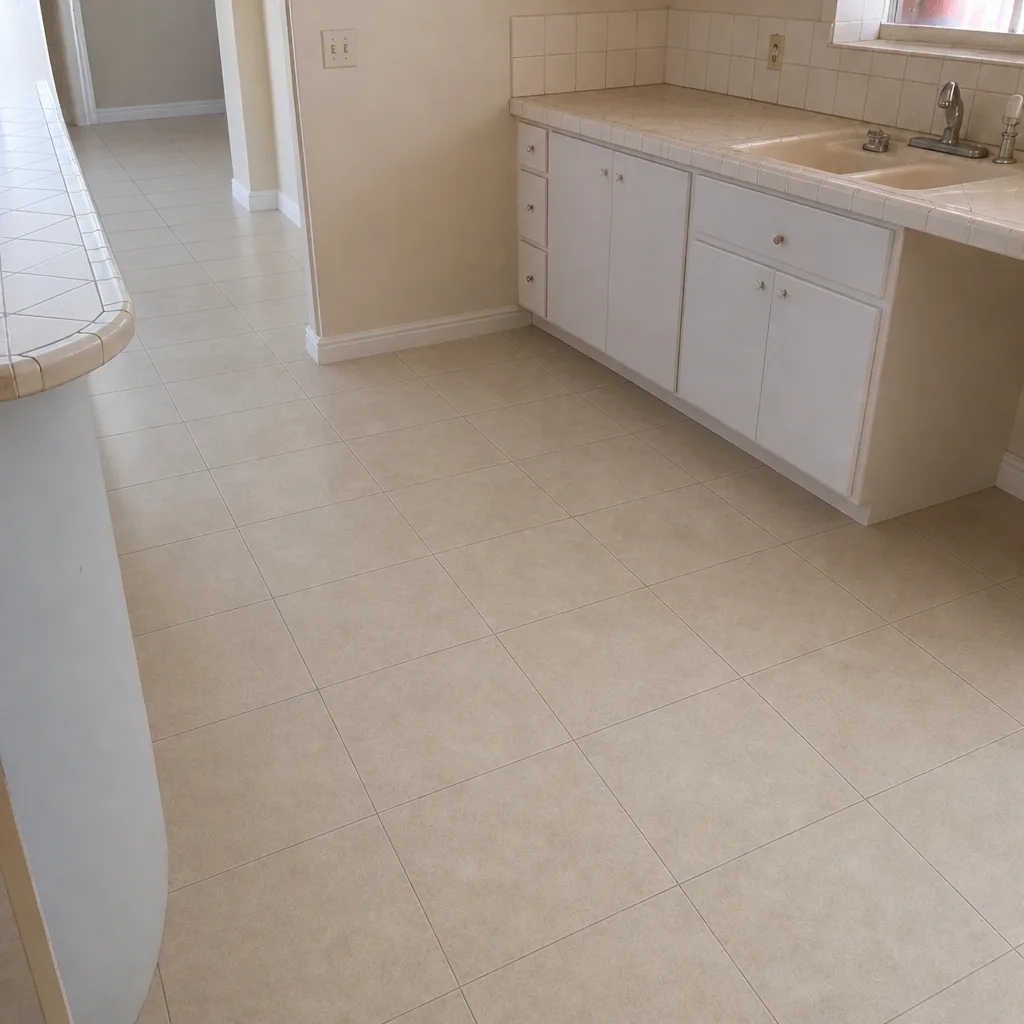
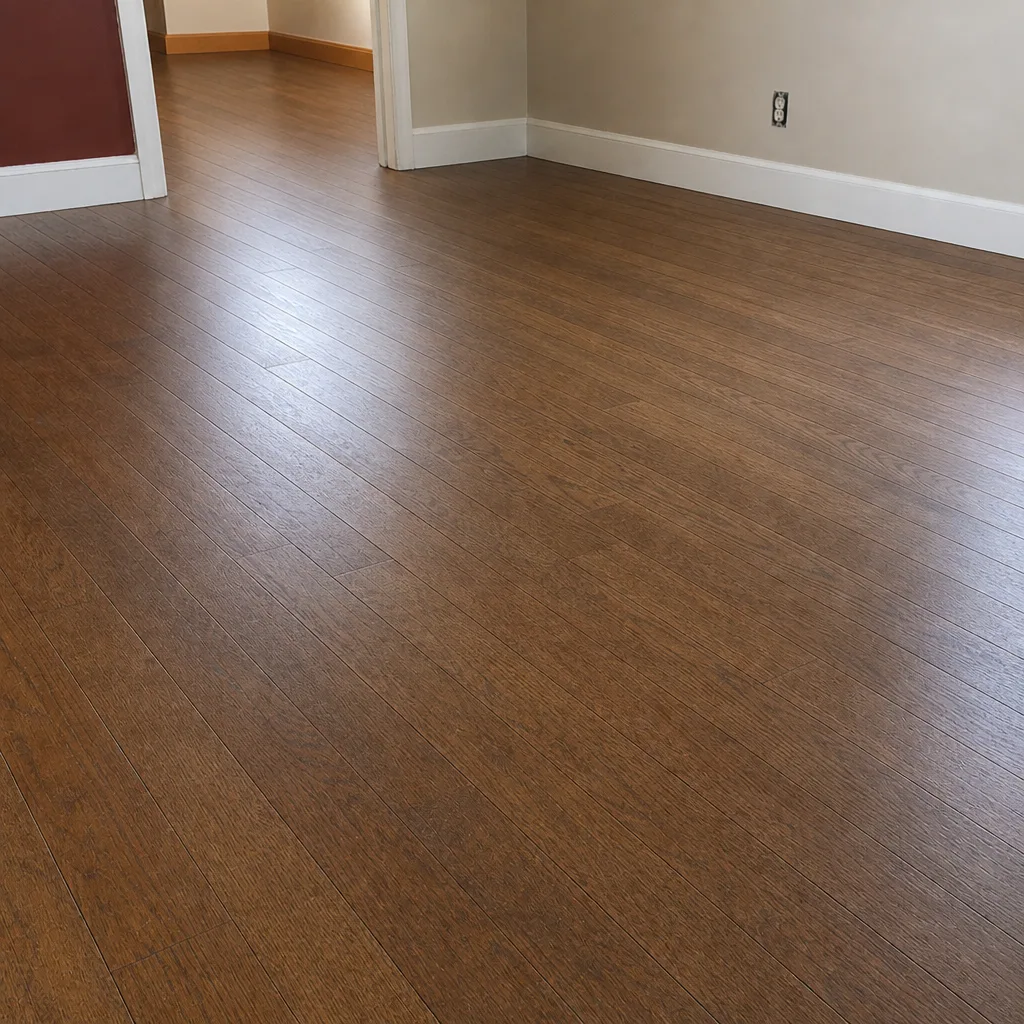
See the difference
 Before
 After
 Before
 After
 Before
 After
When to Call a Professional
Some jobs are routine care. Others are where a pro should step in. Call when hardwood finish is worn past the top coat, when tile grout is cracking or failing, when a floor has water damage, or when carpet has a stain you can’t lift after two attempts. If you’re weighing a new floor against refinishing what you have, that’s also a conversation worth having with someone who sees both options. Flooring Spring Valley offers free estimates in Spring Valley – call (888) 350-5054. We connect you with experienced local professionals who have up to 14 years of experience, and the written estimate sets the price for the job.
Frequently Asked Questions
Several times a week in high-traffic areas, and daily if you have pets, open windows often, or live near exposed ground. The dust here is fine enough to stay on the floor after a broom, so microfiber is the tool that actually removes it. For an in-home inspection of a floor’s condition, call (888) 350-5054 for a free estimate.
A pH-neutral floor cleaner is the safe choice for vinyl, diluted per the label. Acidic cleaners like vinegar and heavily alkaline ones can dull or cloud the wear layer over time. Avoid abrasive pads and wax products too. If you’re not sure what’s on a new vinyl floor, ask at your estimate.
The interval depends on the grout type and traffic, but reseal whenever a water drop soaks in instead of beading on the surface. In a hard-water area like Spring Valley, grout benefits from regular sealing and neutral-pH mopping. Ask about the recommended schedule for your specific tile at your free estimate.
Often yes, but it depends on the thickness of the wood and its condition, checked at the estimate visit. Refinishing is a standalone service and a cost-conscious alternative to replacement when the wood is solid enough. If you want to know whether your floor qualifies, call (888) 350-5054 to book a free estimate.
Several times a week in high-traffic zones, more often than the general weekly guidance suggests. Fine dust and pet dander settle into the pile quickly here, and slow, repeated vacuum passes lift more than fast ones. For advice on a new carpet and its care, our free estimate is the place to start.
Routine dusting, mopping, and vacuuming handle most of it. Professional help matters for refinishing, grout restoration, water damage, and deep carpet cleaning, where the tools and know-how are different from home equipment. Call (888) 350-5054 to schedule a free estimate and find out what’s worth handing off.
The Bottom Line
New floors in Spring Valley need a care routine built for dust and dry air, not the humid-climate guidance printed on most product inserts. Dust-mop with microfiber more often than you think. Use a neutral cleaner on vinyl and keep laminate and wood damp, never wet. Seal grout on schedule for hard water. Vacuum carpet several times a week. And check hardwood finish early, before refinishing becomes a bigger conversation than it needs to be. Nine brands, one contractor: if you want help matching a floor to the room and the care it’ll need, call Flooring Spring Valley at (888) 350-5054 to schedule a free estimate. We answer 24/7. Fast dispatch from 7am to 7pm, Sunday through Friday.
Written by the team at Flooring Spring Valley.