
Last updated November 18, 2026
 Hardwood
 Engineered hardwood
 Luxury vinyl plank
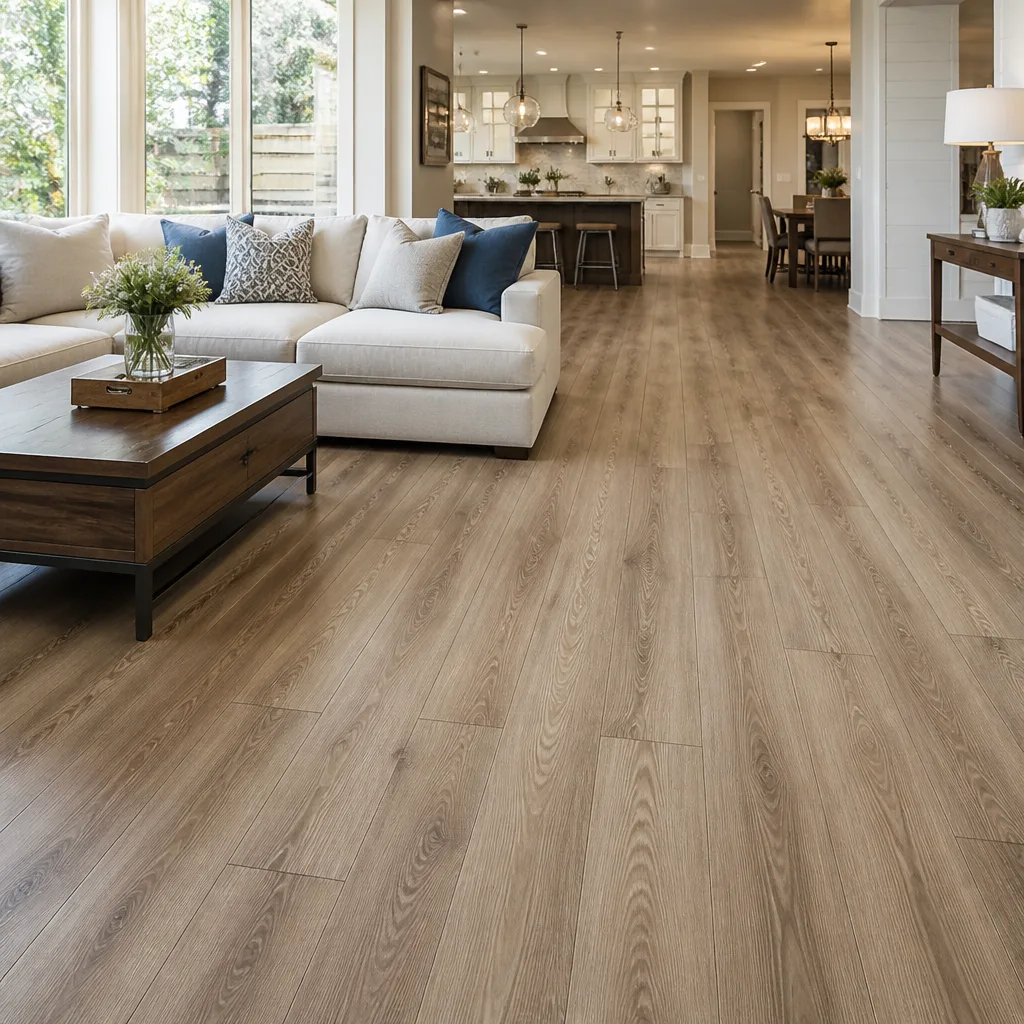 Laminate
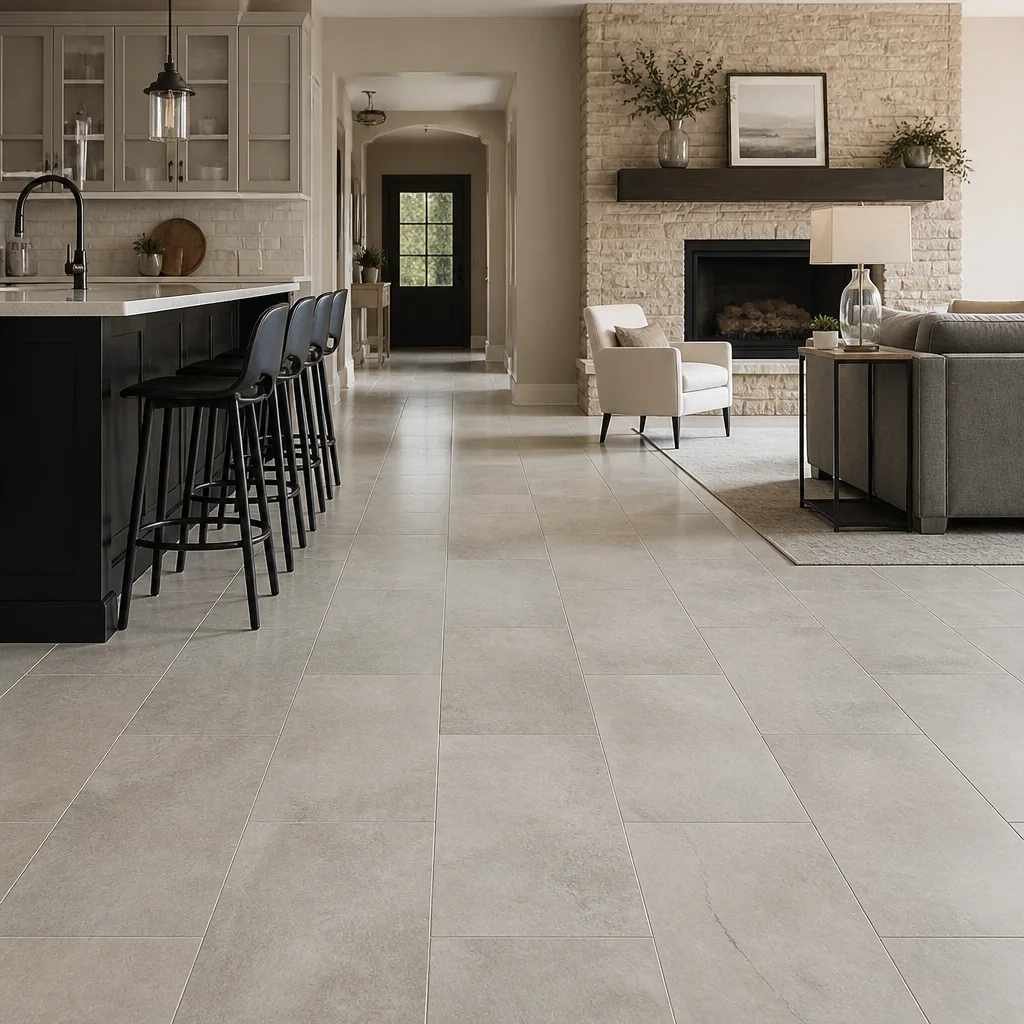 Porcelain tile
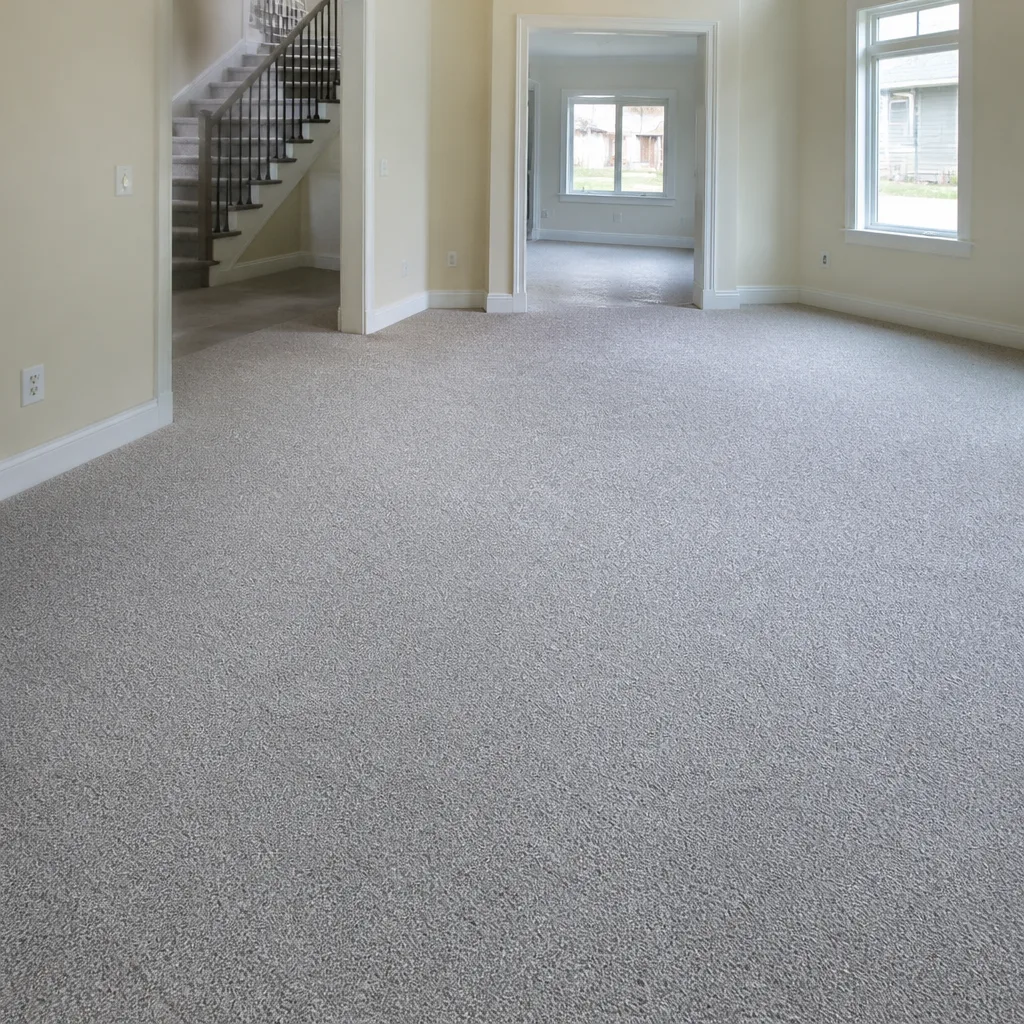 Carpet
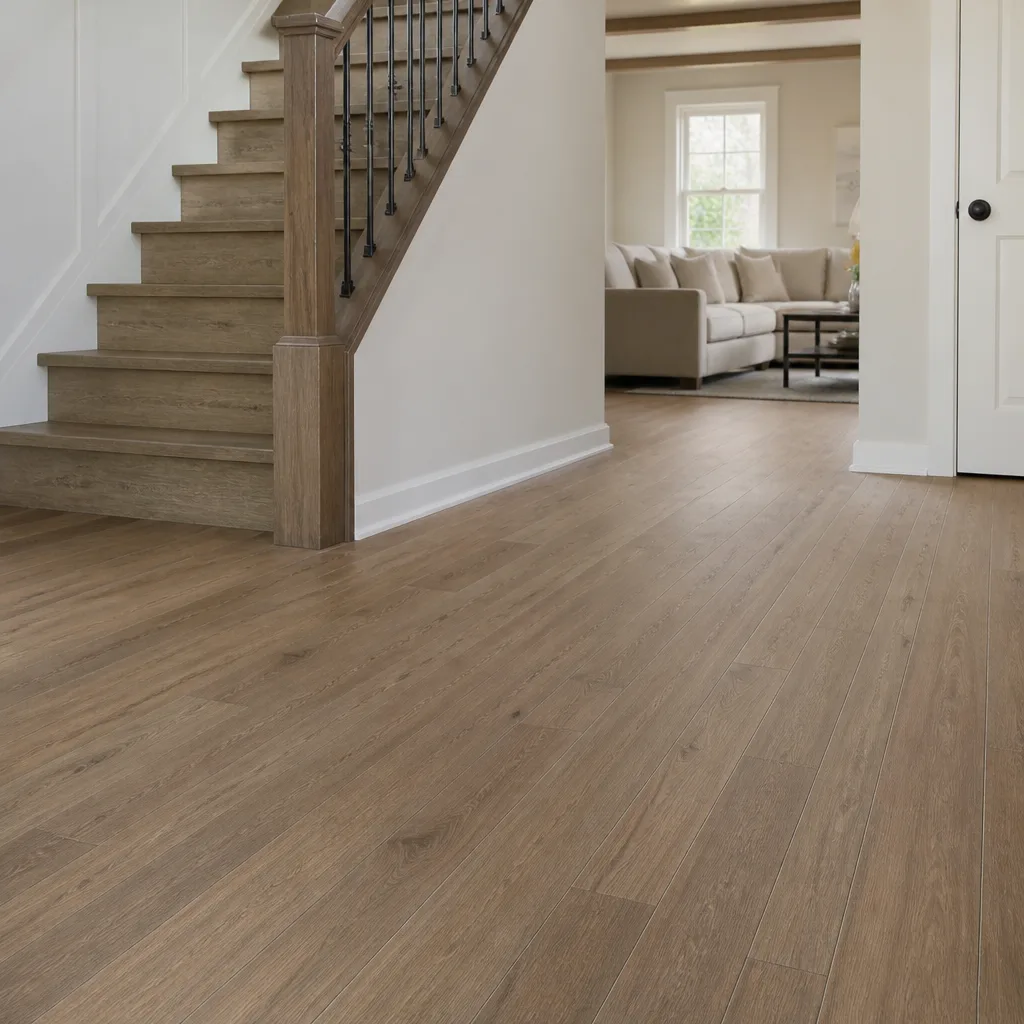 Shaw
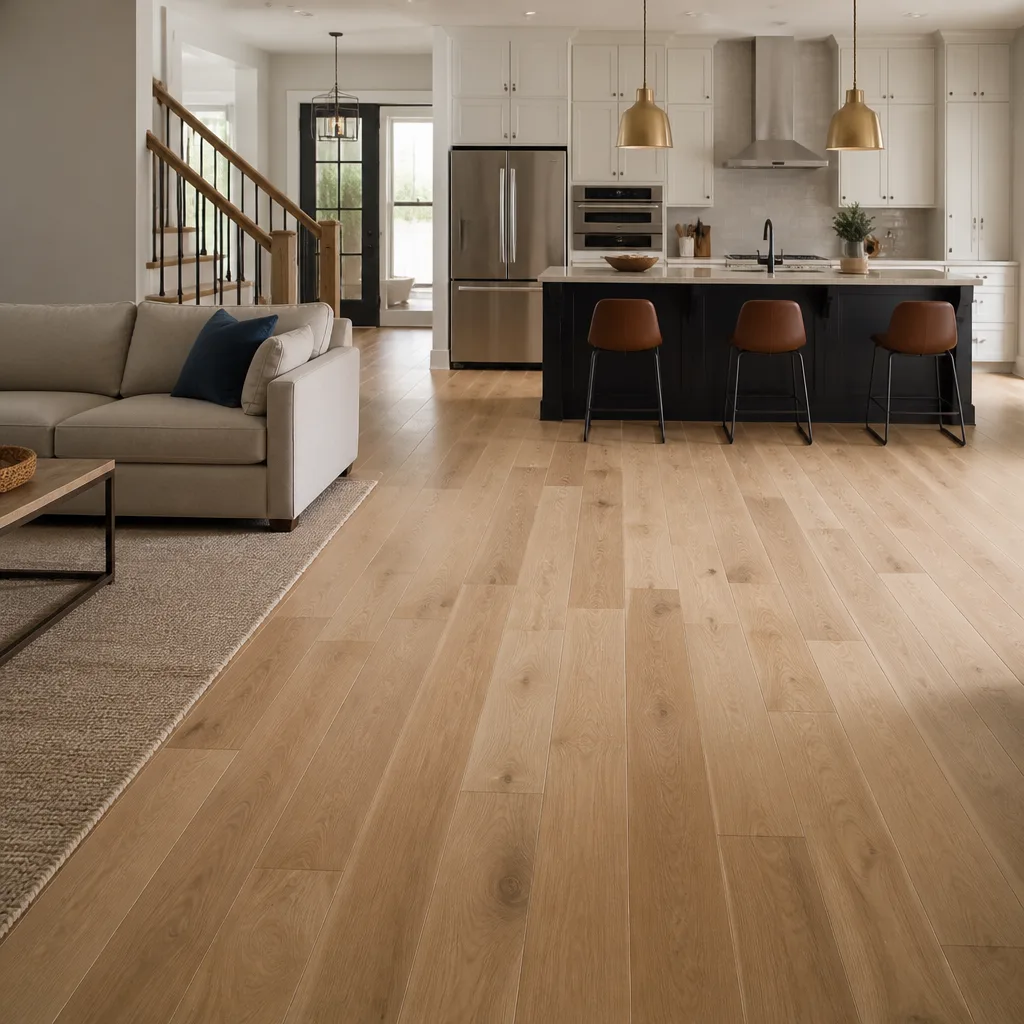 Mohawk
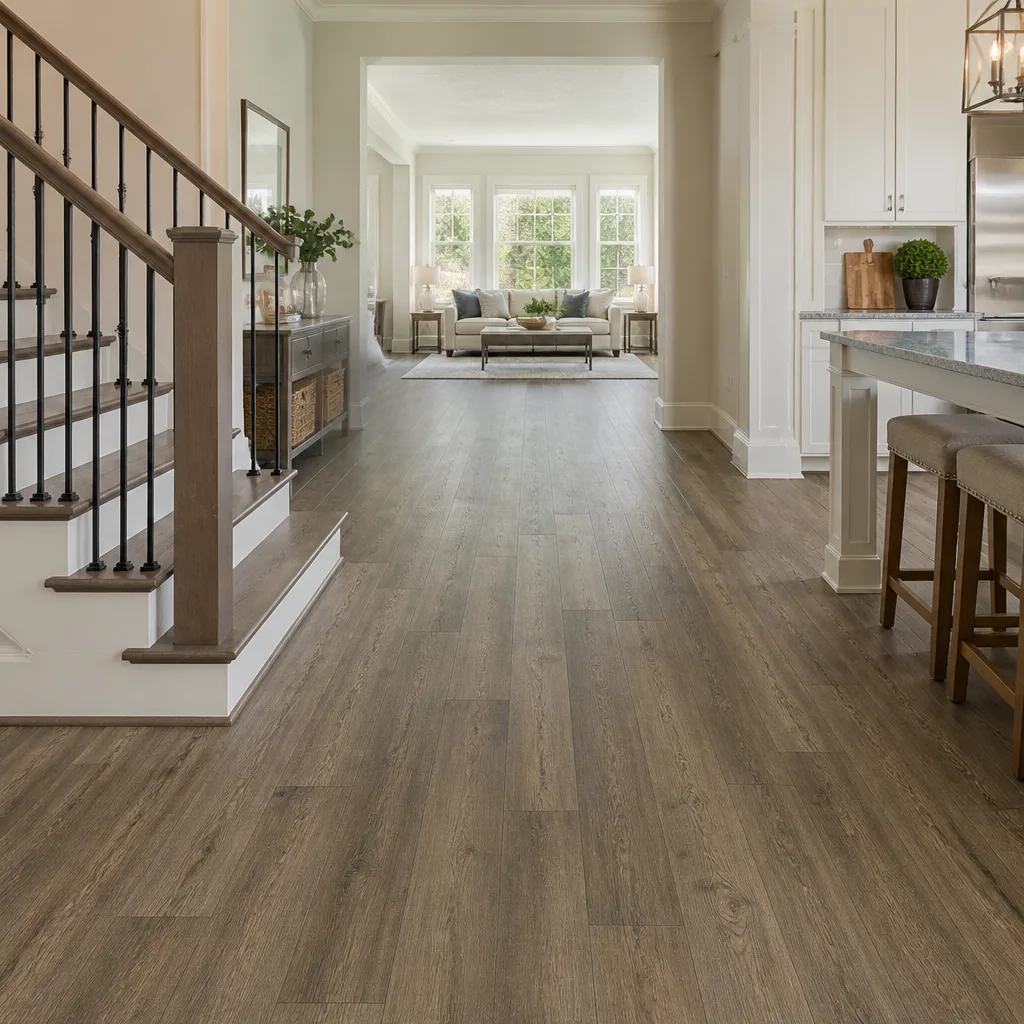 COREtec
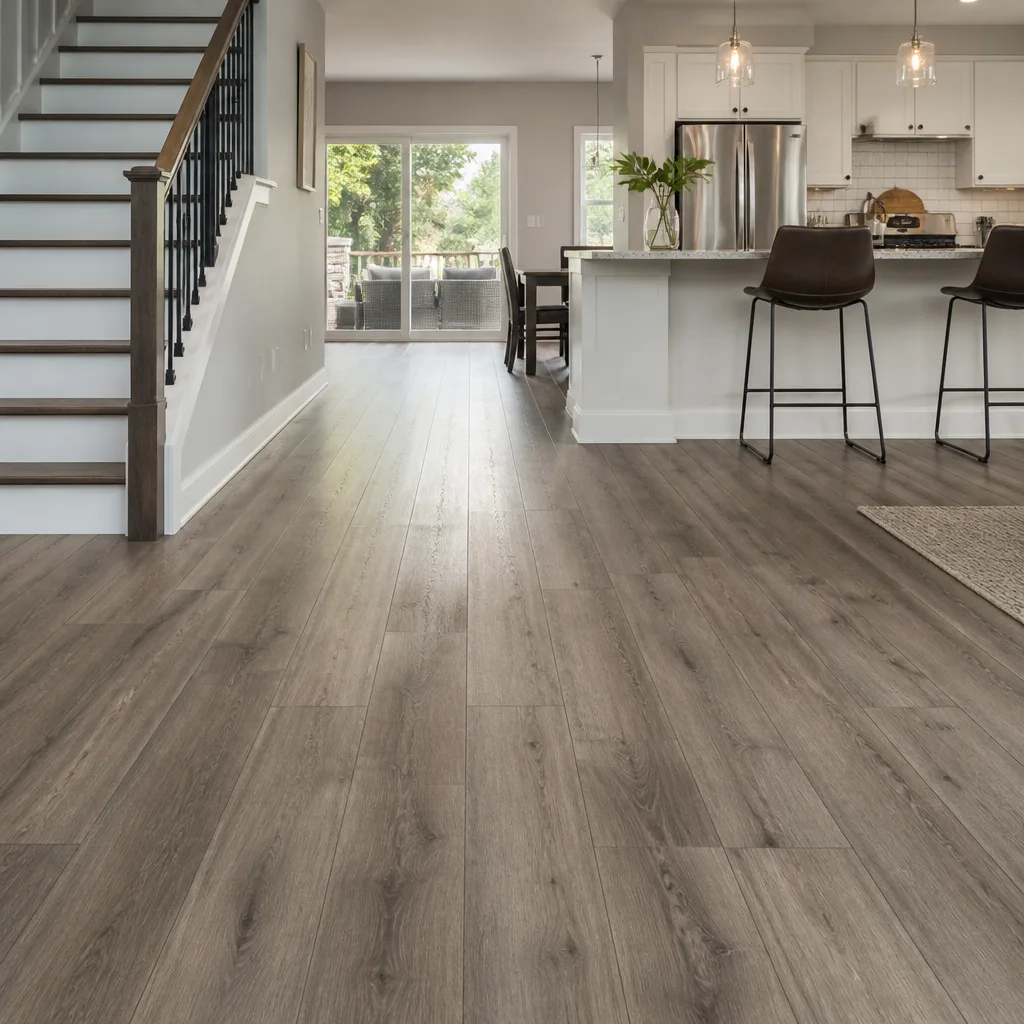 Pergo
Free in-home measure and written estimate: Shaw, Mohawk, COREtec and Pergo lines compared on your own rooms, with carpet, tile, vinyl plank, laminate and hardwood laid out side by side
Get your free estimateChoosing the Right Flooring for Every Room in Spring Valley Homes
Putting luxury vinyl plank in a Spring Valley master bedroom and carpet in the entryway is a common combination that gets the two rooms exactly backwards for longevity. Here in the valley, the front door takes the daily grind of desert grit carried in on shoes, and it also takes hours of low-angle sun that fades cheap finishes fast. The bedroom, meanwhile, is where upstairs noise passes from one unit to the next. Get those two rooms right and most of the floor plan sorts itself out. This guide walks room by room through the three variables that actually decide the choice: traffic load, moisture exposure, and what the subfloor will support. You’ll finish knowing which product belongs where in a Spring Valley home – and why.
Quick Answer
The best flooring for each room comes down to three factors, not personal taste: how much foot traffic the room sees, how much moisture it faces, and whether the subfloor and structure can carry the material. In Spring Valley, entryways and hallways want water-resistant, hard-wearing surfaces like LifeProof luxury vinyl plank or rectified porcelain tile, kitchens and bathrooms want tile or water-resistant vinyl, bedrooms upstairs in townhomes want carpet for acoustic reasons, and existing hardwood deserves a refinishing estimate before anyone talks about replacement. Match the product to those three conditions and the floor will hold up.
Styles & brands we work with
- Hardwood
- Engineered hardwood
- Luxury vinyl plank
- Laminate
- Porcelain tile
- Carpet
- Shaw
- Mohawk
- COREtec
- Pergo
Table of Contents
- The Three Variables That Decide Every Room
- Entryways and Hallways: Where Desert Grit and Sun Win
- Kitchens: The Under-Sink and Grout Decision
- Bedrooms: Why Carpet Still Wins Upstairs
- Bathrooms and Laundry Rooms on a Slab
- Open Floor Plans and the Transition Problem
- Hardwood: Refinish Before You Replace
- Common Mistakes to Avoid
The Three Variables That Decide Every Room
Before brand names or color swatches, every flooring decision in a Spring Valley home runs through three screens. Miss one and you’ll be back at square one in a couple of years.
1. Traffic load. How many feet cross the room on an average day, and what’s on those feet? Appliances, pet claws, and rolling office chairs all count. A guest room and a back hallway are not the same problem.
2. Moisture exposure. Two kinds matter here. Surface moisture from spills, wet shoes, and dishwasher leaks. And moisture coming up from below, which on a slab-on-grade foundation like most Spring Valley builds is a real consideration. It’s why we always check slab moisture before a wood or laminate install.
3. Subfloor and structure. Is the slab flat and sound? Is the second floor framed for tile’s weight? Does existing hardwood have enough thickness left to refinish? These are answered at the estimate visit, not guessed at from a catalog.
Get all three answered for each room and the product almost picks itself. That’s the whole method. Most homeowners we talk to in Spring Valley have already done their research on brands; they’re just missing this framework to sort the rooms.
Entryways and Hallways: Where Desert Grit and Sun Win
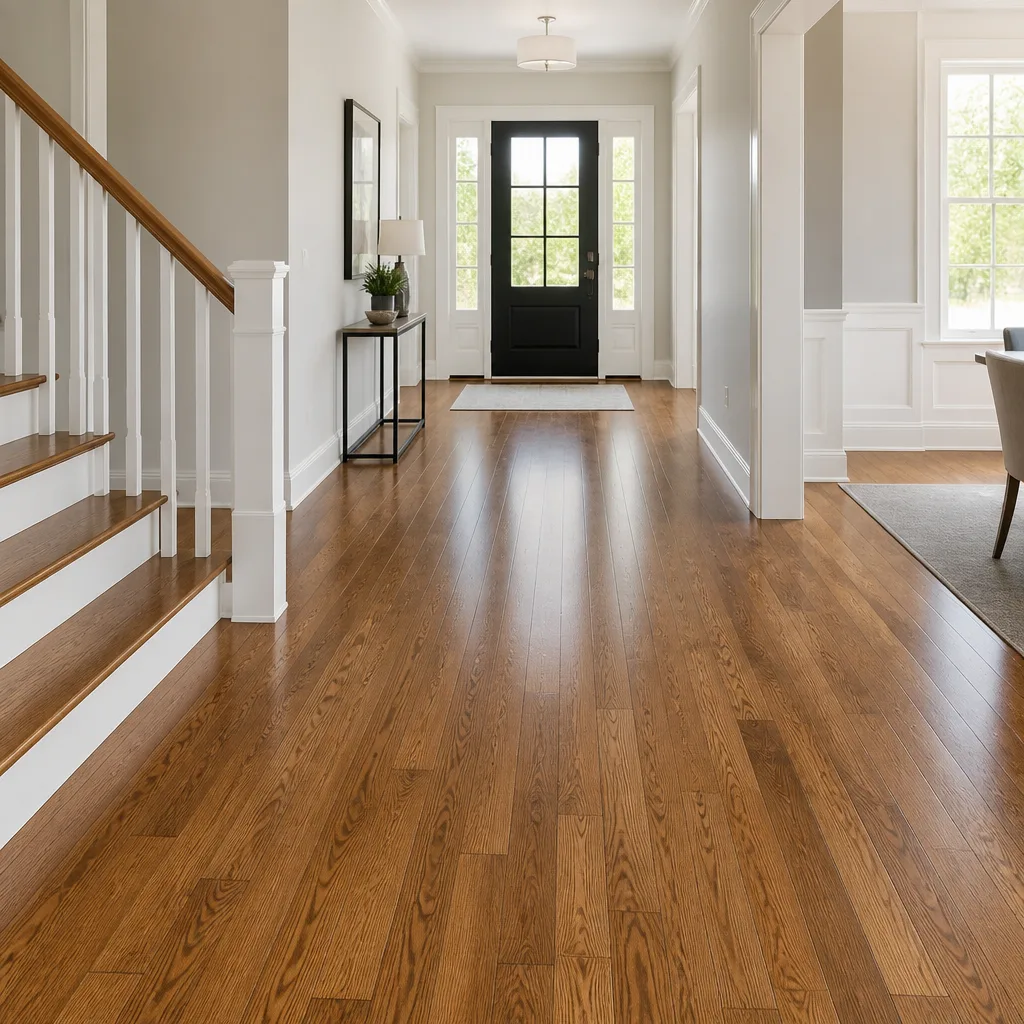
Entryways and hallways are the highest-wear zones in a Spring Valley home. Fine desert grit acts like sandpaper underfoot, and low-angle sun through a front window or sidelight will wear down any finish that isn’t built for UV exposure. Hard surfaces handle this better than anything soft.
National guides rarely account for this. A finish that survives a damp climate can dull quickly when what’s grinding across it is dry dust and sand. That’s why we steer entryways away from delicate finishes and toward surfaces that shrug it off:
- Luxury vinyl plank – LifeProof is a strong pick for families and pets. It resists water and stands up to daily grit, and it handles surface moisture without swelling.
- Porcelain or ceramic tile – Daltile gives us depth on tile options, and porcelain brings commercial-grade resilience to a busy threshold.
- Hardwood with a durable finish – beautiful, but expect a refinish sooner in an entryway than in a living room. It’s a maintenance reality, not a dealbreaker.
What we’d skip here: carpet. An entry mat only covers so many square feet, and the strip of carpet beside it takes the worst of the traffic first. Save the soft flooring for rooms where feet are gentler.
Kitchens: The Under-Sink and Grout Decision
Kitchens force a straightforward choice: the fastest path to a durable floor is water-resistant luxury vinyl plank, while tile gives the most forgiving surface for spills but demands grout upkeep. There’s no single right answer. There’s a decision tree.
- Start with the under-sink risk. Under-sink cabinets are where slow leaks hide. A slow drip finds the seams of almost any floor. Water-resistant vinyl (LifeProof, COREtec) handles surface water far better than laminate or wood, and it gives you a seam-free plank that’s easier to keep clean.
- Weigh grout maintenance honestly. Tile in a kitchen is durable and timeless, but grout lines trap grease and crumbs from daily cooking. Sealed grout helps; it doesn’t eliminate the job. If you’d rather not think about grout for years, tile may not be your kitchen floor.
- Consider pets and kids. A kitchen with a water bowl and dropped dishes leans toward luxury vinyl plank. Water-resistant flooring is the practical choice for high-traffic homes.
- Account for the transition to the next room. In an open-plan Spring Valley kitchen, the flooring often runs straight into the living area. We’ll get to why that matters below.
When in doubt, book the estimate and let us check the subfloor and any under-cabinet moisture first. A free in-home measure tells you more than any photo.
Bedrooms: Why Carpet Still Wins Upstairs
Carpet still wins in upstairs bedrooms for one specific reason: acoustics. In second-floor Spring Valley townhomes and two-story builds, hard flooring amplifies footfall and transmits it to the rooms below. Carpet absorbs that impact and muffles the sound that would otherwise carry through the floor structure.
This is the room combination we most often see reversed. Homeowners put luxury vinyl plank in the master and carpet in the entryway – exactly backwards for longevity and noise. Downstairs entries want hard, water-resistant surfaces. Upstairs bedrooms want soft.
Carpet also does something no hard floor can in a bedroom: it feels warm underfoot on a winter morning, and it softens the room for sleep. Here’s how we’d match carpet to the room:
- Master and guest bedrooms upstairs – carpet, chosen for comfort and sound control. Mohawk and Shaw both give us a wide range of textures and colors without locking you into one look.
- Downstairs bedroom off a tile or vinyl main floor – many Spring Valley homeowners prefer to continue the hard surface for continuity, especially when the room doubles as a home office.
- Kids’ rooms – carpet, for comfort and a little forgiveness on the floor.
If a family member has allergies, talk to us at the estimate. We’ll explain what options fit without overstating anything. Carpet and pads vary widely, and what works depends on the product and the home.
Bathrooms and Laundry Rooms on a Slab
Bathrooms and laundry rooms on a Spring Valley slab come down to a tradeoff between porcelain tile, luxury vinyl plank, and sheet vinyl. Here’s how the three compare in a wet room.
Porcelain tile is the most durable and water-resistant of the three. Daltile gives us commercial-grade supply depth, which matters for larger bathrooms and laundry rooms. Set with a proper waterproofing layer, tile stands up to splashes and steam. Grout is the maintenance point: it needs sealing and occasional cleaning.
Luxury vinyl plank is water-resistant and forgiving, and it’s an excellent fit for a laundry room or a powder bath where you want the look of wood without the worry. COREtec and LifeProof both make water-resistant lines built for high-moisture rooms. Just know that “water-resistant” isn’t “waterproof”: standing water and moisture from below still have to be dealt with, and those floors still need a proper slab check.
Sheet vinyl is the budget-friendly, low-seam option. Fewer seams mean fewer places for water to get underneath. It’s less design-forward than plank or tile but a practical choice in a rental or a busy laundry room.
Whichever you choose, we check slab moisture and the subfloor’s condition on site. What a wet room can safely take depends on those answers, and the written estimate sets the final product and price.
Open Floor Plans and the Transition Problem
Open floor plans are common in Spring Valley builds, and they create a transition problem most flooring guides skip. An open kitchen flowing into living space means a single sightline across several rooms. If the flooring changes at each threshold, those transitions become a visual and practical sticking point.
Two approaches work:
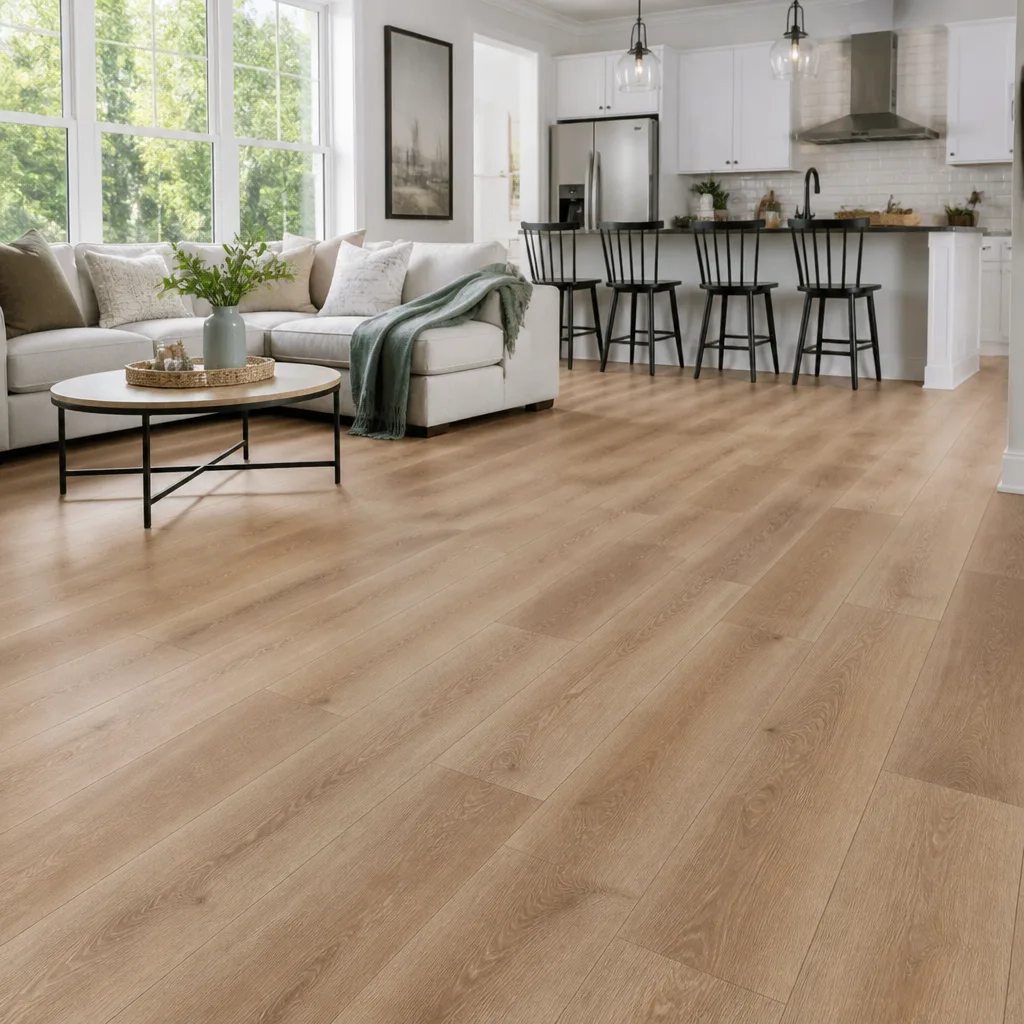
- One product across the whole open zone. If a kitchen and living area share a sightline, run the same luxury vinyl plank through both and skip the transition strip entirely. This is where brands like LifeProof and Mannington earn their keep – the plank runs continuously without a break in color or level. It handles the kitchen’s moisture risk and looks seamless in the living space.
- Deliberate, flush transitions where the material changes. Where the open plan meets a carpeted bedroom hallway or a tile bathroom, use a flush transition strip that keeps the floor level. A raised threshold is a trip hazard and a visual fault line in an open plan.
A similar decision applies to the whole of a Spring Valley home: match products room by room, but plan the transitions as a single system. That’s a conversation we have before a single plank is ordered.
Hardwood: Refinish Before You Replace
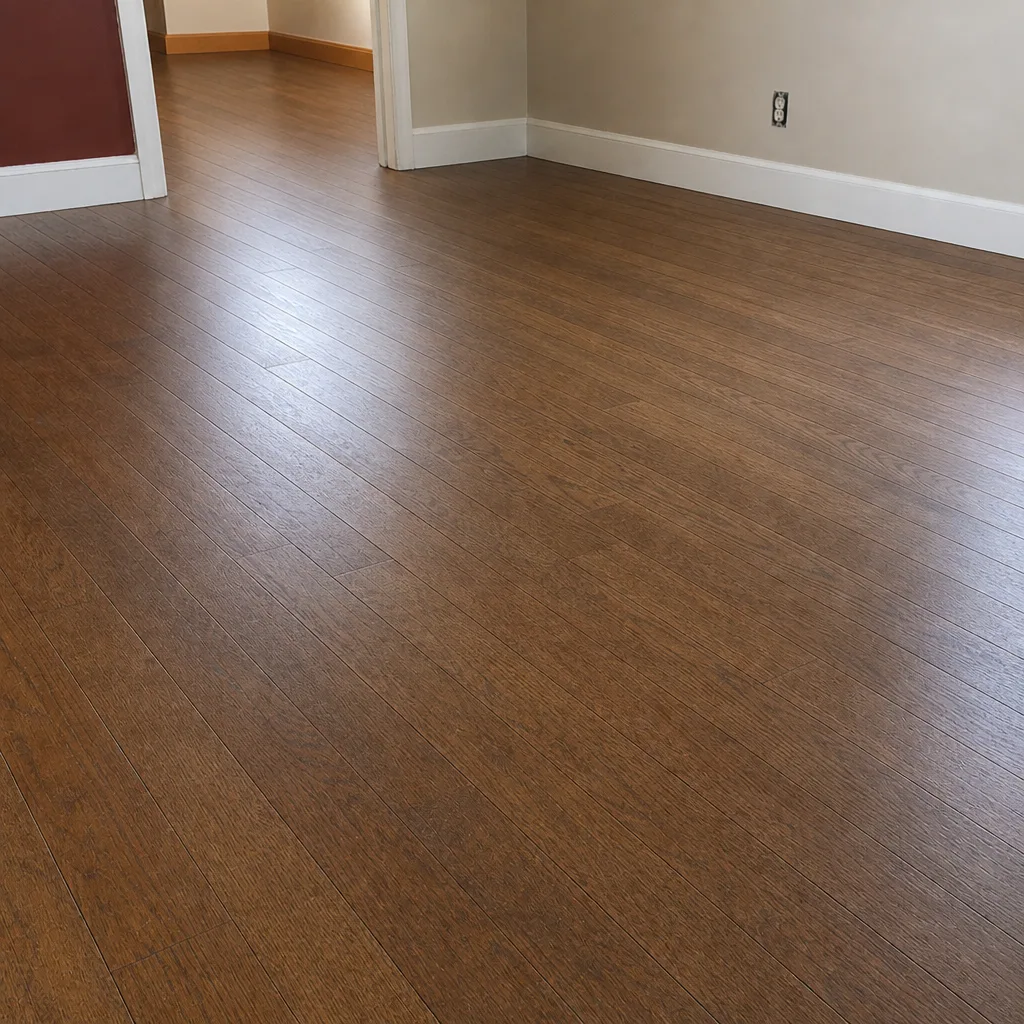
If you already have hardwood floors in a Spring Valley home, the first conversation isn’t replacement – it’s refinishing. Hardwood refinishing is a distinct service from new installation, and it describes what it is: taking an existing floor and bringing it back to life. It’s often a cost-conscious alternative to tearing out and starting over.
Not every floor can be refinished, though. It depends on the thickness of the wood and its condition. A floor that’s been refinished several times may not have enough material left to sand again. We check that at the estimate visit, along with the type of finish and the subfloor’s condition. We also can’t promise a stain will match a sample exactly; how the wood takes stain varies, and the product instructions and the written estimate set the plan.
When a refinish is possible, the outcome is a floor that holds up to real life and spares you the cost and disruption of a full replacement. When it isn’t, we’ll tell you plainly and talk through replacement. That’s the honest order to have the conversation.
Common Mistakes to Avoid
- Putting carpet in the entryway. Desert grit and traffic hit an entry floor first. Carpet there wears out faster than anywhere else in the house, and it’s the worst place for a soft surface in a Spring Valley home.
- Skipping the slab moisture check. Most Spring Valley homes sit on a slab. Wood and laminate over a slab that wasn’t checked for moisture can cup and fail. We test at the estimate, always.
- Choosing a floor by looks alone. A finish that photographs beautifully may dull quickly under direct sun at a front window. Traffic, moisture, and light decide longevity, not the catalog.
- Assuming every floor can be refinished. Hardwood refinishing depends on the wood’s thickness and condition. It’s a check-at-the-estimate answer, not a given.
- Mixing materials without planning the transitions. An open plan with abrupt, raised thresholds looks unfinished and trips people. Plan the thresholds where the material changes.
- Calling luxury vinyl plank “waterproof” for wet rooms. It’s water-resistant. Standing water and moisture from below still have to be managed, and a laundry room still needs a proper slab check.
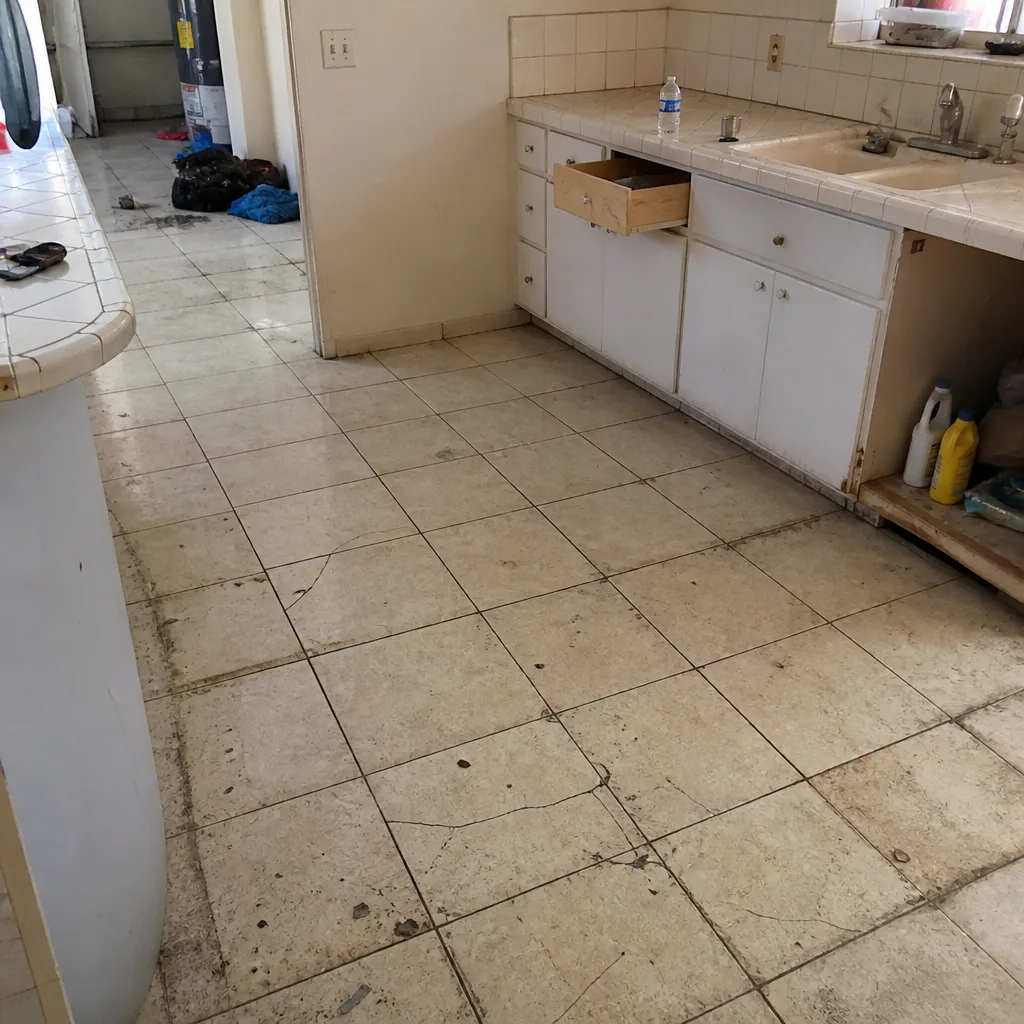
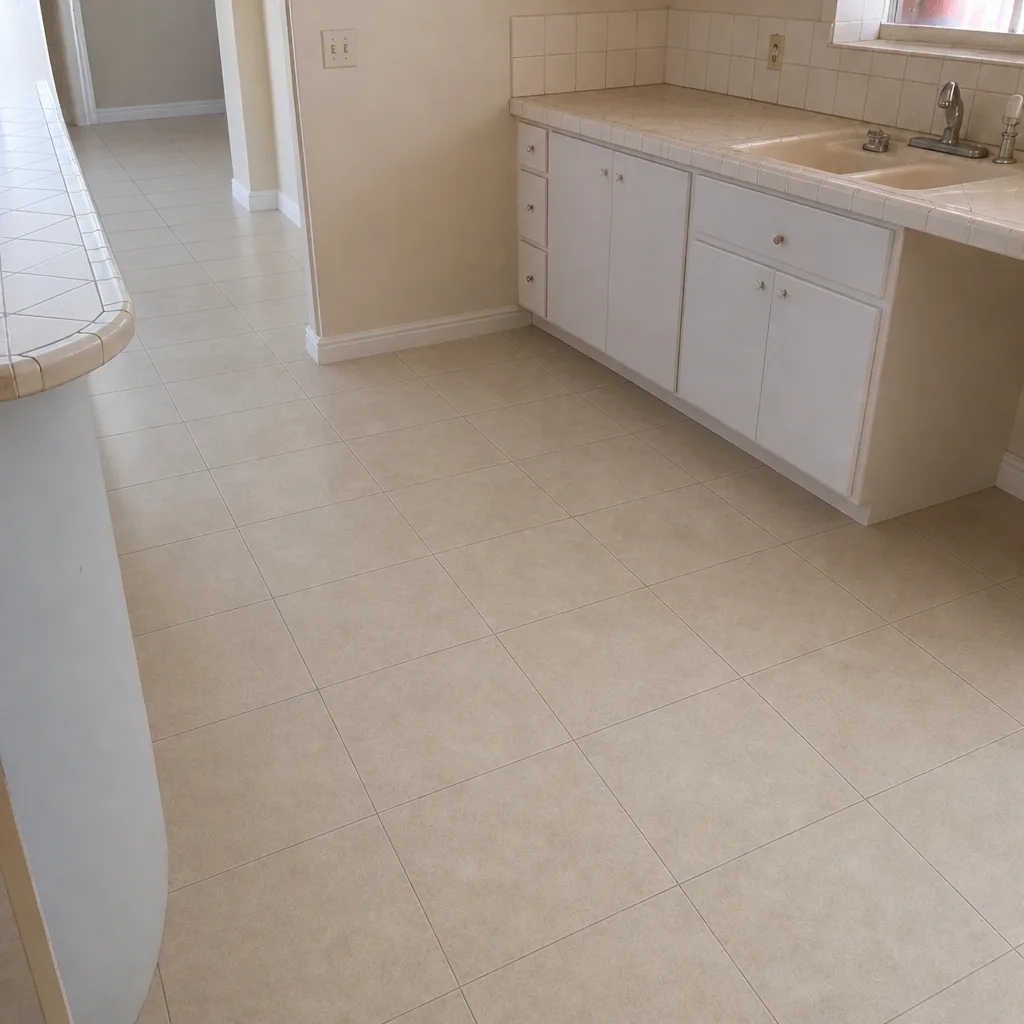
See the difference
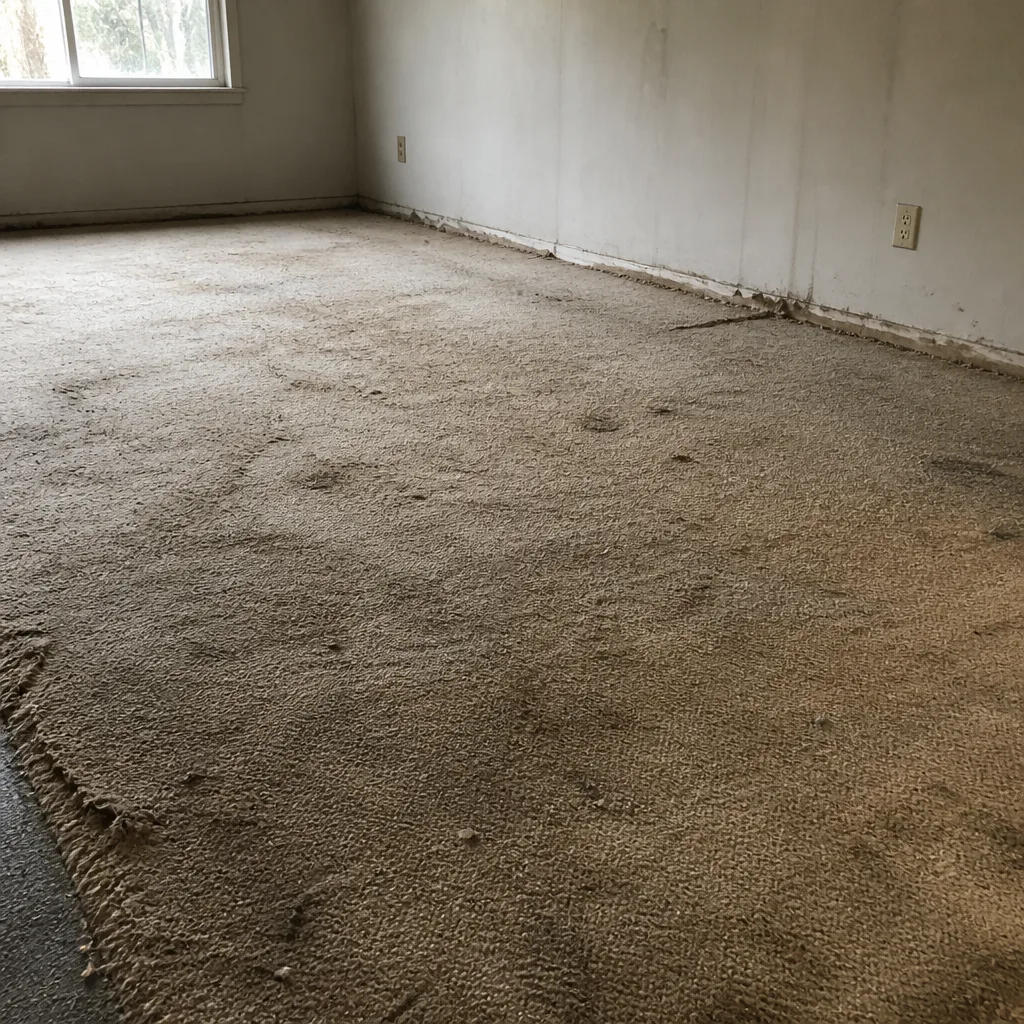 Before
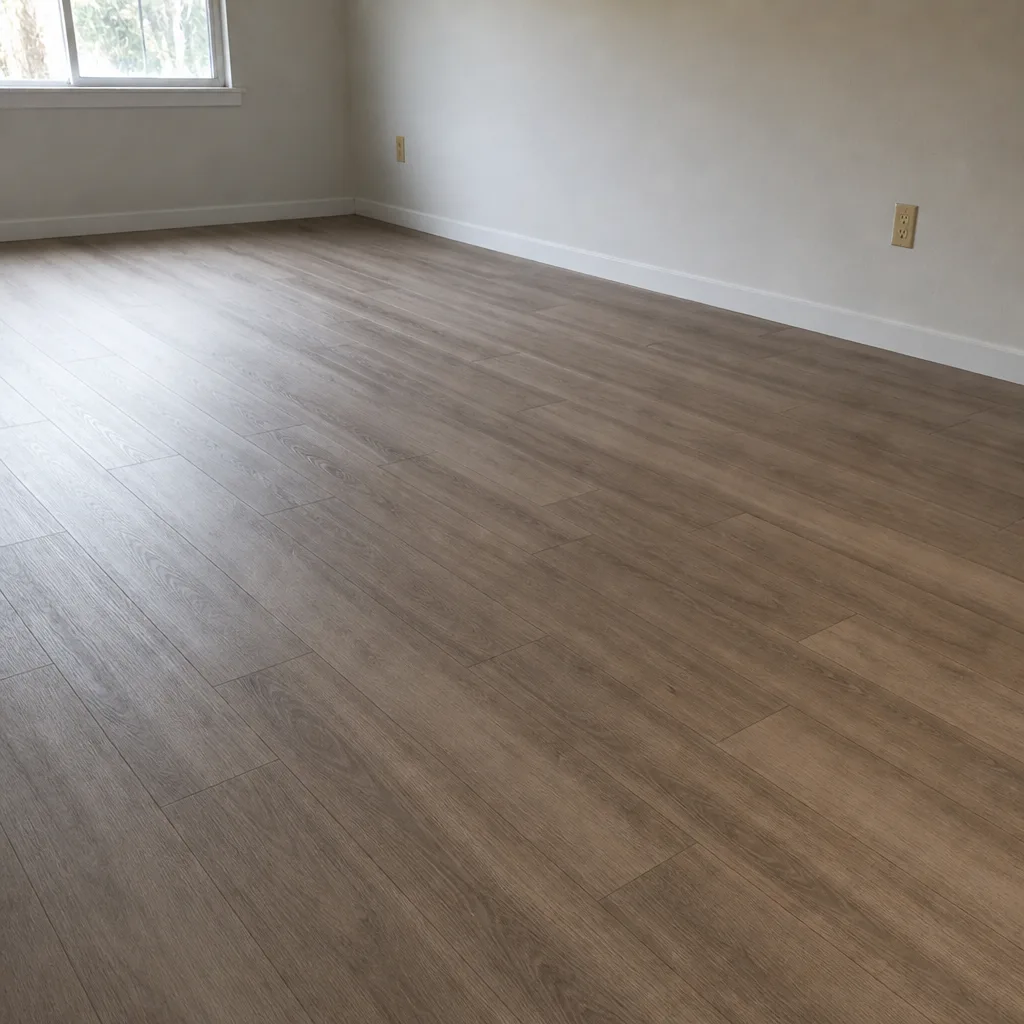 After
 Before
 After
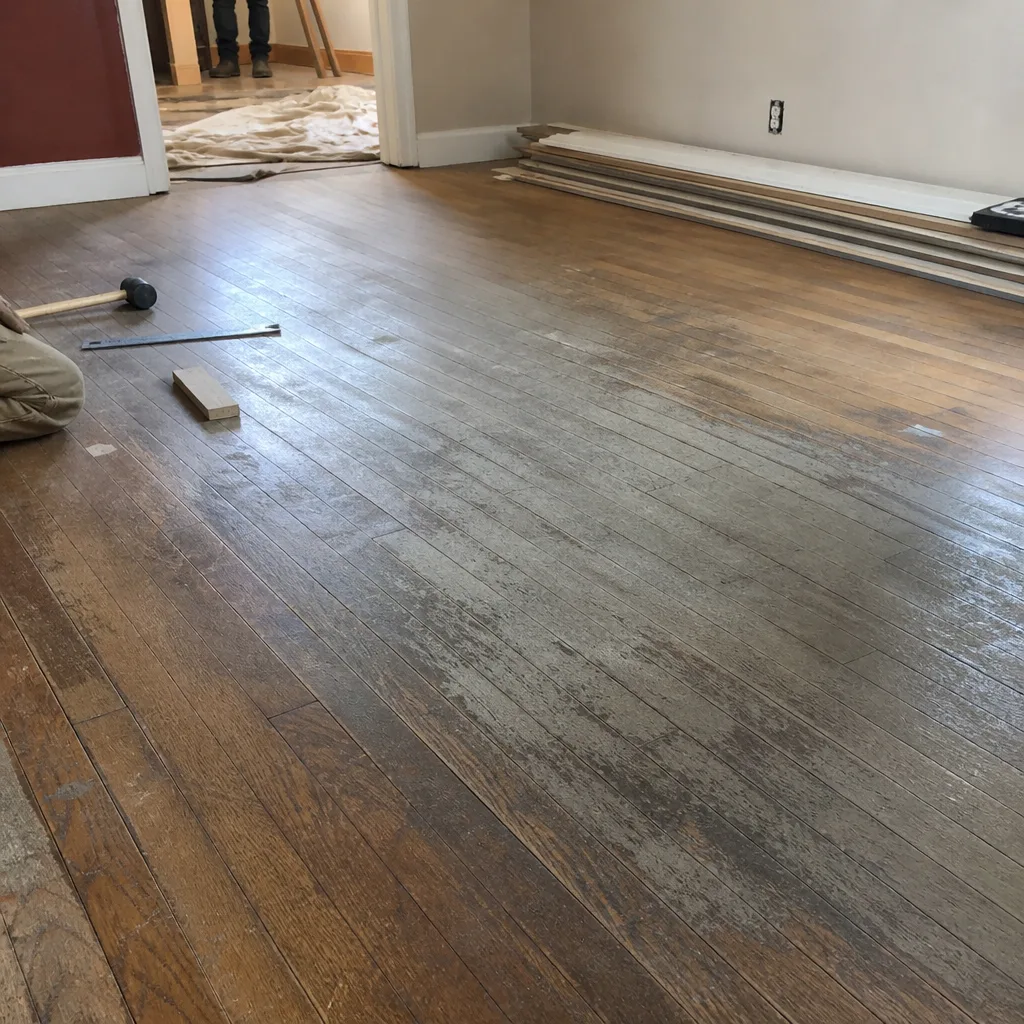 Before
 After
When to Call a Professional
Some rooms take a careful decision, and some homes need a second set of eyes. Call us when:
- You’re deciding between luxury vinyl plank and tile in a kitchen or a laundry room and want a straight answer on which handles your moisture and traffic better.
- You have existing hardwood and want to know if it can be refinished before anyone quotes a replacement.
- Your open plan changes materials at several thresholds and you want the transitions worked out as a system.
- You’re renovating a whole Spring Valley home room by room and want carpet, tile, and refinishing handled by one contractor.
Flooring Spring Valley offers free estimates in Spring Valley – call (888) 350-5054. We answer 24/7. Fast dispatch from 7am to 7pm, Sunday through Friday. The estimate is a free in-home measure, then a written price, then a booked install day. Our technicians have up to 14 years of experience, and we carry nine brands – from Pergo and Armstrong to premium lines like COREtec and Karndean – so we can match the room and the budget.
Frequently Asked Questions
Entryways and hallways do best with water-resistant luxury vinyl plank or porcelain tile, kitchens lean toward luxury vinyl plank or tile with grout you’re willing to maintain, upstairs bedrooms want carpet for acoustics and comfort, and bathrooms and laundry rooms are best on porcelain tile or water-resistant vinyl depending on slab conditions. The right answer is always the one that fits the room’s traffic, moisture, and subfloor.
Carpet in the entryway is the room combination we see reversed most often. Desert grit and traffic hit an entry floor first, so carpet there wears out faster than anywhere else in the house, and it offers no protection against surface moisture. Save the carpet for bedrooms and keep the entry on a hard, water-resistant surface. Call (888) 350-5054 for an exact quote – estimates are free.
Luxury vinyl plank is water-resistant, not waterproof. It handles surface spills and humidity well, which is why COREtec and LifeProof lines work in kitchens and laundry rooms, but standing water and moisture from below still have to be dealt with. The right subfloor check matters as much as the product.
It depends on the thickness of the wood and its condition. Some floors have plenty of material left to sand; others don’t. We check that at the estimate visit and tell you plainly whether a refinish will work. A refinish is a cost-conscious alternative to replacement, but only when the wood supports it. Call us to book a free estimate.
Two ways. You can run one product across the whole open zone – luxury vinyl plank through a kitchen and living area, for example – so there’s no transition strip at all. Or, where the material has to change, use a flush threshold that keeps the floor level. Raised transitions look unfinished and trip people, so we plan those at the estimate.
We install nine brands – Shaw, Mohawk, COREtec, Pergo, LifeProof, Mannington, Armstrong, Daltile, and Karndean – and the room does influence the pick. Daltile for commercial-grade tile, COREtec or LifeProof for water-resistant high-moisture rooms, Karndean for a premium finish, Mannington, Shaw, and Mohawk for carpet and more. We supply and install the product, and the brand fits the room and your budget. Call (888) 350-5054 to talk it through.
The Bottom Line
Choosing flooring room by room isn’t about personal taste first. It’s about traffic load, moisture exposure, and what the subfloor will carry. In a Spring Valley home, the front entry gets the grit and sun, the upstairs bedroom carries the noise, the kitchen hides its risk under the sink, and the open plan ties it all together. Match each room to those conditions and the floor will hold up to real life. When you’re ready, book the free in-home estimate, get a written price, and then set the install day. Our technicians have up to 14 years of experience, and we install and service the floor you choose. Call (888) 350-5054.
Written by the team at Flooring Spring Valley.