
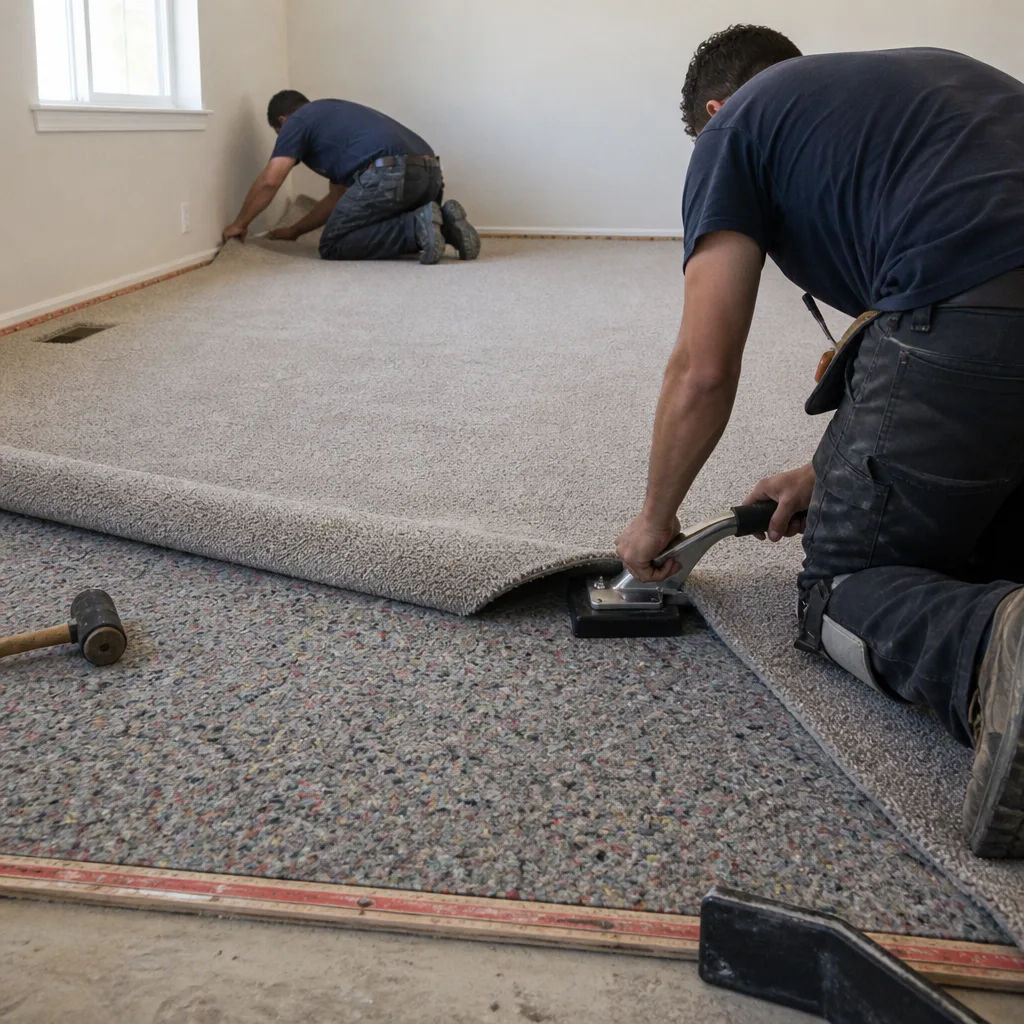
Last updated November 18, 2026
 Hardwood
 Engineered hardwood
 Luxury vinyl plank
 Laminate
 Porcelain tile
 Carpet
 Shaw
 Mohawk
 COREtec
 Pergo
Free in-home measure and written estimate: Shaw, Mohawk, COREtec and Pergo lines compared on your own rooms, with carpet, tile, vinyl plank, laminate and hardwood laid out side by side
Get your free estimateHow to Hire a Flooring Contractor in Spring Valley: A Step-by-Step Guide
Three of the most common flooring failures in residential homes – peaking, gapping, and hollow spots – almost always trace back to the installer, not the product. That’s the uncomfortable truth most buying guides skip. A beautiful COREtec plank laid over a wet slab will cup. A premium Mannington carpet stretched thin will ripple within a season. The material matters, but the crew’s read on your subfloor matters more. This guide walks you through how to vet a flooring contractor in Spring Valley the way a tradesperson would: license checks, subfloor questions, proposal anatomy, contract red flags, and the reference calls nobody makes. By the end you’ll know exactly what to ask before you sign.
Quick Answer
To hire a flooring contractor in Spring Valley, verify a current Nevada State Contractors Board license, ask specifically how the crew handles slab versus wood subfloors, demand a written proposal that separates material from labor and lists subfloor prep, and check two references for subfloor work and post-install follow-through. The cheapest bid usually skips the prep line – which is exactly where floors fail.
Styles & brands we work with
- Hardwood
- Engineered hardwood
- Luxury vinyl plank
- Laminate
- Porcelain tile
- Carpet
- Shaw
- Mohawk
- COREtec
- Pergo
Table of Contents
- Step 1: Verify the Contractor’s Nevada License
- Step 2: Ask the Subfloor Questions That Separate Crews
- Step 3: Read the Proposal Like an Estimator
- Step 4: Spot Contract Red Flags Before You Sign
- Step 5: Call References for the Right Reasons
- Why Spring Valley’s Climate Makes Subfloor Prep Non-Negotiable
- Matching the Material to the Room and the Subfloor
- What a Realistic Schedule Looks Like
Step 1: Verify the Contractor’s Nevada License
Any contractor performing flooring work for compensation in Nevada needs a state license, and you can verify one in about five minutes on the Nevada State Contractors Board (NSCB) website. This is the single most important step, and most homeowners skip it entirely. A license number printed on a business card means nothing until you’ve looked it up.
Here’s what to check on the NSCB database:
- License status is “active.” Suspended, expired, and revoked licenses all still show up in searches – read the status line, not just the name.
- The classification covers flooring. Nevada licenses are classified by trade. Confirm the classification matches residential flooring work, not just general building.
- Name and business name match what’s on your proposal. If the person quoting you isn’t the licensed qualifier or an authorized representative, ask why.
- Check the bond and insurance fields. A licensed contractor carries both. Ask for a certificate of insurance showing general liability coverage before any work begins.
- Look for complaints or disciplinary actions. The NSCB publishes these. One old complaint isn’t disqualifying; a pattern of unresolved ones is.
For Spring Valley homeowners, the practical note is this: a lot of flooring work here is quoted by handymen and “installers” working without a license. That’s fine until something goes wrong and you have no recourse. If the quote is significantly below others and there’s no license number, you’ve found the reason. The same verification logic applies whether you’re scheduling carpet installation for a bedroom or a full tile job on a kitchen floor.
Our own approach is straightforward: we’re state-licensed, insured and bonded, and we’ll show you documentation before you ask. It’s a floor, not a hedge trim – you should never feel awkward requesting proof.
Step 2: Ask the Subfloor Questions That Separate Crews
Most flooring contractors can install a plank or set a tile. Far fewer can diagnose what’s happening under your existing floor before they lay anything new. That’s the difference between a floor that looks great in year one and a floor that still looks great in year five. Ask these questions during the estimate and listen carefully to the answer.
- “Is my subfloor slab or wood, and how will that change your prep?” Spring Valley has a mix of slab-on-grade homes and wood-framed construction. The prep methods are completely different. A crew that doesn’t know which you have before visiting isn’t taking the estimate seriously.
- “How do you test for moisture in a slab?” There’s a right answer here: a moisture test, not a visual inspection. Slabs in the desert still wick moisture from below, and that moisture travels up through adhesive and flooring. If they say “we just look at it,” that’s a red flag.
- “What’s your process for leveling a floor that’s out of tolerance?” Every product has a flatness requirement – yours does too, and it’s written in the manufacturer’s installation instructions. A good crew can describe how they bring a floor back into tolerance, whether that’s grinding high spots, patching low ones, or using a self-leveling compound.
- “Have you worked on homes built in the same era as mine?” Older Spring Valley homes sometimes have subfloor conditions – old adhesive residues, prior water damage, deflection – that a crew who’s only touched new construction may never have encountered.
- “Who actually does the work – your crew or a subcontractor?” Both answers are legitimate. What matters is that the person quoting you knows exactly who will show up and how they prep.
We install and service the floor the customer chooses, whether that’s LifeProof in a busy mudroom or a softer Mannington carpet upstairs. Our technicians have up to 14 years of experience, including the unglamorous part: prepping subfloors so the finished floor performs. If a contractor can’t walk you through slab versus wood prep at the estimate, keep looking.
Step 3: Read the Proposal Like an Estimator
A legitimate flooring proposal is a document you could hand to a different estimator and have them understand the job. It separates materials from labor, itemizes prep, and states what’s included and what isn’t. Vague proposals aren’t a sign of confidence – they’re usually a sign the crew plans to make decisions on site without telling you.
Here’s what a well-built proposal includes, and what a thin one leaves out:
- Material line items with brand, product, and quantity (with overage). “Carpet: $1,800” tells you nothing. You want brand, style, and square footage including the waste factor.
- A separate subfloor preparation line. If prep isn’t priced, it either isn’t happening or it’ll show up as a change order.
- Demo and haul-away. Removing the old floor and disposing of it costs money. Confirm it’s in the price.
- Move-out and move-back of furniture. Specify who’s moving what. If the proposal is silent, assume it’s you.
- Trim, transitions, and thresholds. Baseboard removal and reinstall, door transitions, and stair nosing are common surprise costs. Get them priced.
- Written scope of exclusions. A good contractor tells you what they won’t do. That’s a trust signal, not a weakness.
- Payment schedule tied to milestones. A deposit is reasonable; paying the full amount before material arrives is not.
Ask for the proposal in writing, and ask for the material spec sheet alongside it. If you’re comparing a Karndean quote to a Pergo quote, you can’t compare the totals without knowing which product line each one is pricing. Estimators who can’t or won’t put this in writing are telling you something. Our free estimates are written for exactly this reason – the written estimate sets the final price, and there are no verbal promises to argue about later. You can see how this works across our Flooring Spring Valley services.
Step 4: Spot Contract Red Flags Before You Sign
The single biggest dispute trigger in residential flooring is a contract that lists “flooring and installation” as one combined line item. It feels tidy. It’s a trap. When the floor fails, nobody can point to what was actually installed versus what was actually done, and the manufacturer’s warranty may not cover a defect the installer caused in the first place.
Watch for these red flags:
- “Flooring and installation” as one line. Material and labor should be separate line items so responsibility is clear if something goes wrong.
- No mention of subfloor prep. If prep isn’t in the contract, it isn’t happening, and that’s how hollow spots and tile cracks start.
- No acclimation plan. Materials need to acclimate before installation. Your product instructions and your written estimate set the timeline – the contract should reference it.
- Verbal scope changes during the job. Any change to the scope should be a written change order with a price before the work happens. “We’ll figure it out later” is how disputes start.
- Payment in full up front. A reasonable deposit to order materials is normal. Full payment before the truck arrives isn’t.
- No written warranty language. You want to see, in writing, what the contractor covers and what falls under the manufacturer’s warranty. If it’s not on paper, it doesn’t exist.
- Pressure to sign today. A real estimator will let you read a proposal over a weekend. Urgency is a sales tactic, not a service.
In Spring Valley, where the summer heat pushes interior temperatures up during installs, a crew that plans material handling and acclimation carefully is a crew that knows the local conditions. Ask what their acclimation plan is for your specific product. If they don’t have one, that’s a red flag on its own.
Step 5: Call References for the Right Reasons
Most homeowners call references and ask, “Did you like your floor?” That question tells you almost nothing. Aesthetics are the easiest part of the job. The references that matter reveal how the crew handled the hidden work and what happened after the last walkthrough.
Call two references per contractor and ask these questions specifically:
- “What was your subfloor situation, and how did the crew handle it?” If the reference can’t answer, they probably didn’t know what was happening – which means the crew didn’t communicate.
- “Did the crew show up when they said they would, and did they finish when they said they would?” Scheduling accuracy is a strong character signal. A crew that plans realistically finishes realistically.
- “Did the price change from the written estimate? If so, what changed and why?” Some change orders are legitimate. A pattern of them isn’t.
- “How did they leave the house each day?” Dust containment and haul-away matter in occupied homes.
- “Did they follow up after the install?” A crew that calls six weeks later to check on a floor cares about how it performs, not just how it looked on day one.
- “Have you had any issues since? Did they come back?” This is the reference question that tells you whether the contractor stands behind the work.
Ask the contractor for references where they’ve returned to perform post-install follow-up. A contractor willing to give you names of customers they’ve serviced twice is one who has demonstrated the follow-through you’re looking for.
Why Spring Valley’s Climate Makes Subfloor Prep Non-Negotiable
Spring Valley sits in the Mojave, with summer highs regularly pushing above 100 degrees and interior temperatures in unshaded rooms climbing higher still during installs. That heat does two things to a flooring project: it affects how materials handle during installation, and it stresses the bond between floor and subfloor once the job is done. Understanding both helps you ask better questions.
The practical effects:
- Interior humidity swings wider than most people expect. Even desert climates have interior moisture cycles from HVAC use, plumbing, and slab wicking. A crew that doesn’t test for moisture before installing over a slab is guessing.
- Material handling needs care. Certain materials need to sit in the space they’ll be installed in before the crew touches them. The product instructions and written estimate set those timelines – ask for them.
- Subfloor prep in a heat-stressed slab is different from prep in a wood subfloor. The two require different materials and techniques. A crew that treats them as interchangeable is not one you want installing your floor.
- Tile work is sensitive to deflection and bond. A tile floor laid over a subfloor that isn’t within tolerance will eventually crack, no matter how good the tile is.
- Hardwood refinishing depends on structural condition. Whether an existing hardwood floor can be refinished that way – and whether a sample stain will match – depends on wood thickness and condition, checked at the estimate visit.
None of this is a reason to skip a flooring project in Spring Valley. It’s a reason to hire a crew that plans for the local conditions. Our technicians have seen every subfloor situation, and our estimate process is built around reading your specific floor before we quote. If you’re wondering whether your current floor can be rescued rather than replaced, ask us about refinishing – it’s often the smart first conversation, and it’s a service we offer standalone on floors we didn’t originally install.
Matching the Material to the Room and the Subfloor
The right flooring choice balances three things: the room’s traffic and moisture, the subfloor you’re building on, and your budget – in that order. Start with the room and the subfloor, then let the product follow.
- High-moisture rooms (kitchen, bathrooms, laundry) need water-resistant options. LifeProof and COREtec make water-resistant lines built for exactly these spaces. Be realistic about what “water-resistant” means: standing water and moisture from below still have to be dealt with.
- High-traffic living spaces need resilience without sacrificing feel. Mannington’s range covers both premium and mid-tier options, and Pergo is a solid entry point if you’re refreshing a rental or a starter home.
- Bedrooms and stairs often call for carpet. Carpet installation in Spring Valley is common for bedrooms and upstairs spaces where sound control and comfort matter more than water resistance.
- Entryways, kitchens, and bathrooms are the strongest candidates for tile. Tile flooring installation performed well handles the traffic and moisture, and it lasts when the subfloor is prepped correctly.
- Existing hardwood deserves a refinishing conversation before you consider replacement. Not every floor can be refinished – it depends on the thickness of the wood and its condition, checked at the estimate visit. When it can, refinishing extends the life of the floor and is often a cost-conscious path to a fully renewed room.
- Match the brand to the room, not the price tag. Our nine-brand portfolio – from Shaw, Mohawk, COREtec, and Pergo to LifeProof, Mannington, Armstrong, Daltile, and Karndean – gives us the range to recommend what fits your room, not just what fits an inventory.
We’ll steer you toward the right product for the room, not toward the most expensive one. That’s the job. You can read more about how we approach tile flooring installation specifically if you’re weighing tile against a resilient floor in a bathroom or kitchen. If you’re not sure which direction to go, ask us for a free estimate – the visit includes the conversation that helps you decide.
What a Realistic Schedule Looks Like
Flooring is a scheduled job, not a same-day service. A contractor who tells you they can start tomorrow has either got a cancelation or hasn’t thought about the prep. A realistic schedule follows a documented sequence from first call to final walkthrough.
- Free in-home estimate and measure. The contractor visits, measures the rooms, and looks at the subfloor.
- Written proposal. You receive a written estimate – the estimate sets the final price, and no number is final until it’s on paper.
- Product selection and ordering. Material lead times vary by brand and product line. Ask for an estimated arrival window.
- Acclimation. Materials acclimate in your home for the timeframe set by the product instructions and your written estimate.
- Subfloor prep and demo. Old floor comes out, subfloor is inspected, prepped, and brought within tolerance.
- Installation. This is a booked job with a booked day. The crew arrives, installs, and doesn’t leave until the job is complete.
- Final walkthrough and haul-away. Every edge, transition, and finish checked before payment.
Schedules depend on your specific job – the size of the rooms, the subfloor condition, and the product. No honest contractor will promise you a firm number of install days before the estimate. Ask for a realistic range, not a fixed date, and ask what could shift it. When you’re ready, call (888) 350-5054. We answer 24/7. Fast dispatch from 7am to 7pm, Sunday through Friday.
Common Mistakes to Avoid
- Accepting a quote over the phone without an on-site visit. A contractor who hasn’t seen your subfloor cannot give you an accurate quote in Spring Valley, where slab and wood subfloor conditions vary block to block.
- Chasing the lowest bid. The lowest number almost always means subfloor prep was skipped or the product is underspecified. You’ll pay for it later in hollow spots or premature replacement.
- Skipping NSCB license verification. It takes minutes and it’s the one check that determines what recourse you have if the job goes wrong.
- Signing a contract with “flooring and installation” as one line. Insist on material and labor separation. When the warranty is contested, you’ll be glad you did.
- Not asking who handles furniture and haul-away. These are the surprise costs. Get them written into the proposal before you sign.
- Assuming refinishing isn’t an option for existing hardwood. Many Spring Valley homes have hardwood worth refinishing. It depends on thickness and condition – ask before you assume replacement.
- Paying the full amount upfront. A reasonable deposit is normal; paying the whole contract before material arrives is not.
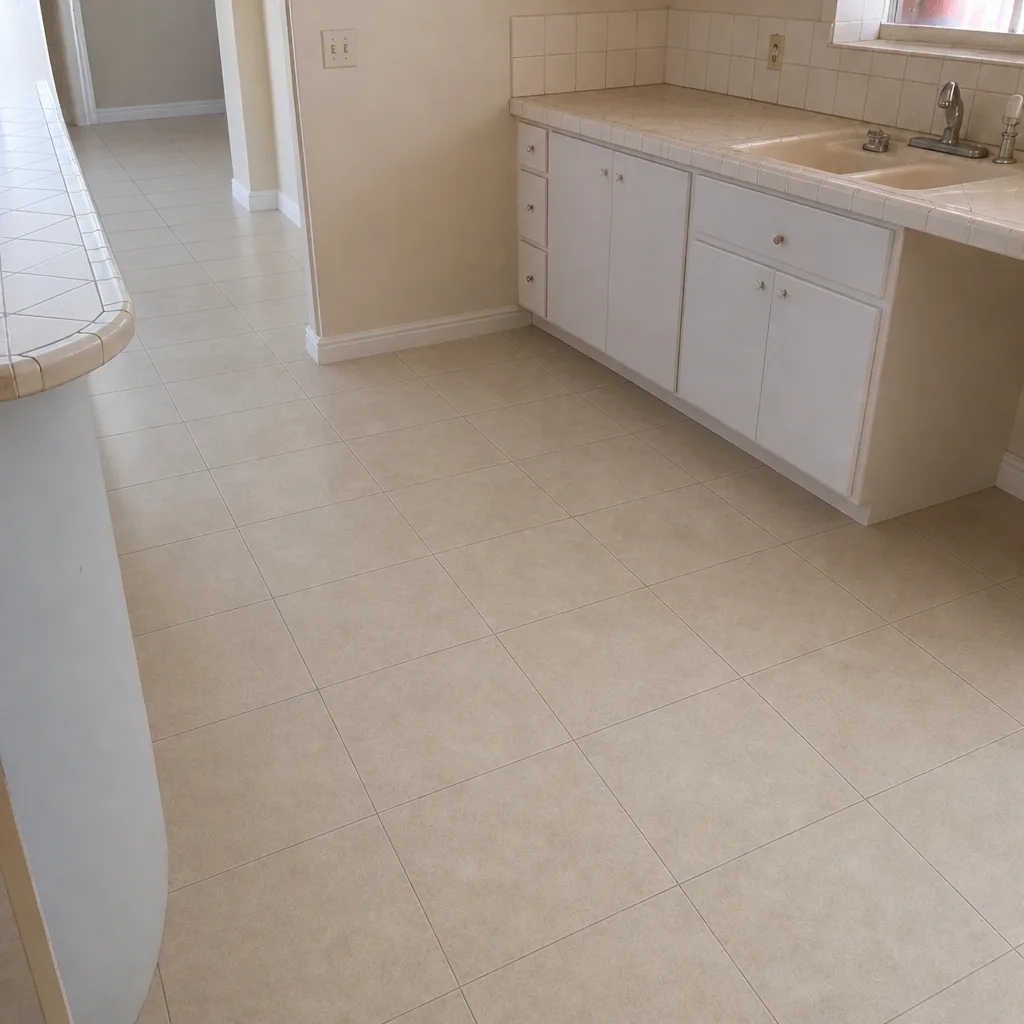
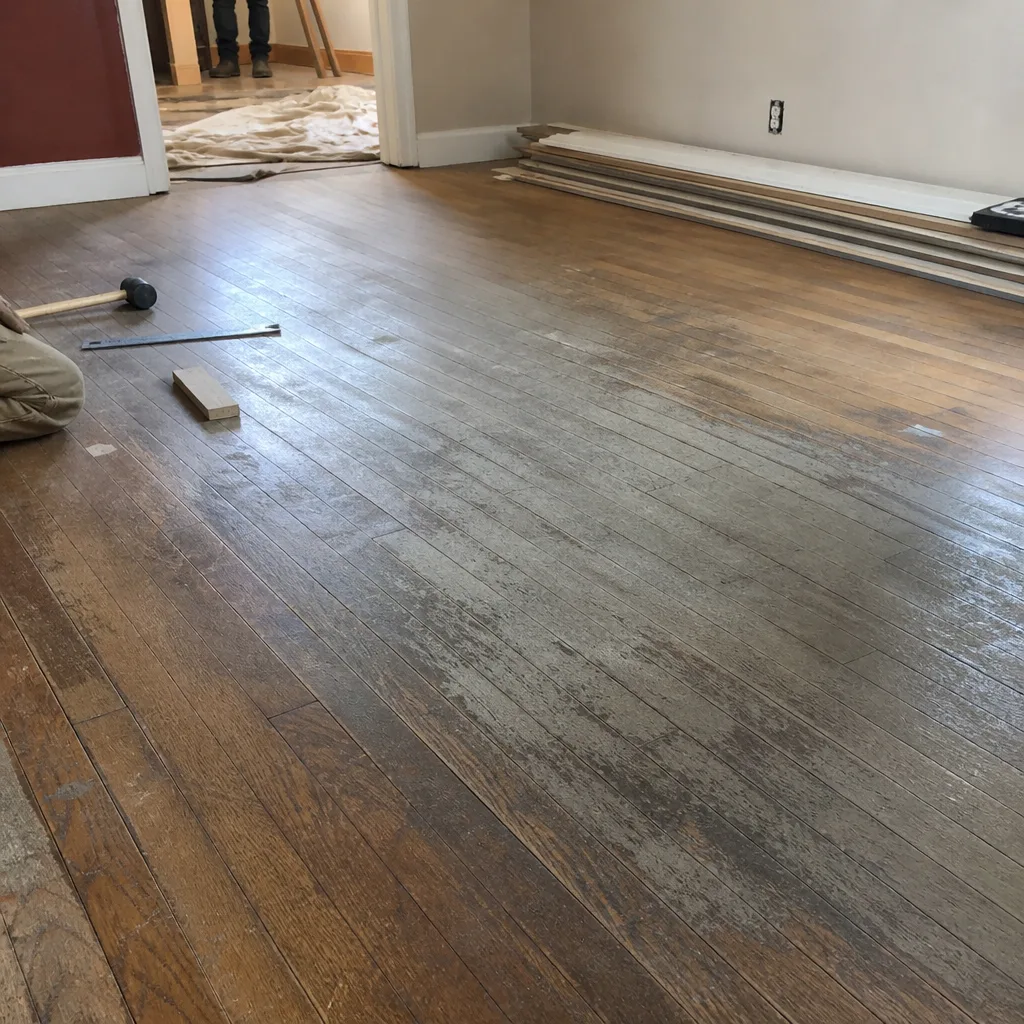
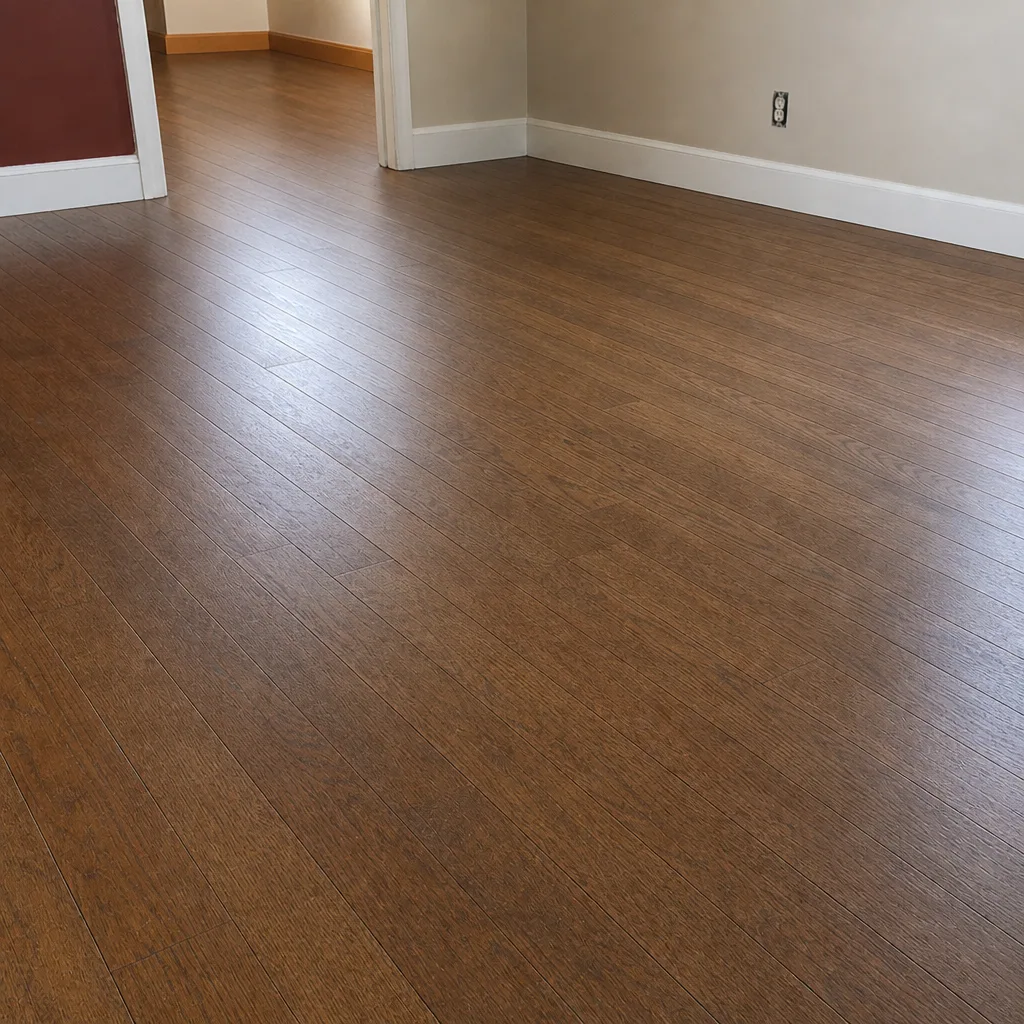
See the difference
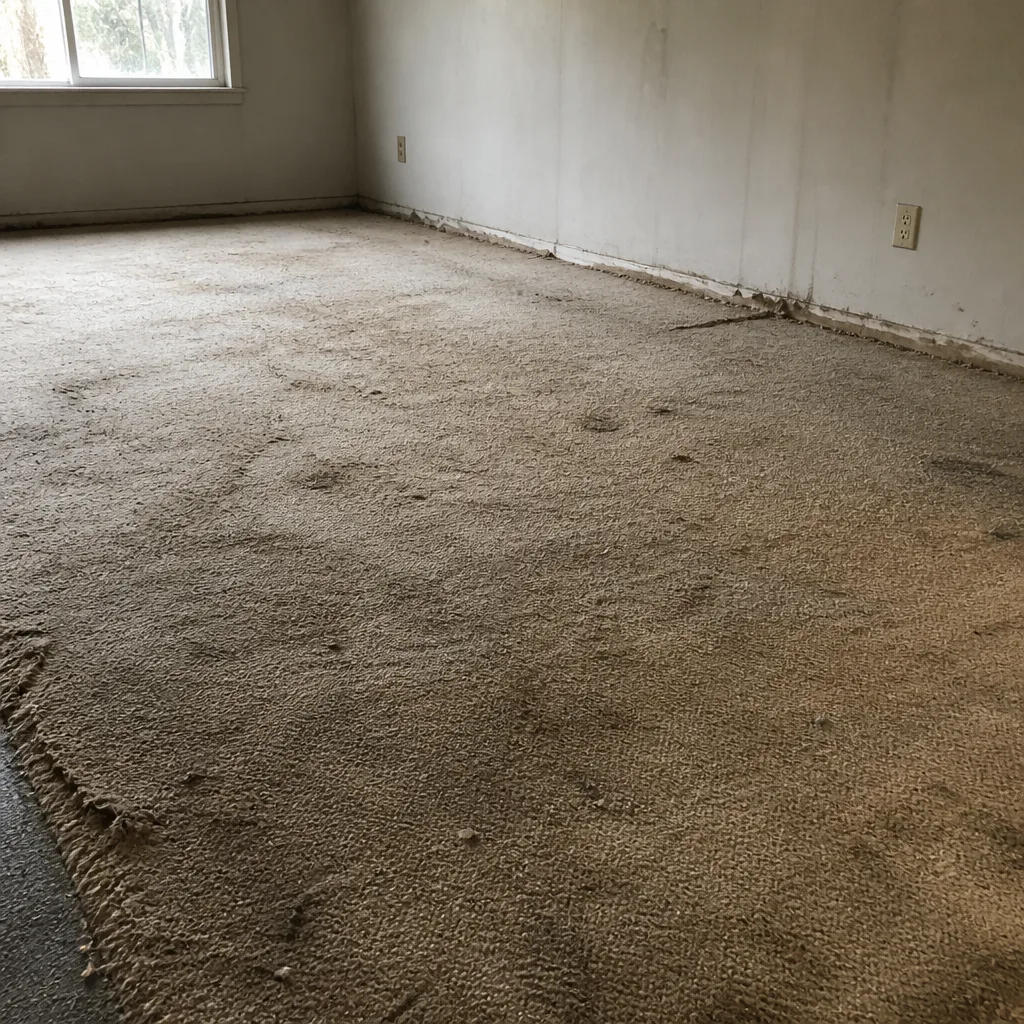 Before
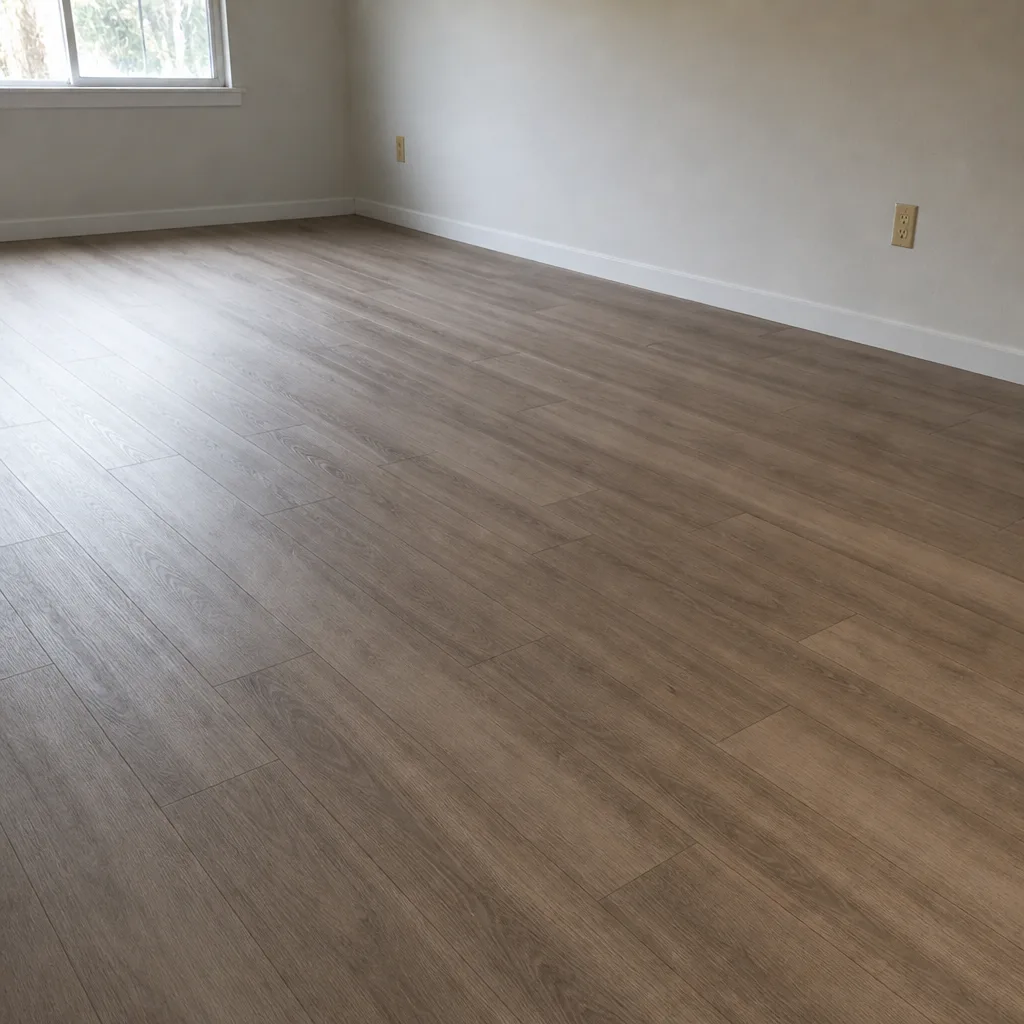 After
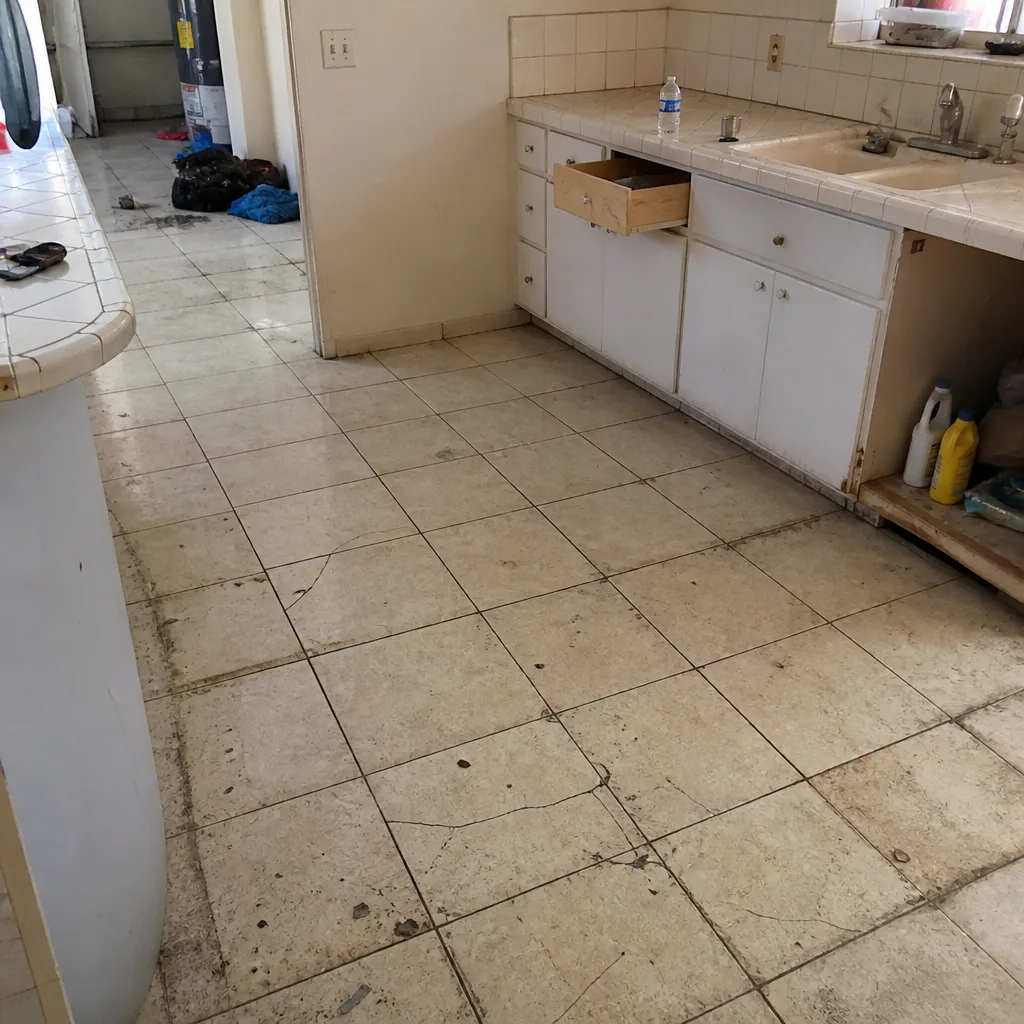 Before
 After
 Before
 After
When to Call a Professional
Bring in a licensed flooring contractor when the work involves a slab subfloor and moisture testing, when a tile floor is cracking or popping, when you’re installing over an existing floor and need to know whether it can stay, or when existing hardwood might be refinishable rather than replaceable. Also call one if you’re planning a whole-home renovation – a single contractor who handles carpet, tile, and hardwood refinishing together avoids the coordination headaches of three separate trades. Flooring Spring Valley offers free estimates in Spring Valley – call (888) 350-5054. We answer 24/7. Fast dispatch from 7am to 7pm, Sunday through Friday.
Frequently Asked Questions
Look up the contractor on the Nevada State Contractors Board (NSCB) website, confirm the license is active, confirm the classification covers flooring work, and check the bond and insurance fields. Cross-reference the license number against the name on your written proposal. Look for any published disciplinary actions. Call (888) 350-5054 for an exact quote on your project – estimates are free.
A legitimate proposal separates material from labor, lists subfloor preparation as its own line, and prices demo, haul-away, baseboards, transitions, and any other included work. It also states what’s excluded. If a proposal lists “flooring and installation” as a single lump, ask for a revision before you sign. Call (888) 350-5054 to schedule a free written estimate.
Repair costs vary widely by scope – a small hollow-spot fix is very different from re-stretching a room of carpet or re-setting a cracked tile. We don’t quote ranges without seeing the job. The written estimate sets the final price, and the estimate visit is free. Call (888) 350-5054 to schedule one.
Often, yes – but not always. Whether an existing floor can be refinished depends on the thickness of the wood and its condition, checked at the estimate visit. Refinishing extends the life of a hardwood floor and is frequently a cost-conscious alternative to full replacement. Call (888) 350-5054 and we’ll tell you honestly what your floor allows.
We install and service the floor the customer chooses from nine brands: Shaw, Mohawk, COREtec, Pergo, LifeProof, Mannington, Armstrong, Daltile, and Karndean. That range covers carpet, LVP, laminate, hardwood, and tile, from budget-conscious options to premium lines. Call (888) 350-5054 to talk through which fits your room and budget – the estimate is free.
Often, yes – but it depends entirely on the condition of the existing subfloor. Some subfloors can be prepped and built on directly; others need repair, grinding, patching, or replacement first. A proper estimate visit is when this gets answered. Call (888) 350-5054. We answer 24/7. Fast dispatch from 7am to 7pm, Sunday through Friday.
The Bottom Line
Hiring a flooring contractor in Spring Valley comes down to vetting the crew, not just the bid. Verify the NSCB license, ask subfloor questions that separate experienced crews from order-takers, read the proposal for prep line items and separation of material from labor, and call references who can speak to subfloor work and follow-through. The installer, not the product, determines how your floor performs years from now. When you’re ready to price a project, we offer free, written estimates with no pressure – call (888) 350-5054 to schedule one.
Written by the team at Flooring Spring Valley.